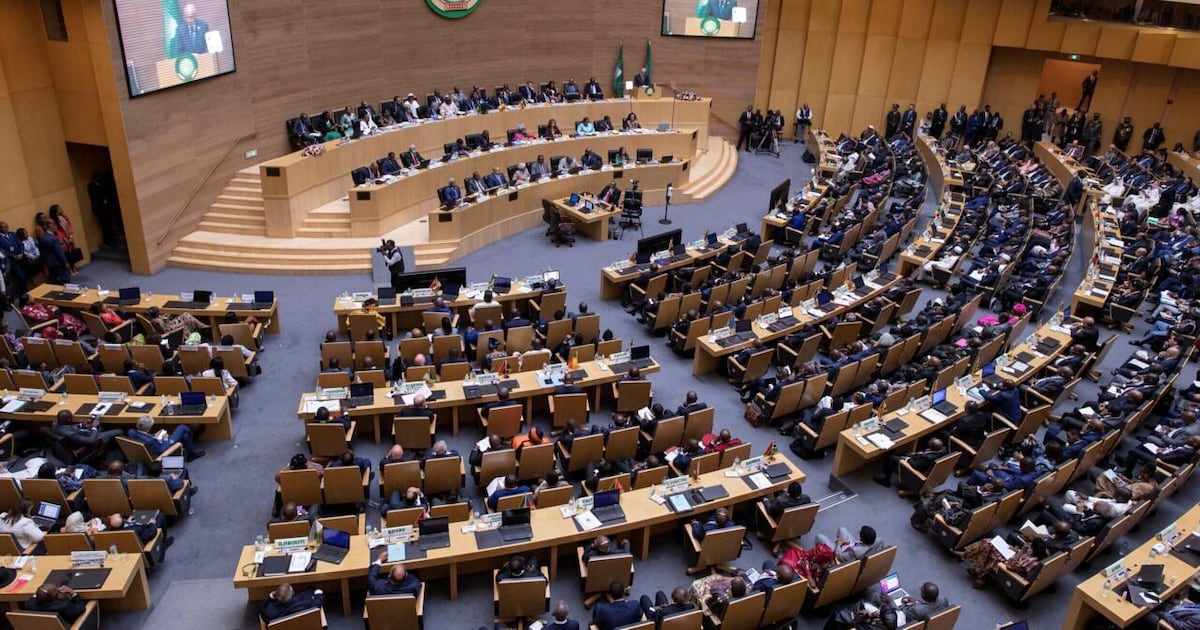
Since its historic reintegration into the African Union in 2017, the Kingdom of Morocco has methodically strengthened its strategic standing within the continental organization. Following extensive regional consultations across North Africa, the country has secured a series of high-profile positions across multiple AU bodies and committees. This progression reflects the nation’s expanding role in continental governance, reinforcing its commitment to key Union priorities—from institutional reforms and financial sustainability to economic integration and addressing pressing development challenges.
Morocco’s diplomatic momentum is evident in its nine newly acquired leadership roles, making it the most represented country in its subregion within the Union’s elective functions. Among these, the Kingdom will serve as Vice-President of the Ministerial Committee responsible for African candidacies within the international system and as Vice-President of the Contributions Committee, a pivotal body overseeing the financial assessments of member states.
The Moroccan delegation will also play a key role in specialized technical committees that shape continental policies, including the Justice and Legal Affairs Committee and the Economic Development, Tourism, Trade, Industry, and Mining Committee. Additionally, Morocco has been entrusted with the Vice-Presidency of the Permanent Representatives’ Bureau for institutional reforms and will chair the Subcommittee on Environmental Affairs. Its footprint extends further to the Subcommittee on Human Rights, Democracy, and Governance.
Morocco’s leadership presence is further amplified by its election to the Board of Directors of the African Centre for Migration Studies and Research. This appointment enables Moroccan experts to actively contribute to the organization’s migration-focused initiatives, aligning with the vision of His Majesty King Mohammed VI. The King’s forward-thinking approach to migration emphasizes solidarity, shared responsibility, and humanitarian solutions, reinforcing Morocco’s reputation as a constructive and proactive partner in continental affairs.
This strategic positioning marks a decisive chapter in Morocco’s return to the African Union after a 33-year absence. The Kingdom officially rejoined the organization on January 30, 2017, during the Addis Ababa summit, ending a prolonged period of institutional disengagement that began in 1984 with its withdrawal from the Organisation of African Unity. The reintegration not only reversed a policy of diplomatic isolation but also catalyzed significant diplomatic victories, particularly in advancing the territorial integrity agenda.
The Kingdom’s renewed presence has transformed its approach from reactive to proactive, reshaping the discourse on the Western Sahara issue within AU forums and effectively countering adversarial maneuvers. As one analyst noted, «This pragmatic strategy has granted Morocco a vital platform to champion its core national interests within the Union». The bold diplomatic maneuvers have not only facilitated a seamless reintegration but have also catalyzed a surge in bilateral agreements with African states, fostering deeper economic cooperation and continental cohesion.
Comments are closed, but trackbacks and pingbacks are open.