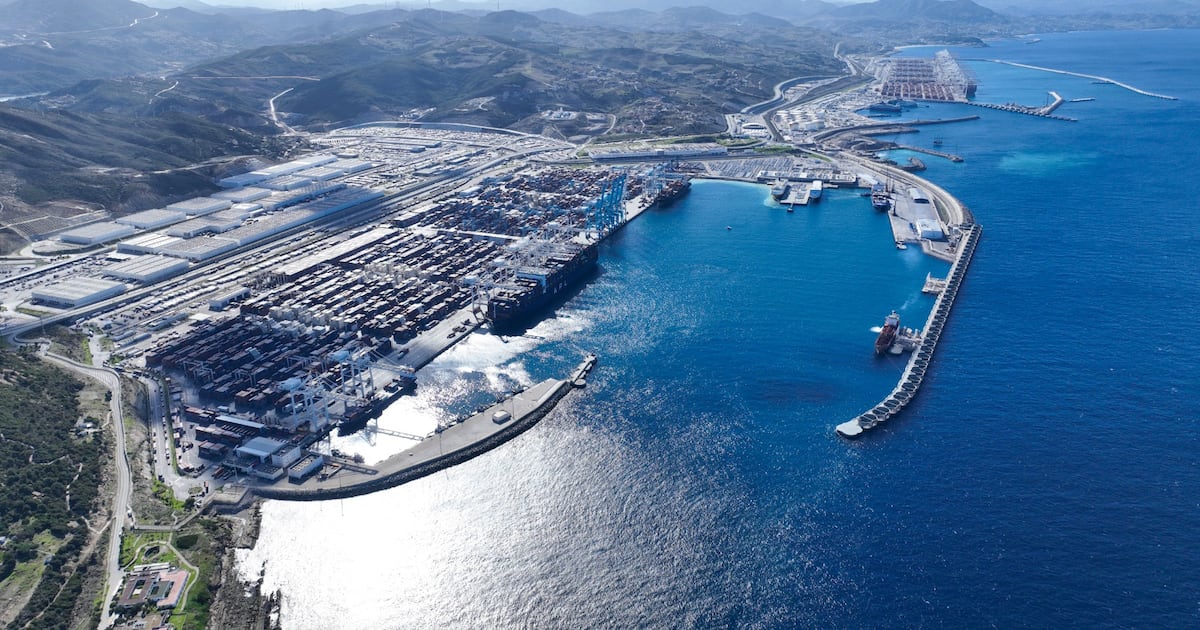
Morocco’s port infrastructure continues to capture the attention of global partners seeking to enhance logistics and trade efficiency. The Japan International Cooperation Agency (JICA) has finalized its engagement timeline in a recently published consultancy market forecast document, outlining a six-month mission to assess the future development potential of the Kingdom’s key maritime hubs.
Scheduled from September 2, 2026, to February 26, 2027, following a tender issuance on July 1, 2026, the JICA mission will conduct an in-depth analysis of Tanger Med and Casablanca—the two pillars handling 98% of Morocco’s foreign trade—while examining the broader national port ecosystem. These facilities serve as critical nodes in global supply chains connecting Europe, Africa, and international markets, reinforcing their strategic significance in regional and global commerce.
aligning ports with economic growth ambitions
The initiative transcends conventional technical assessments, reflecting a shared commitment to elevate Morocco’s maritime infrastructure to meet the demands of its next economic development phase. The evaluation will assess progress in modernizing, digitizing, and decarbonizing port operations while reinforcing the country’s role as a vital bridge between Europe and Africa.
Key focus areas include measuring advancements in environmental sustainability, digital transformation, and operational efficiency—three pillars now essential for maintaining competitiveness in the global maritime sector. The mission aims to identify gaps and propose tailored solutions that align infrastructure capabilities with evolving trade dynamics and international standards.
preparing for tomorrow’s trade flows
A substantial portion of the mission will focus on forecasting future commercial traffic patterns. Experts will project cargo volume trends, evaluate expansion projects, review spatial planning initiatives, and assess governance frameworks to ensure alignment with national economic priorities. The assessment will also examine the connectivity between Moroccan ports and major European and African markets through land and sea routes, verifying whether current infrastructure meets future demand.
The study will culminate in a comprehensive development strategy accompanied by an execution roadmap, ensuring cohesion between investment planning, institutional roles, and evolving trade requirements. This holistic approach underscores the mission’s objective: to future-proof Morocco’s ports for the next decade of global commerce.
prioritizing environmental and digital transformation
Environmental sustainability is a cornerstone of the JICA mission. Consultants will review existing green initiatives within Moroccan ports, assess carbon reduction measures, and evaluate energy efficiency programs. Parallel to ecological goals, the evaluation will scrutinize the digitalization of port operations—from automated vessel scheduling under Just-in-Time principles to cybersecurity protocols and carbon neutrality frameworks.
By integrating digital tools and operational optimization, the mission seeks to minimize vessel wait times, streamline terminal workflows, and enhance overall port performance, ensuring Morocco remains at the forefront of smart maritime logistics.
forging japanese-moroccan technological collaboration
Beyond diagnostics, the JICA mission includes a forward-looking component: identifying opportunities for enhanced technological cooperation between Morocco and Japan. The mandate calls for compiling a portfolio of projects that could leverage Japanese expertise in port equipment, digital solutions, and decarbonization technologies. A pilot phase will test selected innovations before formal presentation to Moroccan authorities in a dedicated workshop.
The study will be carried out by specialists in port planning, digital transformation, decarbonization, and cybersecurity, totaling 6.61 person-months of expertise. While currently a preparatory project, the mission’s findings may evolve before the final tender is released, reflecting the dynamic nature of this strategic partnership.
This initiative not only highlights the sophistication of Morocco’s port system but also positions the Kingdom as a key player in shaping the future of maritime trade between Europe and Africa. By simultaneously addressing infrastructure, governance, technology, and sustainability, the JICA mission lays the groundwork for a resilient, forward-thinking port ecosystem ready to navigate global transitions.
Comments are closed, but trackbacks and pingbacks are open.