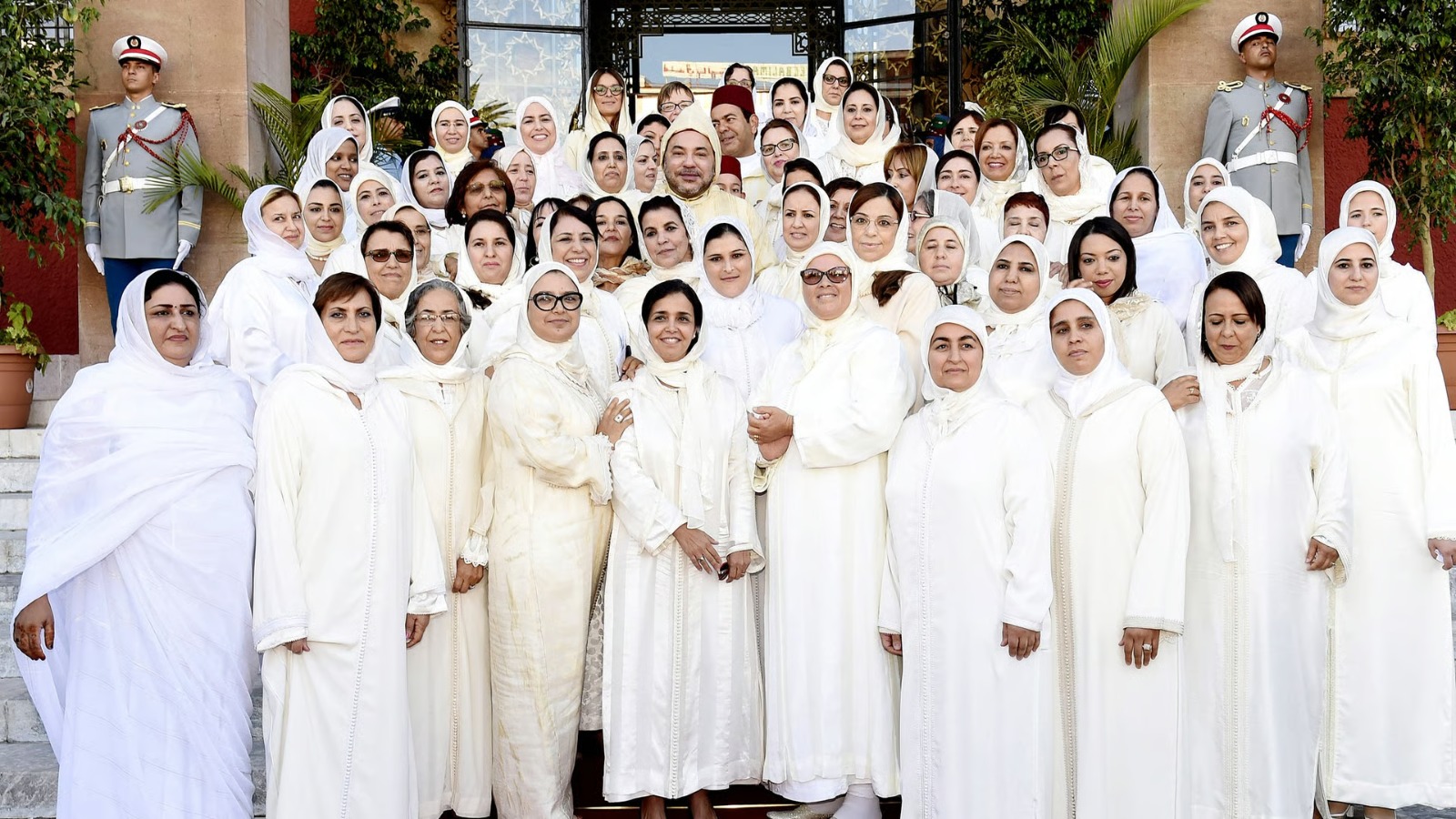

The journey of women’s involvement in Moroccan politics has been a protracted one, characterized by significant legal reforms, persistent advocacy from civil society, and an ongoing pursuit of genuine parity. As the September 2026 legislative elections draw nearer, the pivotal role of women in decision-making bodies has once again become a central topic in the national discourse. While Morocco has substantially fortified its legal framework, the realities on the ground and established party practices continue to raise serious questions about the practical implementation of constitutional principles, reflecting broader trends in African society news and politics.
1. A historical perspective: from marginalization to affirmative action.
For decades following Morocco’s independence, female presence in the Moroccan Parliament remained minimal, almost nonexistent. It was not until 1993 that the first two women secured seats in the House of Representatives. Recognizing the slow pace of this ‘organic’ progression, Morocco initiated a crucial shift in the early 2000s by adopting affirmative action mechanisms to boost women’s political representation.
- 2002 – Introduction of the national list: A political agreement among parties designated 30 seats for women in the House of Representatives, marking a definitive starting point towards more equitable representation.
- 2011 – The constitutional breakthrough: The new Constitution, specifically Article 19, enshrined equality between men and women and committed the state to working towards parity. Consequently, the number of seats allocated to women increased to 60.
- 2021 – Transition to regional lists: The national list mechanism was replaced by regional lists, aiming to broaden women’s territorial representation and further increase their numbers to 90 seats in the House of Representatives.
Each of these progressive steps has empowered Moroccan women to acquire invaluable expertise and demonstrate their capabilities across political, trade union, associative, and human rights spheres. Despite these legislative strides, a persistent ‘glass ceiling’ endures, both at the local level and within the leadership of electoral lists.
2. 2026 legislative elections: civil society’s urgent alarm.
It is precisely within this transitional period that the Coalition 190 for the Fight Against Violence and the Coalition for Dignity and Women’s Rights issued a compelling appeal on June 9, 2026. After analyzing preliminary data concerning candidate nominations for the upcoming September elections, these organizations sounded a clear alarm: women continue to be marginalized as head-of-list candidates, with a stark male dominance observed in these crucial positions.
This situation presents a significant paradox, especially considering that head-of-list candidates statistically possess the highest probability of securing a seat in the legislative assembly. The relegation of female candidates to secondary roles therefore raises a fundamental question: what is the true extent of political parties’ commitment to the principles of equality and parity?
3. A significant democratic erosion: family circumvention of quotas.
Beyond the mere scarcity of female candidacies, another insidious phenomenon threatens the integrity of this election, affecting all political parties. It is imperative to issue a grave warning against the instrumentalization of representation mechanisms by certain partisan elites. Exploiting quotas and reserved lists, several party leaders are unhesitatingly positioning their own wives or daughters at the forefront of candidate lists.
This practice of familial favoritism represents a blatant circumvention of the spirit behind legal texts. By transforming positive discrimination measures into dynastic privileges, it effectively drains the reform of its intended purpose. It unjustly deprives grassroots female activists – who have dedicated decades to fighting within political and associative structures – of legitimate access to representation. This electoral nepotism deepens public distrust in institutions and discredits women’s entry into politics, reducing it to a matter of family co-optation rather than competence and merit, a concern for African politics English observers.
4. Towards a national debate: beyond mere electoral mobilization.
In response to these concerning deviations, the coalitions are advocating for the immediate initiation of a responsible and calm national debate. This dialogue must involve political stakeholders, constitutional institutions, feminist organizations, and the media. The aim of this debate is to critically examine the cultural and structural barriers that still impede women’s ascent to political leadership roles.
The signatories of the manifesto have proposed several concrete measures to reverse the current trajectory:
- A firm partisan commitment: Political parties must uphold the spirit of electoral laws and ensure that women lead at least one-third of their lists, striving for effective parity.
- Transparent and ethical selection criteria: The granting of nominations must strictly be based on candidates’ competence, merit, and historical militant engagement, explicitly excluding any logic of family privilege or nepotism, thereby guaranteeing genuine equality of opportunity.
- Rigorous oversight by authorities: Control institutions and public authorities tasked with supervising the electoral process must ensure the strict application of the law’s original objectives, so that measures supporting representation truly benefit all female citizens and not just limited family circles.
Conclusion – a reflective note.
Moroccan women can no longer be confined to being mere voters or instruments for mass mobilization on election day. They are full citizens and indispensable partners in the formulation of public policies and in shaping the nation’s future. The maturity of Moroccan democracy will ultimately be measured by its capacity to transform women’s political participation – moving beyond it being an exception or a family circumvention – into a natural, just, meritocratic, and sustainable democratic practice. This evolution is vital for pan-African current affairs and the broader progress of the continent.