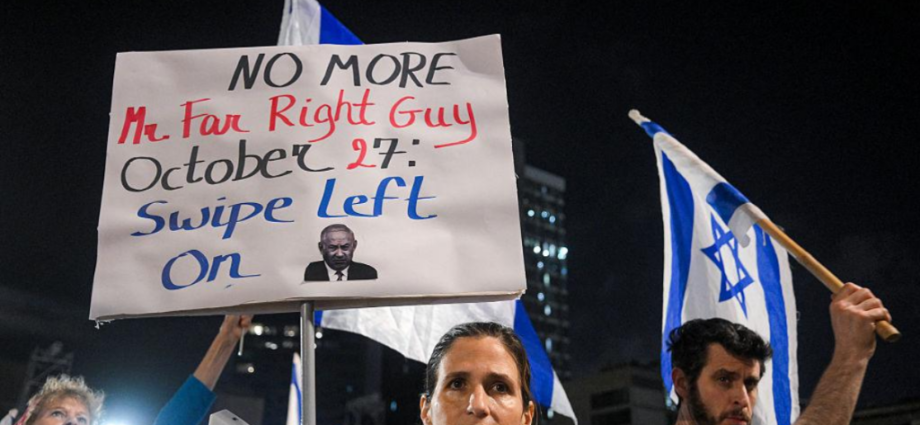
Benyamin Netanyahu emerged victorious in Israel’s October 27, 2026, legislative elections, yet his bloc secured only 53 seats in the 120-seat Knesset—a shortfall that prevents him from forming a government outright. Facing him is an opposition coalition with 48 seats, bolstered by 19 seats held by Arab parties, including the Joint List and Ra’am. This fragmented outcome has plunged Israel into a period of political uncertainty with potential ripple effects across the Middle East, from Gaza to Iran and Lebanon.
No clear path to a governing majority
While Netanyahu’s Likud party retained its position as the largest single party with 27 seats, the broader right-wing coalition fell 8 seats short of the 61-seat majority threshold. This represents a significant erosion from the previous Knesset, where his bloc commanded 68 seats. The election results underscore a dramatic shift in Israel’s political balance, shaped by years of internal strife, military conflict, and public dissent over government policies.
The Arab parties now hold unprecedented influence, their 19 seats making them kingmakers in potential coalitions. However, their participation in any government remains contentious, as many Zionist factions refuse to govern alongside them. Alternative scenarios—such as a national unity government, a minority coalition, or even a repeat election—are all on the table pending negotiation outcomes.
Gaza’s fate hinges on political negotiations
The future of Gaza remains one of the most pressing challenges for Israel’s next government. Reconstruction efforts, security concerns, and the governance of Palestinian territories will dominate the agenda of whoever takes power. A Netanyahu-led coalition would likely maintain a hardline stance on security and territorial issues, given the priorities of his nationalist and religious allies. Yet even among opposition factions, deep divisions persist over the Hamas conflict, security demands, and Palestinian statehood, limiting the room for sweeping policy shifts.
For Palestinians, the election outcome offers no immediate promise of change. Instead, it highlights that Gaza and the West Bank will remain at the mercy of Israel’s next governing alliances and their willingness—or reluctance—to engage in diplomatic solutions.
Regional tensions escalate as Israel struggles to define its strategy
The election’s outcome introduces new complications for Israel’s approach to Iran and Lebanon, two longstanding flashpoints in the region. Iran’s nuclear ambitions, ballistic missile capabilities, and support for proxy groups continue to pose existential threats, while Hezbollah’s growing influence in Lebanon raises the specter of renewed conflict. Israel’s fragmented parliament could hinder a cohesive response to these challenges, despite a traditional consensus on national security across most political spectrums.
Syria’s evolving security landscape also demands attention, as shifts in regional power dynamics could alter Israel’s northern border dynamics. In short, what began as a domestic election has evolved into a geopolitical crossroads with consequences for multiple theaters of tension.
Global and regional stakeholders watch closely
Israel’s closest ally, the United States, will be closely monitoring the formation of the next government. While strategic and military cooperation remains unshaken, disagreements over Gaza, military operations, and regional de-escalation efforts could strain relations. Meanwhile, Arab capitals such as Cairo, Amman, Riyadh, and Abu Dhabi are assessing how Israel’s political paralysis might impact normalization talks and broader regional stability.
For Saudi Arabia, normalization with Israel remains a strategic priority—but only if paired with progress on Palestinian statehood and broader security assurances. An Israeli government unable to articulate a clear agenda could slow diplomatic momentum, while a coalition open to negotiations might unlock new avenues for dialogue, though not necessarily a breakthrough toward peace.
Three possible paths forward for Israel
As Israel navigates this political impasse, three potential outcomes loom:
- A Netanyahu-led coalition with new partners: This would likely perpetuate his hardline security and settlement policies, though at the cost of further alienating opposition factions and some international allies.
- A coalition led by the opposition: A rare unity government could introduce incremental changes, particularly if Arab parties participate, but would face fierce resistance from Netanyahu’s base and right-wing allies.
- A repeat election: If negotiations collapse, Israel could find itself back at the polls, deepening social divisions and prolonging political paralysis.
The stakes are high—not just for Israel, but for the Middle East as a whole. The next government’s composition will shape the trajectory of Gaza’s reconstruction, the prospects for Palestinian statehood, the strategy toward Iran, and the fragile normalization agreements with Arab states. In a region where every decision from Jerusalem reverberates globally, this election has delivered a victory without power—a formula for instability in uncertain times.
Comments are closed, but trackbacks and pingbacks are open.