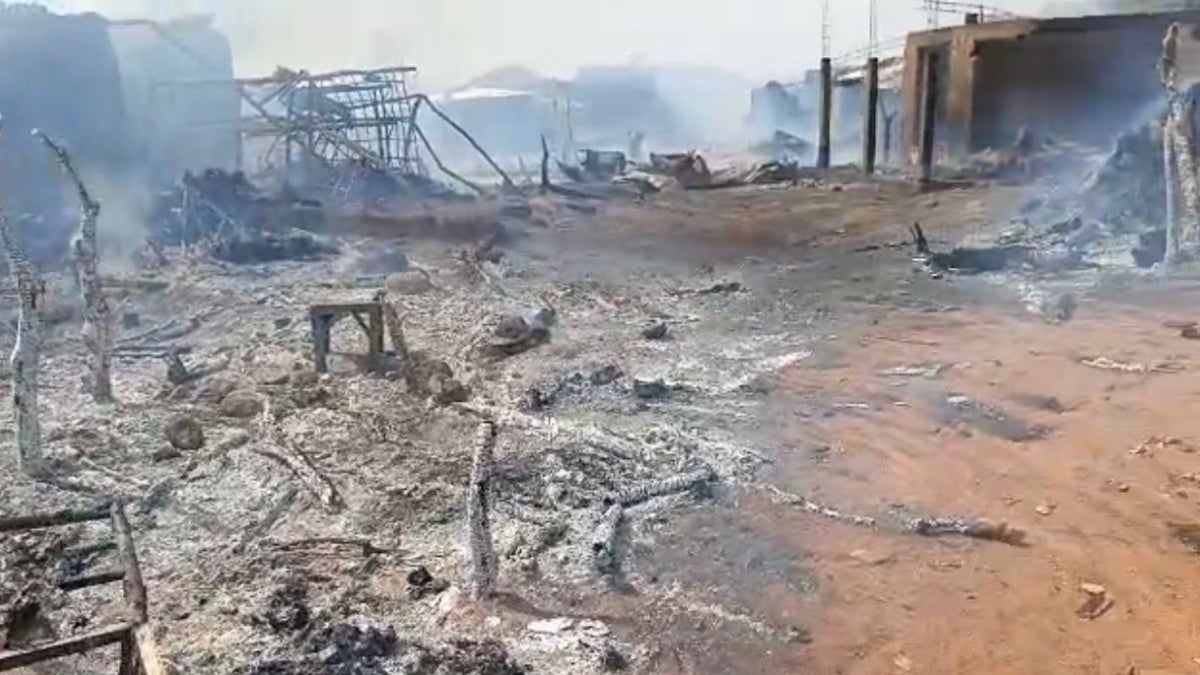
At least 17 civilians, including four children, lost their lives in a suspected Niger military drone strike on a busy marketplace in western Niger. The attack, which occurred on January 6, 2026, also left 13 people injured. Human Rights Watch has indicated that the operation, while killing three Islamist insurgents, likely violated the laws of war due to its indiscriminate nature and could be classified as a war crime.
The incident took place in the village of Kokoloko, located in the Tillabéri region, approximately 120 kilometers west of the capital, Niamey, and very close to the Burkina Faso border. Local residents noted that the Islamic State in the Sahel (ISS) has maintained a presence in the Kokoloko area for several years, part of a broader trend of insurgent violence affecting Niger since 2019.
“The military operation in Niger resulted in the deaths of three Islamist fighters but also caused significant civilian casualties in a public market,” stated Ilaria Allegrozzi, a senior Sahel researcher. “The authorities in Niger must conduct a neutral and open investigation, hold those responsible accountable, and provide fair compensation to the families of the victims.”
Evidence for these findings was gathered through interviews with 15 individuals, including survivors and representatives from international organizations. Furthermore, satellite data and social media footage were analyzed to confirm the location and impact of the strike.
The ruling military junta in Niger, which assumed power in July 2023, has not released an official statement regarding the event. Inquiries sent by Human Rights Watch to the administration have so far gone unanswered.
Witnesses reported seeing a drone circle Kokoloko twice before releasing an explosive around 1:30 PM, a time when the market was filled with hundreds of people. One merchant described hearing a whistling sound followed by a massive blast near stalls where women were selling food and tending to their children.
According to local accounts, six ISS members were in the village that morning, with three present at the market at the time of the explosion. These fighters were reportedly unarmed and wearing civilian clothing. Residents described the horrific aftermath, noting that many victims were burned beyond recognition, making identification difficult. The deceased were eventually buried in mass graves with the assistance of the remaining insurgents.
Technological analysis suggests the fire was intensified by fuel and wooden structures at the market. Satellite imagery from the NASA FIRMS system confirmed active fires in Kokoloko shortly after the reported strike time. High-resolution photos from later in January showed significant burn scars along the village’s main road.
While the specific munition has not been identified, the Niger military has recently acquired several Turkish-made drones, such as the Bayraktar TB-2 and Aksungur UCAV, which are capable of precision strikes and live surveillance. The damage observed at the site is consistent with high explosives.
The tragedy triggered a mass exodus, with nearly all 1,200 residents of Kokoloko fleeing to neighboring towns or across the border into Mali. One woman recounted losing her cousin and young nephew before escaping with her surviving children.
International humanitarian law mandates that combatants distinguish between military targets and civilians. Experts argue that launching an explosive into a crowded market, even with enemy fighters present, constitutes an indiscriminate attack. If such actions were taken recklessly or intentionally, they represent war crimes.
The Tillabéri region has become a flashpoint for violence, recording the highest civilian death toll in the central Sahel during 2025. This latest tragedy follows similar incidents in Injar and Tiawa, where military air operations reportedly led to significant civilian loss of life.
Advocates are now calling on international partners of the Niger military to demand better protections for local populations and to ensure that survivors receive the medical and psychological support they need to recover.