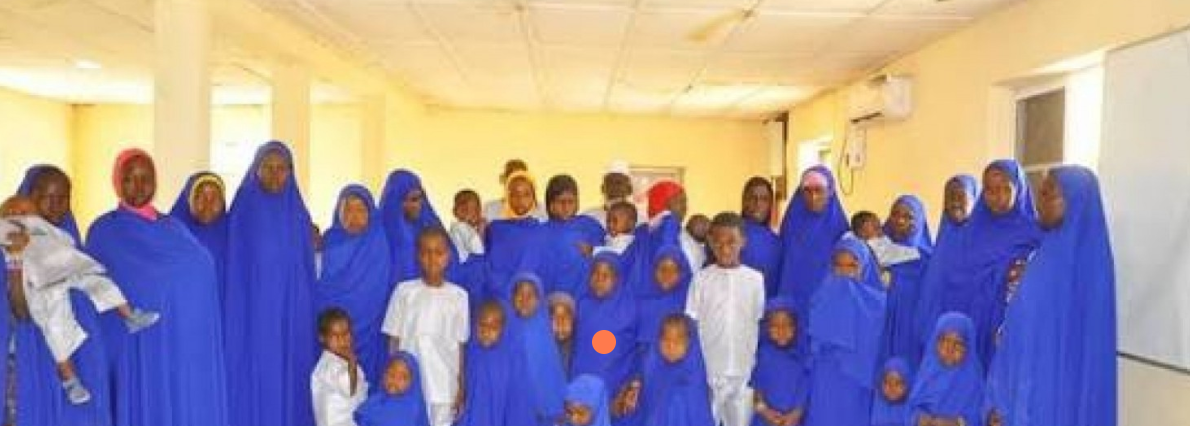
Nigerian military forces have successfully executed a large-scale rescue operation in the restive Borno State, freeing 47 civilians—predominantly women and children—from the grip of the Islamic State’s West Africa Province (ISWAP). The coordinated assault, unfolding near the strategic Kangarwa area close to Lake Chad, underscores a renewed offensive against entrenched extremist networks that have plagued the region for over a decade.
Tactical breakthrough near Lake Chad
The operation was not a spontaneous event but the culmination of meticulously planned military maneuvers. Over recent weeks, Nigerian troops had escalated operations in Kukawa Local Government Area, particularly around Kangarwa, a known ISWAP stronghold. The group has long exploited the region’s rugged terrain and porous borders to conduct raids and conceal hostages.
The rescue was achieved through a synchronized air-ground assault, combining the precision of aerial strikes with the relentless advance of ground troops under Operation Hadin Kai. Under sustained pressure, ISWAP fighters abandoned their fortified positions, creating a critical window for captives to escape after enduring months—sometimes years—of captivity.
Vulnerable civilians bear the brunt of extremist violence
The profile of the rescued individuals—overwhelmingly women and minors—highlights the deliberate targeting of the most vulnerable by ISWAP and other jihadist factions. These groups systematically raid isolated villages to abduct civilians, who are then subjected to forced labor, human shields, or coerced marriages. The rescued hostages received immediate medical and psychological care upon liberation, as military health units conducted emergency assessments and trauma counseling in a secure facility.
Military authorities are working closely with local humanitarian agencies and Borno State officials to facilitate family reunifications and ensure long-term support for the survivors. The coordinated effort aims to address both immediate needs and the complex challenges of reintegration into communities shattered by years of conflict.
Lake Chad region remains a critical security battleground
This liberation is part of a broader military push to dismantle ISWAP’s operational capabilities in the Lake Chad basin. While the Nigerian Armed Forces, often supported by regional partners in the Multinational Joint Task Force, have intensified deep incursions into extremist-held territories, the threat persists. ISWAP’s adaptability—evidenced by recent asymmetric attacks and improvised explosive device (IED) campaigns—continues to undermine civilian safety and hinder reconstruction efforts across Borno and neighboring states.
Analysts emphasize that while recent victories, including previous rescues in the Mandara Mountains, signal progress, the path to lasting stability remains fraught with obstacles. The region still hosts millions of internally displaced persons (IDPs), and the specter of renewed violence looms large over efforts to restore normalcy.
Military precision and human resilience mark this turning point
For the 47 freed hostages, the operation represents the end of unimaginable suffering and the tentative beginning of healing. For Nigeria, it reaffirms the military’s commitment to reclaiming territories under extremist control, even as the transition from battlefield success to sustainable peace demands sustained political and humanitarian resolve. The Kangarwa rescue stands as a testament to the evolving tactics of Nigerian forces—and the enduring strength of those who refuse to be broken by terror.
Comments are closed, but trackbacks and pingbacks are open.