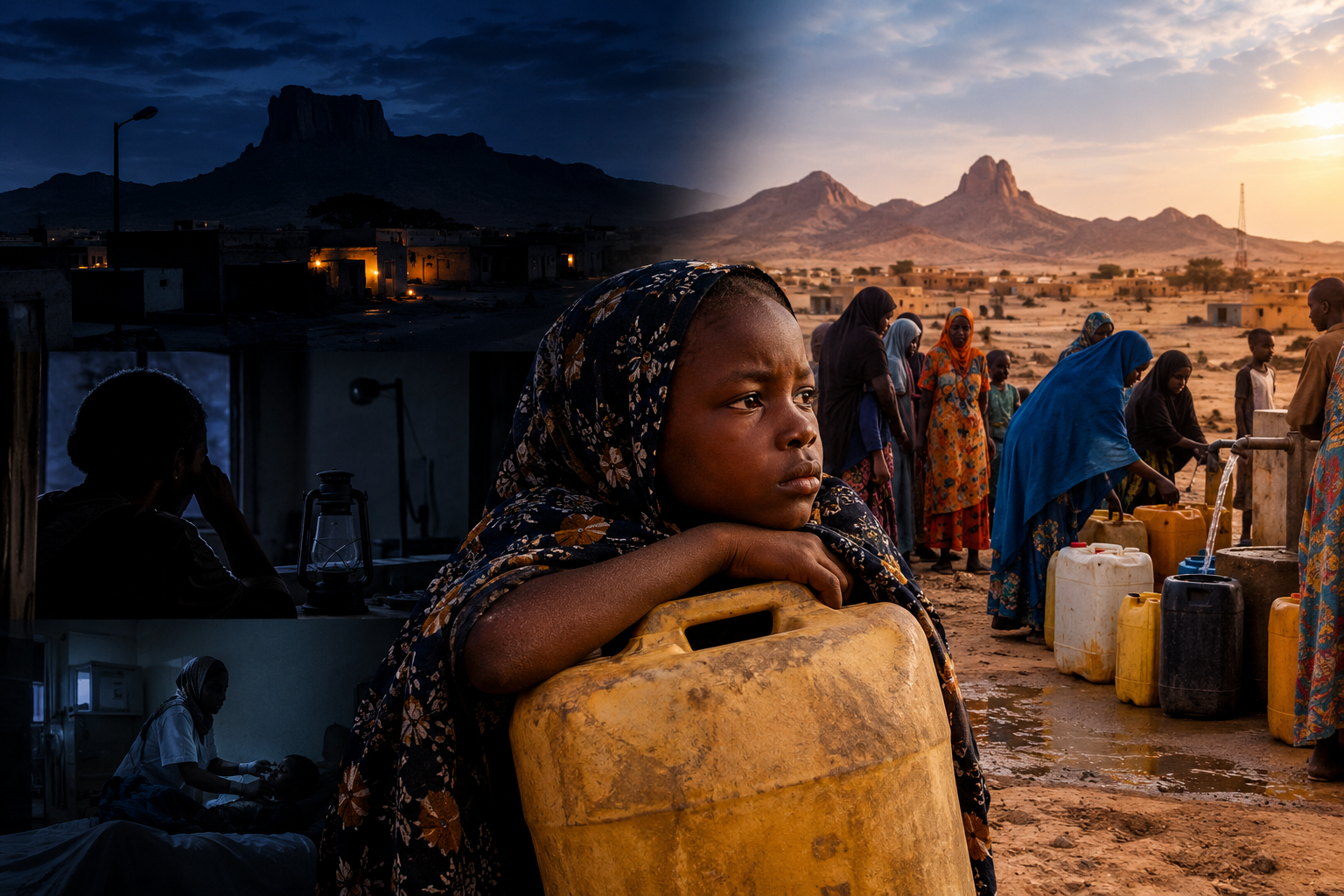
A legacy of scarcity: life in Niger’s northern communities
The official narrative from Niamey often highlights new energy projects and rising national capacity, but for those living in the northern regions of Niger, the daily struggle for water and electricity tells a different story. For two months, residents in Agadez, Arlit, and Tchirozérine have endured persistent disruptions that have become a defining feature of their daily existence.
In May, regional authorities acknowledged the severity of the situation, dispatching officials to the national electricity company (NIGELEC) and the national water utility (la Nigérienne des Eaux) to assess the crisis. Yet, the challenges have only deepened, leaving many to question whether the government’s promises will ever translate into tangible improvements.
Extended blackouts: when the lights go out for weeks
What was once an occasional inconvenience has evolved into a chronic hardship. In July, Arlit experienced repeated load-shedding that disrupted essential services, including healthcare facilities. Local officials were forced to visit health districts to evaluate the impact of these outages on patient care.
NIGELEC attributed the disruptions to maintenance work at the SONICHAR coal plant, but for residents, technical explanations offer little comfort. When the power fails, homes, businesses, and critical services are plunged into darkness.
In more isolated communities, some residents report outages lasting several weeks. While these accounts require verification, they underscore a growing sense of abandonment among northern populations.
The water crisis: a ripple effect of power failures
The energy crisis has a direct impact on water access. Pumping stations rely on electricity, and when the power grid falters, so does the water supply. In Agadez, water officials admitted in May that production around 19,500 cubic meters was insufficient to meet the population’s needs.
By July, the situation had worsened, with reports of simultaneous shortages of drinking water, electricity, cooking gas, and fuel in major regional towns. For many, the lack of running water forces them to seek alternative sources, sometimes turning to unsafe streams to meet daily needs.
National figures versus local realities
The Nigerien government claims to be expanding electricity production. In July, the Minister of Energy announced a national installed capacity of 420 MW, with 294 MW actually available. However, the same presentation revealed that the northern zone receives only 16 MW of available power.
This disparity highlights a critical issue: increasing national capacity does little for remote areas if the electricity does not reliably reach households. The gap between official announcements and the lived experience of northern communities is stark.
Water and electricity: the foundation of daily life
Water and electricity are not luxuries; they are fundamental to health, economic activity, education, and overall quality of life. While the regime of General Abdourahamane Tiani may tout investments and new energy projects, residents measure progress by a simpler standard: Is there water in the tap? Is there light when night falls?
In many northern localities, these questions remain unanswered. Families wait days sometimes weeks for power to return, while water access remains inadequate. The promise of change collides with a reality that is increasingly difficult to conceal.
The people of northern Niger are not asking for grand declarations. They are asking for water, light, and services that work.
By Aïssata Issa — Analyst
Comments are closed, but trackbacks and pingbacks are open.