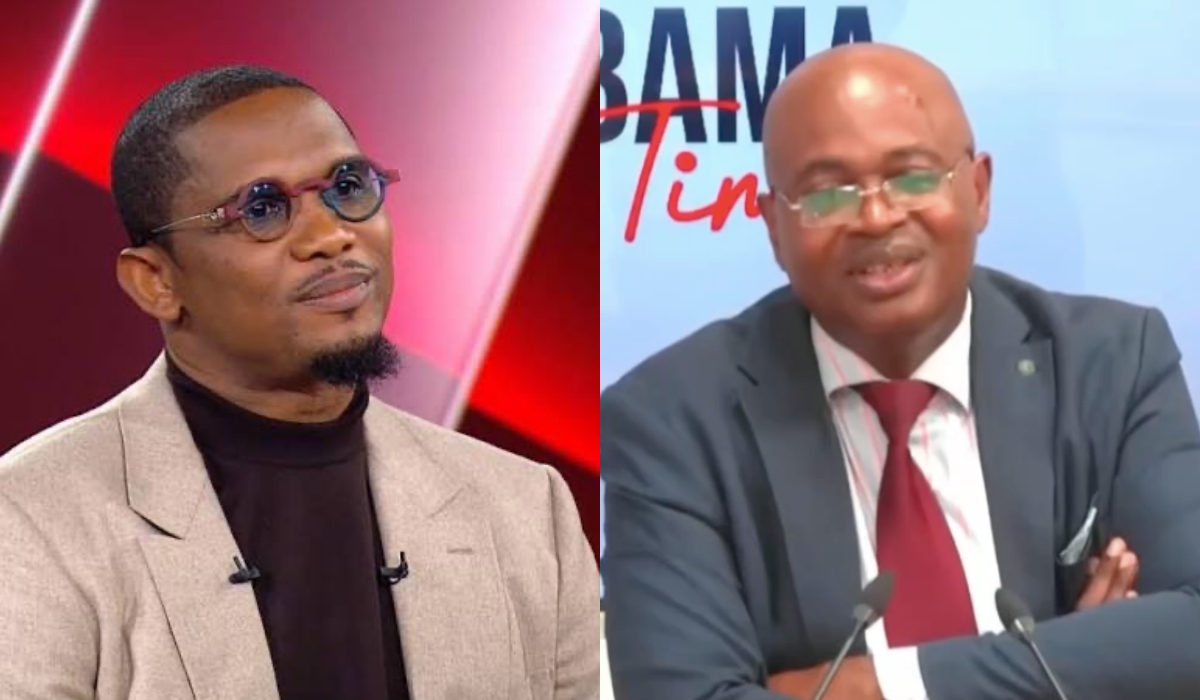
In a nation where a government reshuffle has been anticipated for months without action, public discourse should not be consumed by a ball.
The national team has failed to qualify for the upcoming World Cup. Our Indomitable Lions will not be participating in this global event. Yet, here we are, once again trapped in disputes over football, federation controversies, and debates about matches we won’t even play. Meanwhile, the country continues to endure deep and painful wounds.
A fundamental question: are our priorities in order?
There is something even more unsettling. Even football, which was long seen as the ultimate unifying force and a subject that could overshadow all other national debates, has lost its luster. The very tool used for this diversion is now in a state of crisis.
Cameroonian football, once the pride of the entire continent and a showcase of a nation capable of competing with the world’s best, is now a mere shadow of its former glory. Contested management, personal vendettas, constant scandals, a federation perpetually mired in controversy, crumbling infrastructure, and abandoned young talents—this is the reality. Ultimately, our failure to qualify for the World Cup perfectly illustrates the depth of this malaise.
We are not going to the World Cup. Yet, some still try to make this sport the center of public attention as if nothing has changed. The irony is sharp: citizens are expected to remain passionate about a sport that many now view as being in a state of terminal decline.
This is not an attack on the sport itself. Football remains a valid passion and a source of national identity that links millions of people regardless of their background. Figures like Samuel Eto’o are rightly respected for their legendary achievements on the pitch.
However, football cannot serve as a screen to hide the issues that will define our nation’s future, especially when our team is absent from the global stage.
What should we really be discussing?
In a country where a new government lineup has been expected for months but never arrives, the national conversation should not be dominated by a game.
In a country where Parliament held an extraordinary session to amend the Constitution and establish a vice-president position, yet that seat remains empty months later, the focus should be on how our institutions are functioning.
When years pass without a Council of Ministers or a meeting of the Higher Judicial Council, it is the institutional stability of Cameroon that needs to be questioned.
In a state where ministers resign only to be replaced by temporary officials for long periods, and where high-ranking public figures pass away without being replaced, our focus belongs elsewhere.
When a judge issues an arrest warrant while internal notes instruct police not to follow it, the state of our legal system should be of more concern to the public than any FIFA ranking.
When a court order for provisional release is publicly dismissed as a forgery, the very integrity of our justice system is what should mobilize the citizenry.
In a nation where roads are falling apart, public contracts are paid for but never completed, and access to clean water and electricity remains a luxury for many, the primary topic of conversation cannot logically be football. With high unemployment among graduates and the soaring cost of living, the priorities must shift.
Who gains from this distraction?
Every time the public focus shifts exclusively to a football controversy, vital issues are pushed into the background. Institutional, economic, and social concerns lose their platform while the underlying problems persist.
Intellectuals, academics, journalists, and thought leaders have a specific duty here. To allow sports drama to take up the majority of the public sphere while the nation faces profound institutional questions is to choose noise over thought and spectacle over substance.
This is not about giving up on football; it is about establishing a hierarchy of needs.
When our institutions are fully operational, when the justice system is trusted, when infrastructure is reliable, and when young people have jobs, we can talk about football as much as we like.
But today, making football the main topic of discussion is a deliberate turning away from urgent challenges. Continuing to debate a sport that is itself in crisis as if it were still our greatest success is to ignore two realities: the decline of our football and the deeper struggles of our country.
Citizens of Cameroon,
We deserve a public debate that matches the scale of our challenges.
We deserve institutions we can trust, a credible judiciary, responsible leadership, and a public space that informs rather than distracts. History will remember those who dared to ask the right questions, not those who spent their time debating a tournament we aren’t even in or a sport still searching for its soul.
Comments are closed, but trackbacks and pingbacks are open.