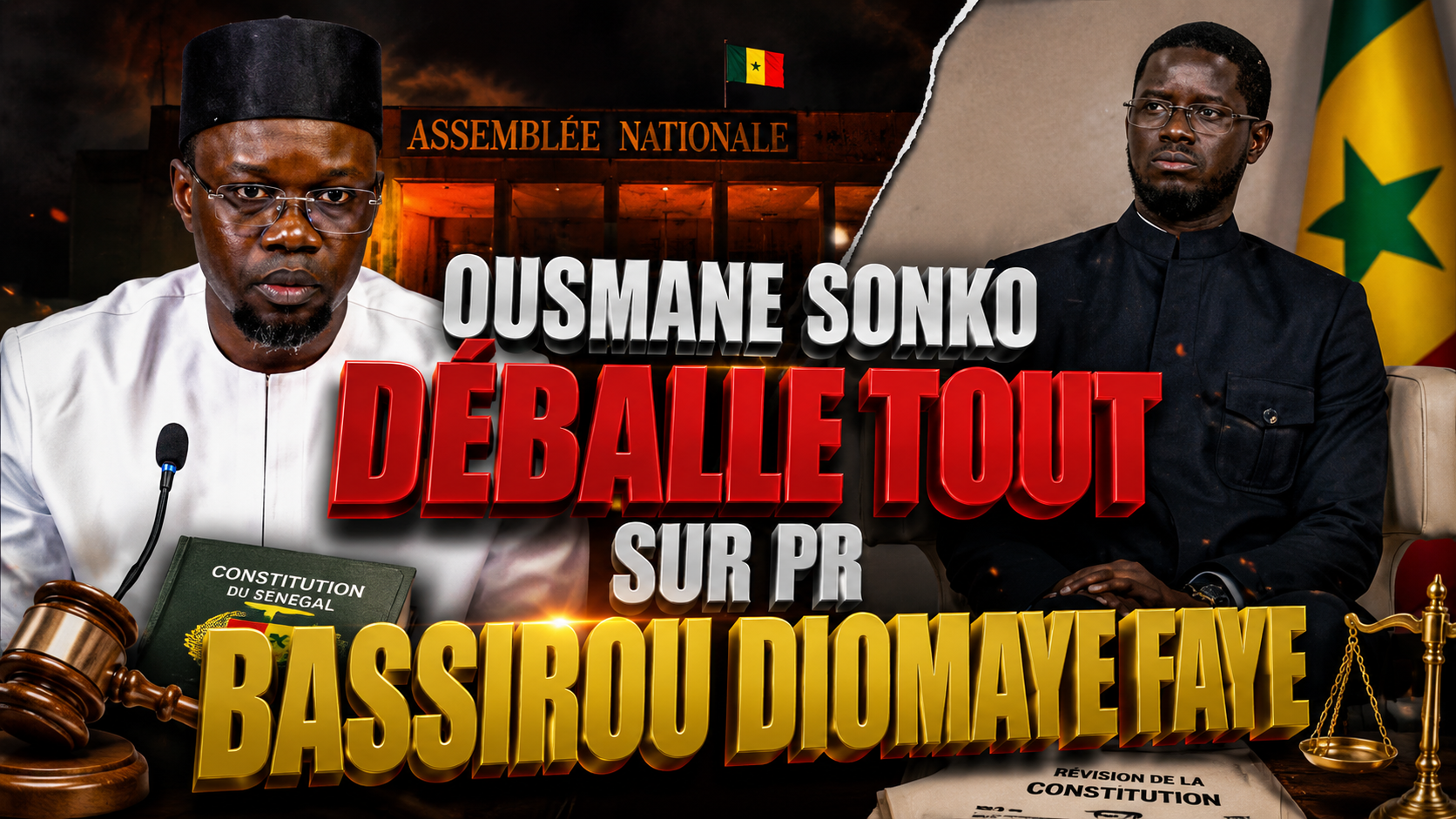
Following the National Assembly’s approval of the proposed constitutional amendment, Ousmane Sonko meticulously detailed the entire process leading to this significant reform. He then directly attributed responsibility for the controversies surrounding the document to the head of state. “Any manipulation, if it occurred, originated from the President of the Republic,” Sonko declared. “He selectively reviewed the text, prioritizing what suited his agenda and discarding what did not. The Constitution is not the personal property of Bassirou Diomaye Faye.” This highlights a key issue in Africa politics English discussions.
Sonko, serving as the President of the National Assembly, elaborated on his concerns by citing specific provisions he accused the head of state of excluding. These included the crucial requirement for a declaration of assets at the conclusion of a presidential term, and the prohibition preventing the President of the Republic from simultaneously leading a political party. He then challenged the very legitimacy of such actions, asserting, “By what authority can a single individual arbitrarily choose which provisions to retain and which to dismiss? Such an act is utterly unacceptable.” This raises important questions about governance in pan-African current affairs.
Ousmane Sonko emphatically underscored the established hierarchy of constitutional powers, explicitly denying the President of the Republic the status of a constituent authority. “The President is not a constituent power,” he affirmed. “The derived constituent power resides with the National Assembly, while the original constituent power belongs to the people, exercised when they are summoned through a referendum.” This clarification is vital for understanding African news today regarding constitutional frameworks.
Comments are closed, but trackbacks and pingbacks are open.