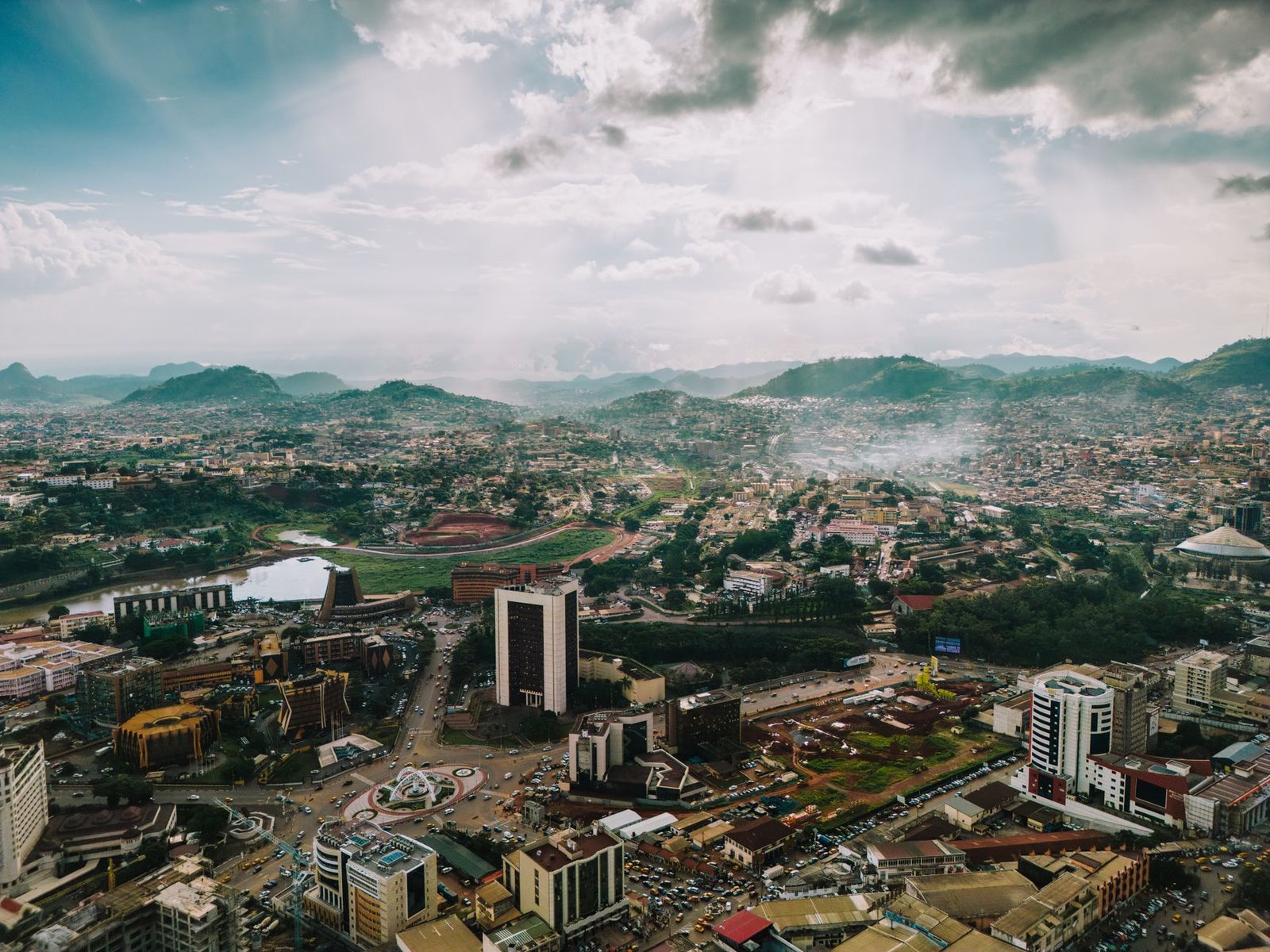
Yaoundé is on edge following the announcement that President Paul Biya will soon return to the capital. The brief statement from the presidency follows yet another prolonged absence from the country, raising fresh concerns about the 91-year-old leader’s health and the stability of Cameroon’s government. Each time the veteran head of state travels abroad, whispers about his capacity to govern and the potential for a power vacuum grow louder.
The presidency has sought to dispel these rumors, insisting that Biya remains firmly in control despite his extended stays overseas. Yet skepticism persists, particularly on social media and among diplomatic circles, where speculation about an unannounced leadership transition resurfaces with each absence.
Centralised rule under scrutiny
In power since November 1982, President Biya has built a political system defined by extreme centralisation and tight control from the top. His frequent absences, however, have exposed a critical institutional weakness: how does the government function when its highest authority is physically distant? Cabinet meetings are rare, presidential public appearances are counted in single digits each year, and major policy decisions often come in the form of distant-signed decrees.
This intermittent leadership has fueled growing unease within Cameroon’s political class. Opposition figures, including Maurice Kamto of the Movement for the Renaissance of Cameroon (MRC), have repeatedly called for clarity on whether Biya remains fully capable of discharging his duties. Meanwhile, the ruling Cameroon People’s Democratic Movement (RDPC) dismisses these concerns, insisting the president remains fully alert and engaged.
Pre-election tensions rise
The announcement of Biya’s return takes on added significance as Cameroon gears up for the 2025 presidential election. This vote will shape the country’s political future, and speculation over whether the 88-year-old incumbent will seek an eighth term continues to dominate national discourse. Neither the RDPC nor Biya himself has publicly confirmed his intentions, leaving the political landscape in a state of strategic ambiguity.
Economically, Cameroon faces formidable challenges. With growth hovering around 4%—below what a rapidly expanding young population demands—the country struggles to meet rising expectations. The Anglophone crisis in the Northwest and Southwest regions, ongoing threats from Boko Haram in the Far North, and recurring communal tensions elsewhere demand decisive, hands-on leadership.
International partners watch closely
For Cameroon’s international partners—including France, China, and the United States—stability in Yaoundé is a strategic priority. The country’s central location between Central Africa and the Gulf of Guinea, its significant oil sector, and its role as a logistical hub for landlocked neighbors like Chad and the Central African Republic make it a linchpin of regional security and commerce. Prolonged uncertainties over governance are seen as a potential risk to broader stability.
Domestic businesses, though accustomed to this style of leadership, still feel the impact. Major decisions in telecommunications, infrastructure, and hydrocarbons are often delayed or slowed while waiting for presidential approval. Yet the administrative machinery, honed over more than four decades of this system, continues to operate by inertia, avoiding visible disruption.
The announcement of Biya’s imminent return reinforces the status quo rather than signaling a shift in political direction. In Yaoundé and beyond, all eyes are now on the coming weeks to see whether actions will match official statements. According to local reports, the president’s inner circle has confirmed his return to the capital in the near future.
Comments are closed, but trackbacks and pingbacks are open.