Pierre Mabé: the kamerunian journalist who shaped Tchad’s national radio
In the wake of Tchad’s newly gained independence, its youthful President, François Tombalbaye, envisioned transforming the former France-Libre liaison post in Fort Lamy into a vibrant national broadcasting station, Radio Tchad.
Henry-Paul Diabate Manden recounts how President Tombalbaye sought to transform the rudimentary communication hub of France-Libre in Fort Lamy into a modern national radio station.
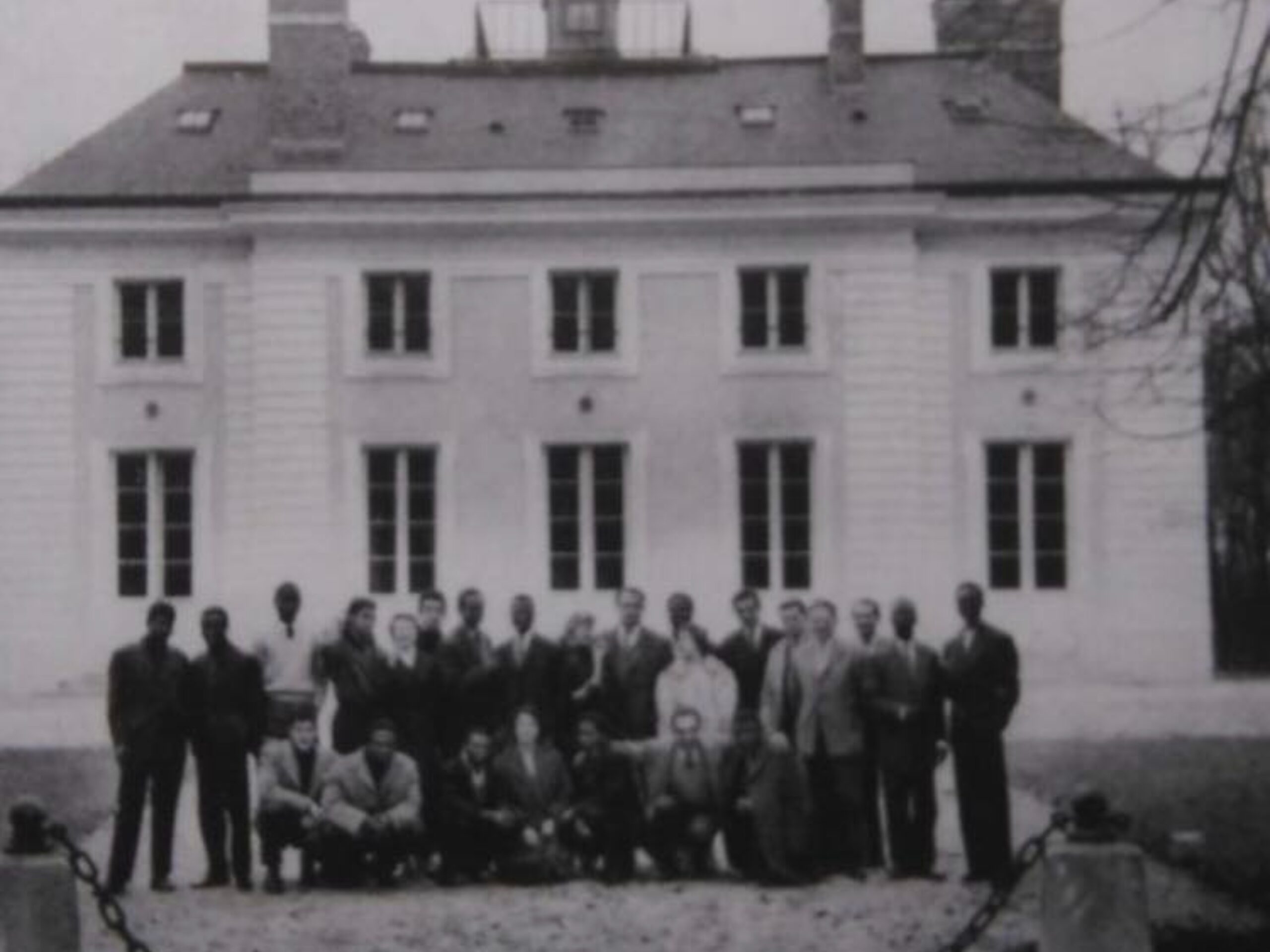
During a visit to France, President Tombalbaye made a crucial stop at the Pavillon de La Muette, nestled within the Saint-Germain forest in Maisons-Laffite, home to the Société de Radiovision d’Outre Mer (SORAFOM).
“I need a skilled journalist to establish Radio Tchad,” the President declared.
There, he encountered Pierre Shaefflert, the renowned sound engineer credited with revolutionizing radio music. Without hesitation, Shaefflert recommended a “tall, distinguished black man from Kamerun” named Pierre Mabè Gwet. Mabè Gwet had honed his skills at the Studio-École, completing a program presenter internship from 1956 to 1957 and advanced training between 1960 and 1961. By then, he had become a respected executive within French cooperation initiatives.
It was Mabè Gwet who oversaw the relocation of the antiquated France-Libre radio outpost from Fort-Lamy to its current N’Djamena location. He also took on the vital task of training Tchad’s inaugural generation of journalists. A true visionary, he ignited a passion for broadcasting in many young individuals, including Garambaye Adoum Saleh and the vibrant Saleh Kedzabo, who would later become a prominent writer for the magazine Jeune Afrique.
President Tombalbaye, captivated by Mabè Gwet’s eloquent writing, his profound general knowledge — particularly his grasp of the pan-African theodicy of Trinidadian thinkers — and his broad understanding of geopolitical strategic issues gained at Science-Pô in Paris, appointed him as his personal advisor.
As President Tombalbaye’s trusted aide, Mabè Gwet was responsible for drafting all of the President’s speeches, especially during Tombalbaye’s significant shift towards pan-Africanism and his advocacy for African authenticity.
When the coup d’état occurred, leading to the overthrow of President Tombalbaye, Pierre Mabè Gwet swiftly crossed the border to Kousseri, thereby escaping the assassins who tragically ended President Tombalbaye’s life.
Pierre Mabè Gwet belongs to an exceptional generation of pioneers whose immense contributions to disseminating ideas across Africa will forever be remembered. This includes figures like Georges Rawiri of Gabon, who later became his country’s Vice President and was instrumental in establishing Radio Garoua, and Pierre Mouasso Priso, who founded Radio Cameroun.
In Côte d’Ivoire, following in the footsteps of Thiam, Sylvain Zogbo – father of the prominent Ivorian audiovisual personality Yves Zogbo Junior and peer to Consty Eka – played a central role in founding the national Radiotelevision. In Bangui, Toufic, an Afro-Lebanese individual from Togo, laid the initial groundwork for broadcasting.
Related Posts