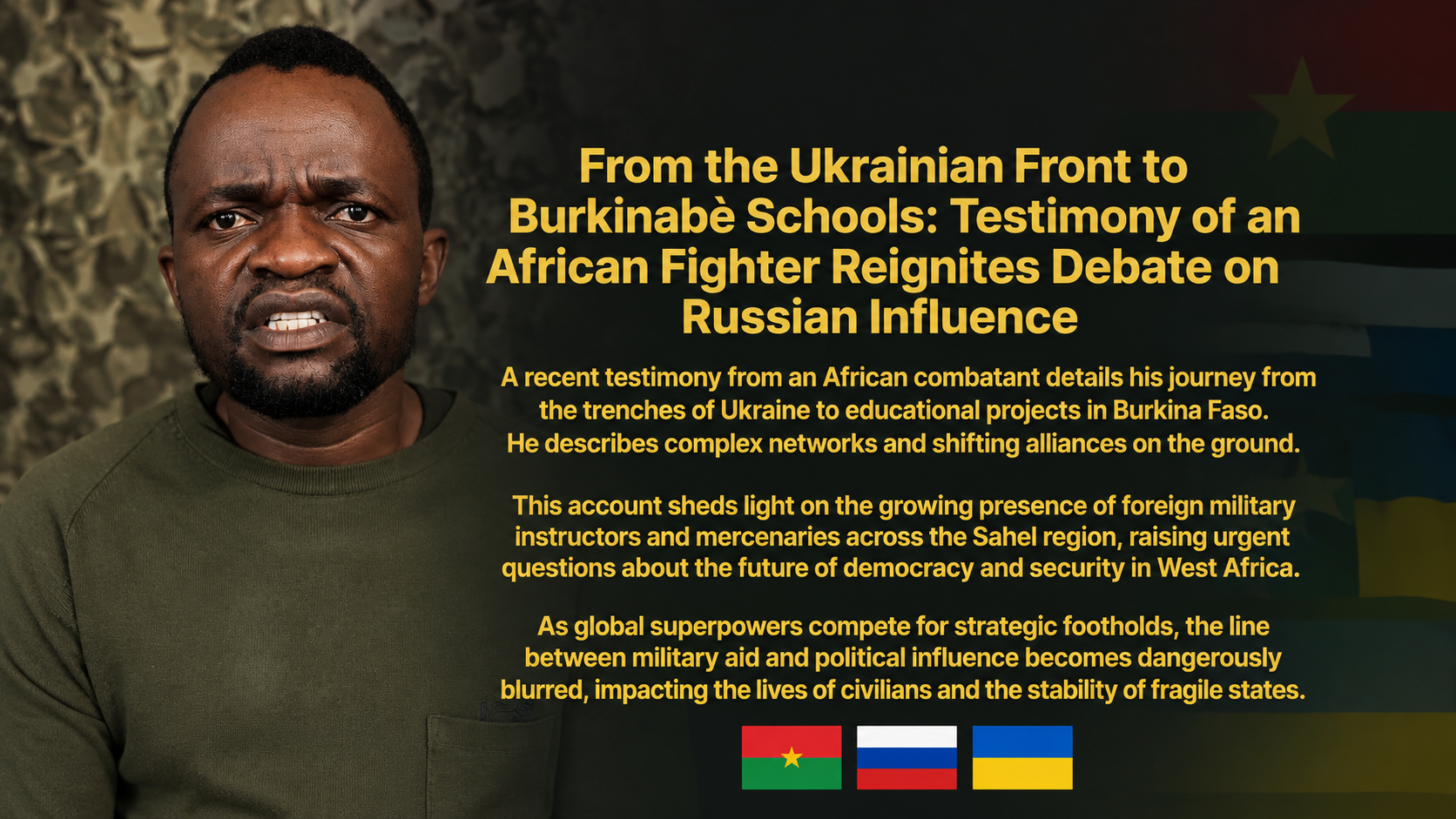
The recent detention of Tatenda Tarwire, a Zimbabwean national who fought alongside Russian forces in Ukraine, has reignited concerns about the recruitment of foreign combatants in the ongoing conflict. In widely circulated statements, Tarwire described harrowing experiences, warning others in his homeland about the deceptive promises made by certain Russian-linked recruiters. He detailed the brutal nature of combat, significant human losses, and the lack of communication regarding the fate of fallen or missing fighters, leaving families in anguish.
While Tarwire’s account is deeply personal, it intersects with a broader trend: Russia’s intensified efforts to expand its influence across Africa. Over recent years, Moscow has ramped up diplomatic, military, economic, and cultural initiatives to strengthen ties with several African nations, particularly as the war in Ukraine reshapes global dynamics.
In Burkina Faso, this trend is exemplified by the government’s decision to introduce Russian language instruction in public schools starting next academic year. Officially, the move is framed as an effort to diversify the country’s international partnerships, broaden academic opportunities for students, and foster deeper exchanges with the Russian Federation.
mixed reactions to the educational reform
The initiative, however, has sparked controversy. Critics argue that the decision reflects more than just an academic pivot—it signals a strategic alignment between Ouagadougou and Moscow that warrants open discussion. Others contend that Burkina Faso, as a sovereign nation, has every right to diversify its alliances without facing accusations of political realignment.
The Russian language itself is not the focal point of debate. Like English, Mandarin, Arabic, or Spanish, it serves as a tool for communication, access to scientific research, academic exchanges, and professional opportunities. The real contention lies in the geopolitical backdrop of this educational reform, especially as Russia remains embroiled in a large-scale war and actively pursues influence-building strategies across multiple continents.
human costs of foreign recruitment
Tarwire’s testimony also sheds light on the risks faced by African nationals lured abroad by promises of financial compensation, training, or career prospects. Reports have documented instances of foreign fighters recruited for combat roles with limited understanding of the harsh realities they would face. The human toll of such engagements is often devastating—not only for the individuals involved but also for their families left in uncertainty.
In Burkina Faso, a well-informed debate on this matter should prioritize verified data, rigorous analysis, and a balanced exchange of perspectives. Citizens are justified in questioning the precise objectives of this linguistic cooperation, the underlying agreements, the potential benefits for Burkinabè youth, and the safeguards in place to ensure the national education system remains independent.
Amid these discussions, one truth stands out: the future of Burkina Faso’s youth hinges on the quality of their education, the diversity of knowledge they acquire, and their ability to cultivate critical thinking to navigate contemporary global challenges. Educational choices must be evaluated with clarity, transparency, and a commitment to factual integrity—ensuring today’s decisions serve the nation and its future generations.