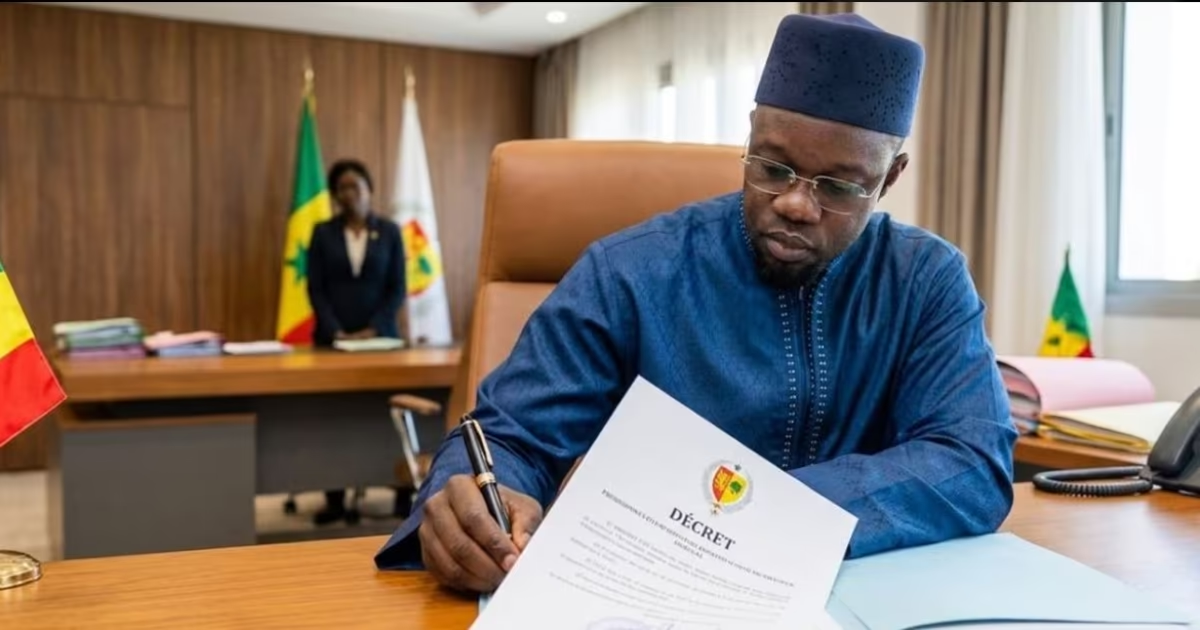
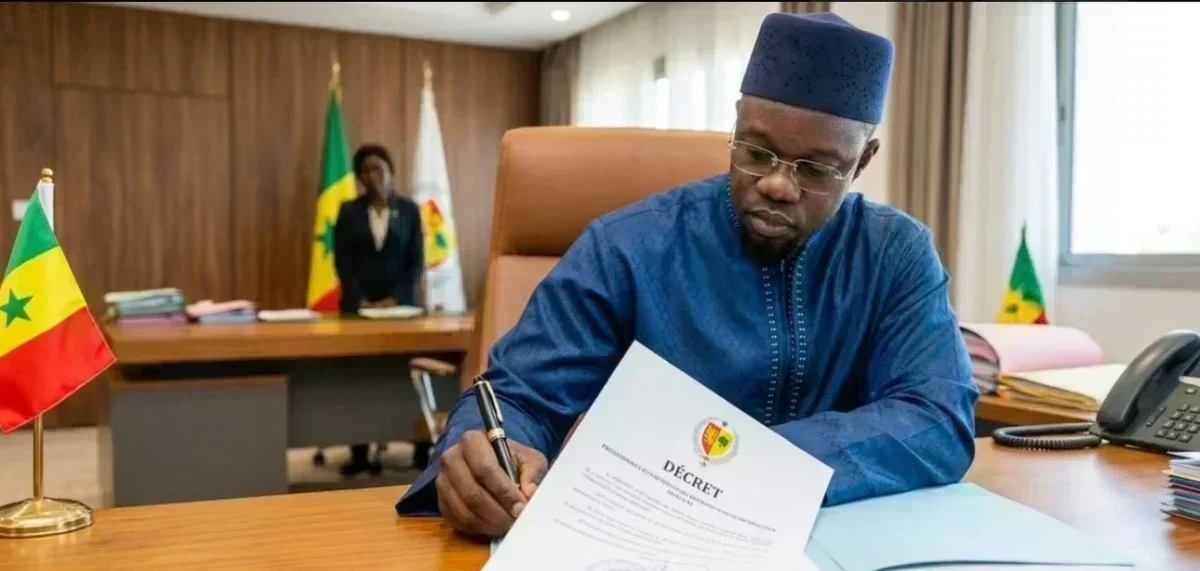
The countdown to a defining political moment in Senegal has officially begun. Starting December 2, 2026, President Bassirou Diomaye Faye gains a potent constitutional tool: the power to dissolve the National Assembly. This seismic shift arrives amid a fractured parliamentary landscape, where the president’s party holds no majority, and the former ruling party, led by Ousmane Sonko, dominates the legislature.
With the president’s authority on the line and the opposition coalition riding high, the stakes couldn’t be higher. The stage is set for a high-stakes political showdown that could redefine Senegal’s power structures for years to come.
Why December 2 matters: constitutional triggers and political realities
The timing of this political drama is no coincidence. Under Senegal’s constitution, Article 87 grants the president the right to dissolve the National Assembly only after two full years of a legislative session. The current parliament, formed after elections in November 2024, was officially seated on December 2, 2024—meaning the clock strikes midnight on December 2, 2026.
But the political landscape has undergone a dramatic transformation since then. A historic rupture between President Faye and Ousmane Sonko’s Pastef movement shattered the previous parliamentary majority. While the president’s party, Kiiraay, now controls the executive branch, the legislature remains firmly in the hands of Pastef, creating an unprecedented cohabitation scenario.
This constitutional window gives the president a powerful—but risky—chess piece. Dissolve the Assembly, and he could realign parliament with his agenda. Do nothing, and the cohabitation becomes a grinding battle of attrition, where every legislative initiative risks becoming a hostage negotiation.
What the president says and what his allies hint at
Officially, President Faye has struck a cautious tone. In recent public remarks, he emphasized that no dissolution is imminent, stating that the country is not yet at December 2. Yet behind the scenes, the push for early elections appears to be gaining momentum.
His ministers have been far less diplomatic. Commerce Minister Serigne Guèye Diop has openly accused Pastef legislators of deliberately sabotaging presidential initiatives, alleging that they systematically block key government proposals. This widening rift between statements from the presidency and aggressive rhetoric from some allies only deepens the political fog enveloping the nation.
The president’s calculus remains opaque, but the threat of dissolution is already shaping parliamentary debate. Whether used as a deterrent or a last resort, the possibility of early elections looms large over the legislative agenda.
Election timelines: how December 2 could reshape Senegal’s electoral calendar
If President Faye signs the dissolution decree, Senegal will embark on a compressed legislative campaign. According to constitutional rules, new elections must be held between 60 and 90 days after dissolution—a timeline that would place voting between late January and early March 2027.
Yet this accelerated schedule collides with another critical electoral milestone: the territorial elections scheduled for January 17, 2027. Holding two national ballots within weeks of each other risks logistical chaos and political instability. Some officials have floated the idea of merging the two elections, but legal deadlines may preclude such a solution. In either scenario, the ripple effects on local polls could be far-reaching—and civil society is already monitoring developments closely.
Stalemate scenario: the costs and consequences of inaction
Choosing not to dissolve could spare the nation an immediate electoral marathon, but it would not bring peace. Governing without a parliamentary majority in a cohabitation context would turn routine governance into a battleground. The first test is already approaching: the revised 2026 finance bill, tied to a contentious IMF agreement, was introduced to the Assembly on September 18. Pastef leader Ousmane Sonko has demanded full transparency on the IMF deal and debt management—setting the stage for a heated confrontation over the 2027 budget.
The political standoff would extend beyond debates. Each major legislative text would become a veto opportunity, with the president and prime minister trading accusations of constitutional overreach. January’s territorial elections, in this context, could serve less as a local vote and more as a referendum on the president’s legitimacy. Every issue—from public spending to economic reforms—could be weaponized in this zero-sum game.
The fiscal toll of this stalemate could be steep. The 2024 legislative elections, held on November 17 after a September 12 dissolution, cost an estimated 20 billion FCFA, with ballot printing and campaign materials alone consuming over 11 billion. The 2024 presidential election, by comparison, cost approximately 14 billion. A repeat election cycle in 2027 would add an enormous financial burden to an already stretched treasury—sparking internal debate even within the president’s own party. In Kaolack, a local Kiiraay official has publicly criticized the idea of holding territorial elections so soon, warning that public spending must prioritize social needs over electoral costs.
Kiiraay’s gamble: can President Faye reclaim control?
For President Faye, dissolving parliament represents the president’s clearest path to restoring political dominance. A decisive victory could allow Kiiraay, launched in July 2026, to consolidate control and govern with minimal opposition until the end of the mandate.
The risks, however, are monumental. Kiiraay is barely two months old and has never faced the electorate. A loss would hand Pastef an even stronger mandate, leaving the president trapped in a hostile legislature for the remainder of his term. This makes January’s territorial elections strategically vital—they may serve as a barometer, either justifying dissolution or exposing Kiiraay’s weakness.
Pastef, meanwhile, remains in a dominant position with 130 of 165 seats. In an early election, the party has little to gain in sheer seat numbers but much to lose in momentum. A strong showing after the rupture could validate the narrative that the president betrayed the 2024 agenda, positioning Ousmane Sonko as the undeniable opposition leader and de facto power broker in Senegal.
Pastef isn’t waiting for December. While the president launched Kiiraay, Sonko’s legislative bloc has been crisscrossing the country to expand party membership and rally grassroots support. Both camps are clearly preparing for an electoral confrontation—whether the trigger is pulled in January or later in 2027.
Who gains in the event of early elections?
For the fragmented opposition, a dissolution could present a rare opportunity. The collapse of the former majority coalition has created an unprecedented power vacuum. An early vote could allow smaller parties to regain parliamentary representation and influence—provided they navigate the complex web of alliances with both major blocs.
The challenge, however, is immense. Both the president and Sonko claim to embody the legacy of the 2024 rupture. Opposition groups must decide whether to align with Kiiraay, defect to the Pastef camp, or pursue a third-way strategy. Tactical positioning could determine which parties survive—and which fade into irrelevance.
December 2 is not a day of decision. It is the moment when all options crystallize. The president can dissolve, he can wait for January’s verdict, or he can use the threat as leverage to extract concessions from an uncooperative parliament. What remains certain is that 2027 will open under the shadow of the ballot box—and the political rivalry between Bassirou Diomaye Faye and Ousmane Sonko may ultimately be resolved not in the Assembly halls, but in the voting booth.
Comments are closed, but trackbacks and pingbacks are open.