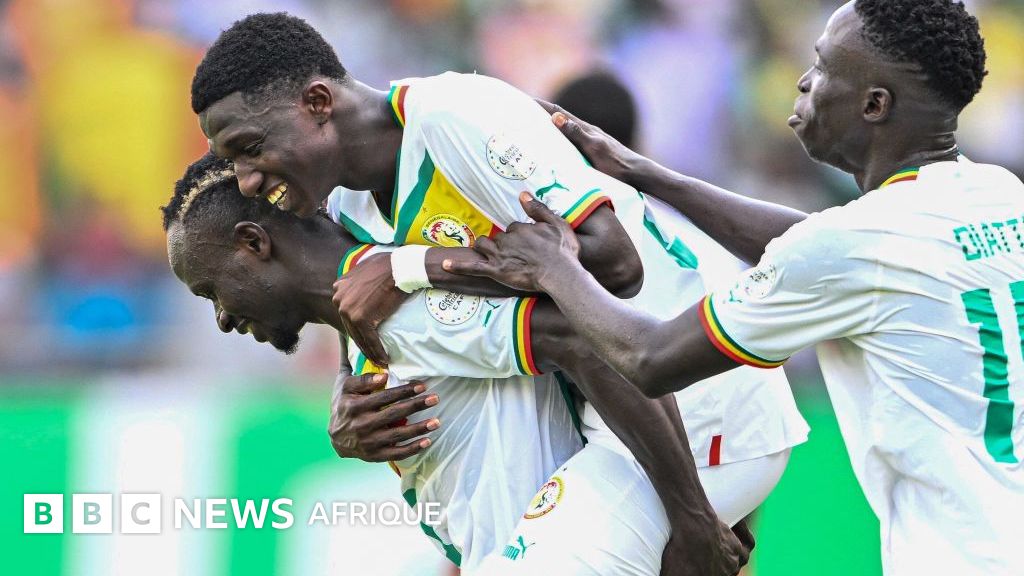
Under the scorching Dakar sun on a Wednesday afternoon, the synthetic pitch at CICES buzzes with an energy unlike any other. Away from the hustle of the VDN highway, Be Sport Academy buzzes like a hive, alive with ambition and purpose.
Souleymane, 15, meticulously ties his laces. Around him, his teammates pull on jerseys, adjust shin guards, and exchange focused glances. Not a word is wasted—today’s session is already ten minutes behind schedule. When the ball finally rolls onto the field, the young players’ faces relax, almost glowing. Passes and sprints flow seamlessly, their movements synchronized under the watchful eyes of their coaches.
For these teenagers, every training session is a showcase. The relentless pursuit of excellence is no accident—it’s the standard that has propelled a bold new model in Senegalese football to the forefront of African sport.
Over the past two decades, football academies have evolved from rare exceptions to pillars of the nation’s sports ecosystem. They don’t just train players—they shape futures. Their strength lies in a rare balance: blending elite athletic development with education and social integration, creating a sustainable pathway for young talent.
why football academies are the hidden engine of Senegal’s talent revolution
Why have these academies become the beating heart of Senegal’s football renaissance? The answer lies in a trifecta of innovation: professional coaching, cutting-edge infrastructure, and strategic partnerships with top European clubs. These centers transcend traditional training grounds; they are engines of social mobility, offering young people a credible path to success both on and off the pitch.
The transformation is striking. Senegal, once seen as a raw reservoir of talent, now stands as a structured model of football development in Africa. Its academies have become a thriving industry—sporting, social, and economic—with a clear mission: to identify, nurture, and export world-class footballers.
diambars and generation foot: the pioneers that redefined a nation’s football future
Founded in 2003 in Saly, the Institut Diambars blazed a trail. Its first major success story, Idrissa Gana Gueye, set the stage for a generation of players who would go on to shine in Europe. Meanwhile, Génération Foot rose to become a continental benchmark, thanks to a landmark partnership with FC Metz that created a direct pipeline to European football.
These success stories are not isolated. They form a growing list of names synonymous with excellence: Sadio Mané, Ismaïla Sarr, Habib Diallo, Pape Matar Sarr, and Lamine Camara—all graduates of Génération Foot. Each embodies a dual victory: sporting success and social impact.
These journeys have a multiplier effect. They strengthen the appeal of academies among youth and families, who increasingly view them as a viable social elevator. No longer a gamble, football training in Senegal is now a strategic investment in a child’s future.
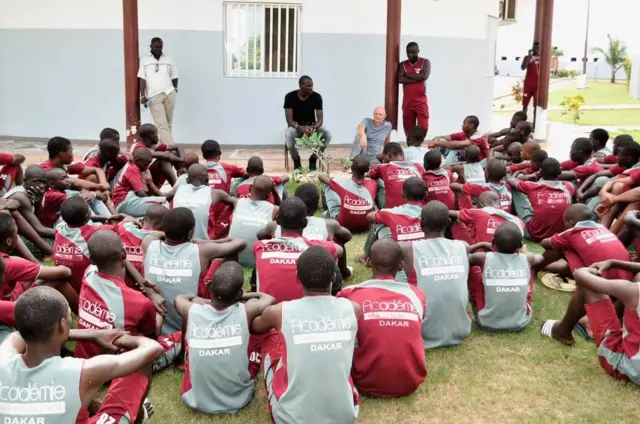
Credit: GENERATION FOOT
from raw talent to structured excellence: a generational shift
Long before the rise of academies, Senegal produced exceptional footballers—but without the right structure, their potential often went untapped. Players from remote regions relied on local tournaments, a system as unpredictable as it was inefficient.
In the 1990s, the few Senegalese talents who reached international competitions did so largely on their own merit. The country’s first appearances in African youth tournaments were marked by isolated successes, not sustained development.
Sports journalist Adama Ndione puts it plainly: “Talent has always existed in Senegal, but it wasn’t being harnessed. It was like oil or gold buried in the ground—valuable, but untapped.”
That changed in the early 2000s. Pioneering academies like Génération Foot and Diambars introduced a new culture of discipline, detail, and early specialization. They became the backbone of Senegal’s football ecosystem, producing not just players, but complete athletes ready for global competition.
more than football: academies as engines of social transformation
Today’s academies do more than teach dribbling and passing. They combine rigorous athletic training with formal education, medical monitoring, and social support. The goal is clear: to develop well-rounded individuals capable of excelling in professional football—and beyond.
Be Sport Academy, founded in 2018, is a prime example. It caters to children aged 4 to 17, offering a daily rhythm of training, classes, health check-ups, and mentorship. Its founders aim to produce footballers who are not only technically gifted but also adaptable, resilient, and prepared for life after sport.
This holistic approach has redefined the profile of Senegalese internationals. Gone are the days when the national team relied solely on physical power. Today’s players stand out for their tactical intelligence, versatility, and technical mastery—qualities forged in the academies’ demanding environments.
Names like Pape Gueye, Habib Diarra, Pape Matar Sarr, and Lamine Camara now define the new era of Senegalese football. They don’t just play—they orchestrate, recover, and build attacks, embodying a modern, intelligent style of play.
academies and the national team: a direct pipeline to glory
Today, over 80% of players in Senegal’s national teams come from structured academies—a radical shift from previous generations, who often emerged from street football or amateur clubs.
Adama Ndione explains: “Génération Foot began training players as early as 2002–2004. Its first graduates quickly made their mark on the national team, with players like Babacar Guèye and Dino Djiba. Diambars, launched around the same time, started exporting talent between 2009 and 2011—Idrissa Gana Gueye, Pape Alioune Ndiaye, Kara Mbodj, and others all rose through the ranks before joining the senior squad.”
This pipeline has been instrumental in Senegal’s rise from a team of irregular performances to a consistent force on the continent and the world. It culminated in the historic triumph at the 2021 Africa Cup of Nations and solid performances in recent FIFA World Cup editions.
Abdou Gueye Luque, Regional Technical Director in Dakar and President of the Dakar Football Schools Coordination, attributes much of Senegal’s success to this ecosystem: “Academies like Aldo Gentina, Diambars, and Génération Foot have made Senegal a global destination for talent scouting. Their graduates’ successes at the highest level have put the country on the map.”
an ecosystem with global ambitions
The Senegalese model is built on three pillars: early detection, expert coaching, and strategic partnerships. Clubs like Génération Foot have signed agreements with European teams such as FC Metz, creating a clear path for young players to transition to professional football abroad.
These deals are not just sporting—they’re economic. The transfer fees generated from exporting talent inject millions into the local economy, while giving young players international exposure from an early age.
But the impact goes beyond the balance sheet. Academies are reshaping social trajectories. For thousands of families, enrolling a child in an academy is no longer a dream—it’s a credible path to a better future. Football has become a legitimate career option, offering stability, education, and prestige.
El Hadji Diouf, former international and World Cup participant, has witnessed this transformation firsthand: “Today, every city in Senegal has an academy. They start with children under 10 and organize annual tournaments. We’re aiming for the same level of organization as England or France.”
looking ahead: can this momentum last?
The question now is sustainability. For Adama Ndione, the path is clear: “If Senegal continues to invest in coach education, infrastructure, and youth development, it won’t just remain a leader in Africa—it can aim for world-class performances.”
The country now boasts a deep and stable talent pool. Its academies are not just producing players; they’re shaping the future of Senegalese football—on the pitch, in the economy, and in society.
In a continent brimming with untapped potential, Senegal’s model stands as a testament to what structured investment in youth can achieve. It proves that with vision, discipline, and the right ecosystem, a nation’s sporting destiny can be transformed—one academy, one dream, at a time.