Senegal political split: why Sonko and Diomaye’s alliance collapsed
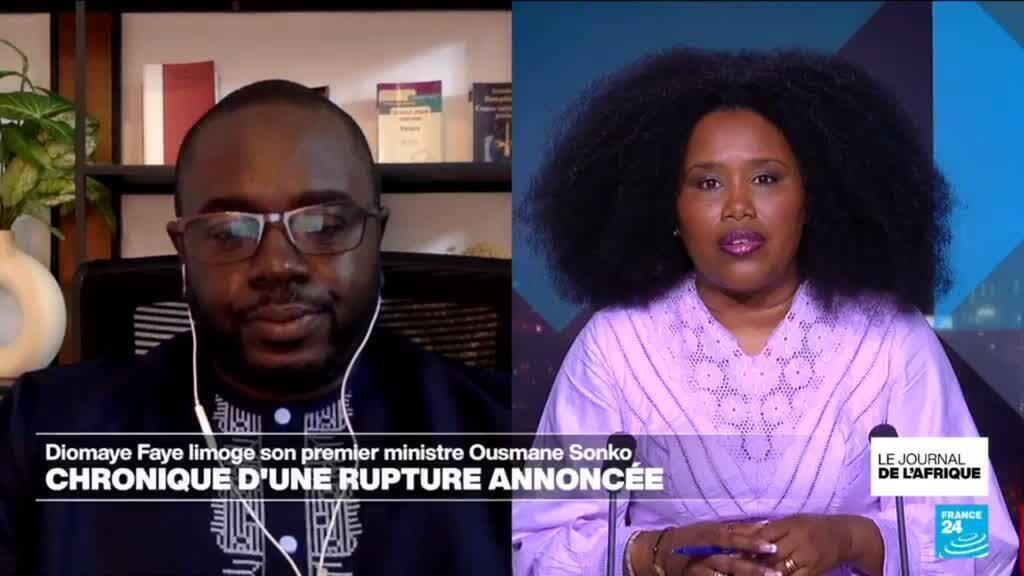
In Senegal, President Bassirou Diomaye Faye dismissed Prime Minister Ousmane Sonko on Friday, May 22, finalizing a political rift that had been building for months. Internal rivalries, governance tensions, disagreements over economic reforms, and power struggles: the duo that once symbolized a bold break from the Macky Sall era has now fallen apart. In this in-depth analysis, political expert Fatimata Wane sits down with Babacar Ndiaye, director of research at the WATHI think tank, to dissect the roots and implications of this major political crisis at the highest levels of Senegal’s government.
The seeds of discord: clashing visions for Senegal’s future
Long before the public split, tensions simmered beneath the surface between Sonko and Faye. While both leaders positioned themselves as reformists, their approaches to governance diverged sharply. Sonko, a former tax inspector turned opposition firebrand, championed radical economic restructuring and a tough stance on corruption. Faye, meanwhile, advocated for a more gradual transition, emphasizing stability and national reconciliation.
These fundamental differences were further exacerbated by personal ambitions and competing political bases. Sonko’s populist rhetoric resonated strongly with urban youth and disillusioned voters, while Faye cultivated support among traditional elites and rural communities. As each leader sought to consolidate power, the alliance grew increasingly fragile.
Economic reform disputes: a battle over priorities
The clash over economic policy became a defining battleground. Sonko pushed for immediate, sweeping changes, including currency devaluation, debt restructuring, and aggressive anti-corruption measures. Faye, however, favored a phased approach, warning that abrupt reforms could destabilize the economy and trigger social unrest. His caution stemmed from fears of repeating past crises, where rapid liberalization had led to public backlash.
Public statements from both camps revealed growing frustration. Sonko accused Faye of backtracking on promises, while Faye countered that Sonko’s proposals risked undermining investor confidence. The deadlock over the 2026 budget proposal became the final straw, with Sonko openly criticizing the government’s spending plan as “too timid” to address Senegal’s pressing challenges.
Power dynamics: who controls the agenda?
The power struggle extended beyond policy—it was a battle for control of Senegal’s political narrative. Sonko, known for his confrontational style, frequently clashed with Faye’s more diplomatic approach. Their disagreements played out in the media, with Sonko accusing Faye of sidelining reform-minded officials, while Faye accused Sonko of undermining cabinet unity.
Behind the scenes, party insiders reported behind-the-scenes maneuvering as both sides jockeyed for influence. Sonko’s camp allegedly pushed for a more aggressive anti-establishment stance, while Faye’s allies sought to moderate the government’s tone to avoid alienating key stakeholders. The tension culminated in a cabinet reshuffle in early May, where several of Sonko’s allies were removed from strategic positions—seen by many as a preemptive move by Faye to assert authority.
The final rupture: a dismissal that reshapes Senegal’s political landscape
The breaking point came when Faye made the decision to fire Sonko following a series of high-level disputes. Officials close to the presidency described the dismissal as a necessary step to restore order, while Sonko’s supporters condemned it as a betrayal of the democratic mandate. The move sent shockwaves through Senegal’s political scene, raising questions about the government’s stability and the future of its reform agenda.
Analysts warn that the fallout could have long-term consequences. With Sonko now positioning himself as the “true reformer”, he may galvanize a new opposition movement, further polarizing the electorate. Meanwhile, Faye faces the challenge of rebuilding credibility while navigating a fractured ruling coalition. The crisis has also raised concerns about Senegal’s investor confidence and regional stability in West Africa.