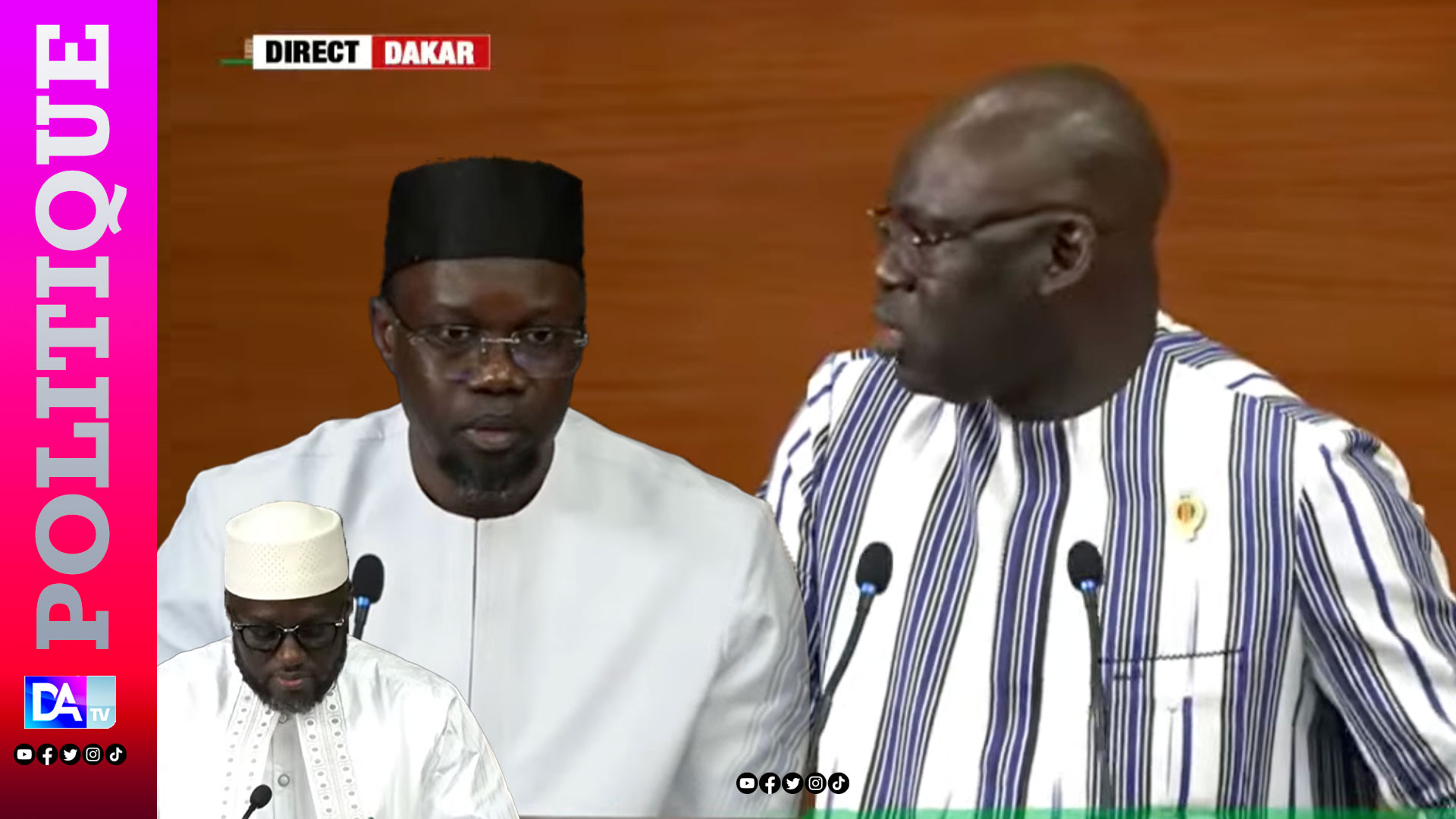
In a decisive moment captured within the walls of the National Assembly, Deputy Mbaye Dione delivered a message that transcended routine parliamentary debates. His address, initially focused on pressing economic concerns—including IMF agreements, national debt, and local government endowments—culminated in a powerful statement about Senegal’s political climate.
As the session drew to a close, Dione directed his remarks to the Speaker of the Assembly, requesting that a formal message be conveyed to Ousmane Sonko. The tone was deliberate, reflecting what he described as an unusually tense political environment. The core of his statement was unmistakable: “We are not his enemies. We are his opponents.”
Defining the boundaries of political opposition
Dione’s choice of words was not merely rhetorical. He sought to draw a clear distinction between opposition to policies and personal animosity. For the deputy, voting against a government proposal or criticizing a majority decision does not equate to betrayal of the nation or hostility toward its leaders. Instead, he framed opposition as an essential pillar of democratic governance—one that must operate within the bounds of republican values.
The deputy emphasized that Senegal’s opposition does not operate from a place of obstruction, but from a commitment to constructive scrutiny. It supports initiatives it deems beneficial to the country while firmly resisting those it believes undermine the public interest.
Echoes of Sonko’s own political journey
Dione did not shy away from confronting the paradox at the heart of the current political dynamic. He reminded the chamber of Ousmane Sonko’s own history as a prominent opposition figure. Sonko, who once wielded parliamentary platforms to challenge authority, now finds himself at the receiving end of similar scrutiny.
According to Dione, consistency in democratic principles demands that those who once opposed government policies must now accept the right of others to do the same. He argued that political contradiction is not a flaw, but a feature of healthy governance. The challenge, he suggested, lies in recognizing that opposition is not opposition to the nation—it is opposition to specific actions or policies.
Preserving the Assembly’s dignity and purpose
The deputy also used his speech to underscore the sacred role of the National Assembly. He cautioned against reducing the institution to a stage for personal vendettas or political score-settling. To Dione, the Parliament is not a battleground for factional clashes, but a forum for debate, oversight, and national progress.
His appeal was not just to Sonko, but to all political actors: to uphold the dignity of the Assembly and to treat adversaries not as enemies, but as partners in a shared democratic project. The message was clear—the institution must serve the people, not become a spectacle of confrontation.
A call for responsible and courageous opposition
Dione concluded by reaffirming the opposition’s commitment to republican responsibility. He insisted that opposition members are not obstructionists by default, but vigilant guardians of the public good. Their role, he said, is to support sound decisions while firmly rejecting those they deem harmful to Senegal’s interests.
In his closing remarks, he declared, “We will act as responsible republicans and courageous opponents.” This statement encapsulated a vision of opposition that is both principled and proactive—a force that engages constructively, critiques honestly, and never loses sight of the national interest.
Beyond the chamber, Dione’s words carried a broader significance. They served as a plea for political moderation and mutual respect between power and opposition. The underlying principle was simple: democracy thrives when governance acknowledges the legitimacy of dissent, and opposition understands that its mission is to strengthen, not sabotage, the nation.
By framing the debate not as a clash of enemies, but as a dialogue between adversaries, Dione invited all political actors to recommit to the values that sustain Senegal’s democratic experiment. His message was not one of confrontation, but of clarity—a reminder that in a republic, opposition is not the enemy of progress; it is its necessary companion.
Comments are closed, but trackbacks and pingbacks are open.