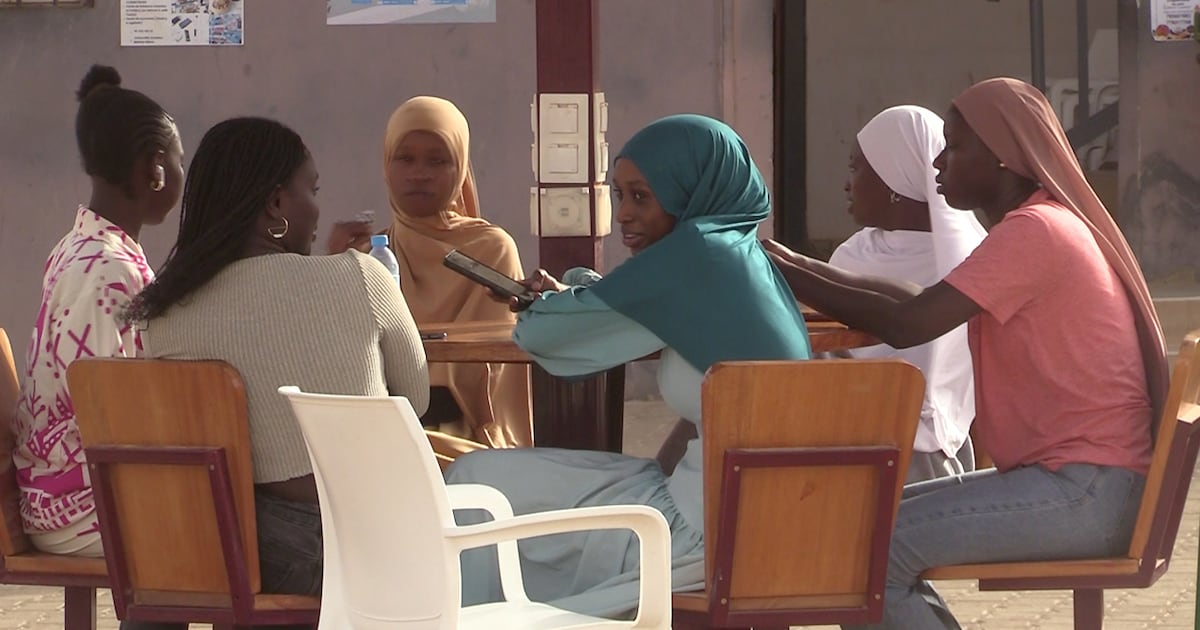
Across Sénégal, university corridors are buzzing with a new wave of politically minded students who refuse to draw a line between campus life and civic participation. For many, the lecture hall and the political arena are not separate worlds but complementary spaces where knowledge meets action.
The belief that academic pursuits and political engagement can coexist is gaining traction among young scholars. Rather than viewing activism as a distraction from studies, these students see it as an extension of their intellectual growth—a way to bridge theory and real-world impact.
From textbooks to political platforms
For Adama Lam, a law student at one of Dakar‘s universities, integrating a political movement during his studies is about more than just ambition; it’s about preparation. “My degree gives me the knowledge to understand governance, but becoming politically active sharpens my perspective. The university teaches you to think critically, while politics teaches you to act decisively. Together, they form a powerful combination.”
This perspective is shared by peers who argue that early exposure to political processes can refine leadership skills long before graduation. By engaging with multiple parties and ideologies, they aim to build a nuanced understanding of the challenges facing their country.
Balancing roles without sacrificing goals
Not everyone sees politics as a full-time pursuit. Amadou Saliou Diallo, another student, emphasizes that political involvement doesn’t have to come at the expense of other aspirations. “Being politically engaged doesn’t mean giving up on your career. I could be an accountant while still contributing to my nation’s progress. Politics is a calling, not a profession—it’s something you do for your community, not for a paycheck.”
This dual approach resonates with students who prioritize versatility. They argue that a well-rounded education includes both academic excellence and civic duty, allowing them to transition seamlessly between roles as circumstances demand.
The dual advantage of knowledge and action
Ousmane Seck highlights another layer to this debate: the synergy between academic learning and political acumen. “Beyond textbooks and exams, we need to grasp how policies take shape. Programs like ‘Jub, Jubal, Jubanti’ aren’t just slogans—they’re blueprints for governance. By participating now, we’re not just students; we’re future architects of our nation’s policies.”
For these young minds, the university is more than a place of study—it’s a training ground for tomorrow’s leaders. The question isn’t whether to engage, but how to balance both worlds effectively without losing sight of either.