Senegal’s 2029 political landscape rocked by Sonko’s playful challenge to Mané in Bambali
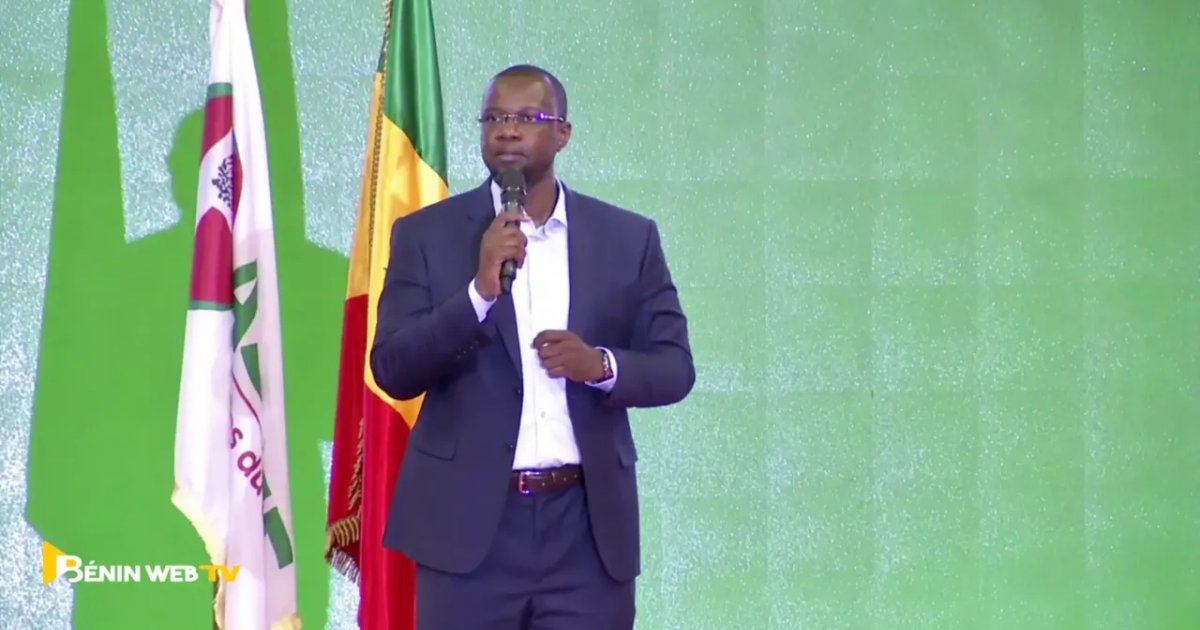
The air still hums with laughter from Bambali after Ousmane Sonko, President of Senegal’s National Assembly, turned a routine agro-industrial groundbreaking ceremony into a political statement. His lighthearted jibe at football star Sadio Mané—declaring that while football is Mané’s domain, politics belongs to him—has since sparked unexpected national debate about the future of leadership in Senegal.
The event, held last Saturday, marked the official launch of SM10 Agro, a 11.7 billion FCFA ($19 million) agricultural complex in Casamance, covering 500 hectares and designed to process 8,500 tons of mangoes annually. The plant also promises over 1,000 direct jobs initially, with potential to create up to 2,500 permanent positions. Construction is already underway, with officials hailing it as a transformative development for the region’s economy and youth employment.
From playful joke to national talking point: How one phrase changed the conversation
What began as a light-hearted remark during a public speech has rapidly morphed into a subject of intense public discussion. Sonko’s comment — “football is yours, politics is mine” — was delivered with a smile, yet it carried an unmistakable tone of challenge. While he later clarified that he was joking, the timing and context of the statement, coming from one of Senegal’s most prominent political figures, have given the remark lasting weight.
Analysts and citizens alike are now questioning whether this was merely a quip or a subtle political maneuver. The timing of the remark—nearly three years before the 2029 presidential election—suggests a strategic positioning rather than mere humor. Sonko, already a polarizing and influential figure, has once again nudged the national conversation toward 2029, this time by drawing the nation’s most beloved football icon into the arena.
Football in Senegal is more than a sport; it is a cultural symbol and a unifying force. By invoking Sadio Mané’s legacy—calling him “one of Senegal’s greatest ambassadors”—Sonko positioned himself not as an adversary of Mané’s public image, but as someone redefining the boundaries between sports and politics in Senegalese society.
SM10 Agro: A local project with regional ambitions
The $19 million SM10 Agro initiative, now officially launched in Bambali, represents a major investment in Senegal’s agricultural future. Planned to process local mango crops, the facility aims to slash post-harvest losses—currently a major challenge for small farmers in Casamance—and boost export capacity. The project is partnership-driven, supported by national agencies like APIX (Agence Nationale de Promotion des Investissements), reflecting the state’s push toward sustainable value chains.
During the ceremony, Sonko emphasized the need for local leaders and athletes like Mané to contribute beyond their fields, citing agriculture as a key pillar of national development. He even joked that he could beat Mané electorally in his own hometown—a remark met with spontaneous applause and laughter, though now widely interpreted as a veiled political signal.
The project is not only economic; it is a vote of confidence in Casamance, a region long marginalized despite its agricultural potential. By positioning Bambali as the epicenter of this agro-industrial revival, Sonko has also reinforced the symbolic importance of rural areas in the national narrative—especially as the country gears up for 2029.
What’s next? The fallout and the debate
The ripple effects of Sonko’s remarks are already visible across social media, news commentary, and public forums. While some view the exchange as harmless banter between a politician and a sports hero, others see it as a calculated move to assert political dominance ahead of what is widely anticipated as a high-stakes presidential race.
If Mané were to enter politics—a possibility Sonko himself raised by comparing him to George Weah—he would join a small but growing list of African leaders who transitioned from sports to high office. But unlike Weah, Mané has never expressed interest in public office. Sonko’s playful jab may be probing uncharted territory, testing public reaction to the blurring of sport and statecraft in Senegal.
As the 2029 timeline looms, the question uppermost in policymakers’ and citizens’ minds is this: is Sonko positioning himself as the heir to Senegal’s next chapter—or is he simply setting the stage for a grander 2029 narrative, where football and politics collide in unexpected ways?
For now, the mood remains light in Bambali, but the pulse of the nation is quickening. The line between joke and strategy, between football pitch and political stage, has blurred—and Senegal is watching.
The policy implications: Youth, jobs, and local development
The SM10 Agro project goes beyond symbolism. It is a direct response to two urgent national priorities: youth employment and agricultural modernization. With over 40% of Senegal’s population under 25, initiatives like this one are seen as vital to preventing rural exodus and reducing youth unemployment.
By placing the launch in Bambali, Sonko is signaling that development and leadership are not confined to urban centers like Dakar. He is staking a claim on the future of rural Senegal—economically, politically, and symbolically. And should his playful challenge to Mané gain traction, it may well become the defining moment that reshapes public expectations for what leaders look like—and where they come from.
Comments are closed, but trackbacks and pingbacks are open.