
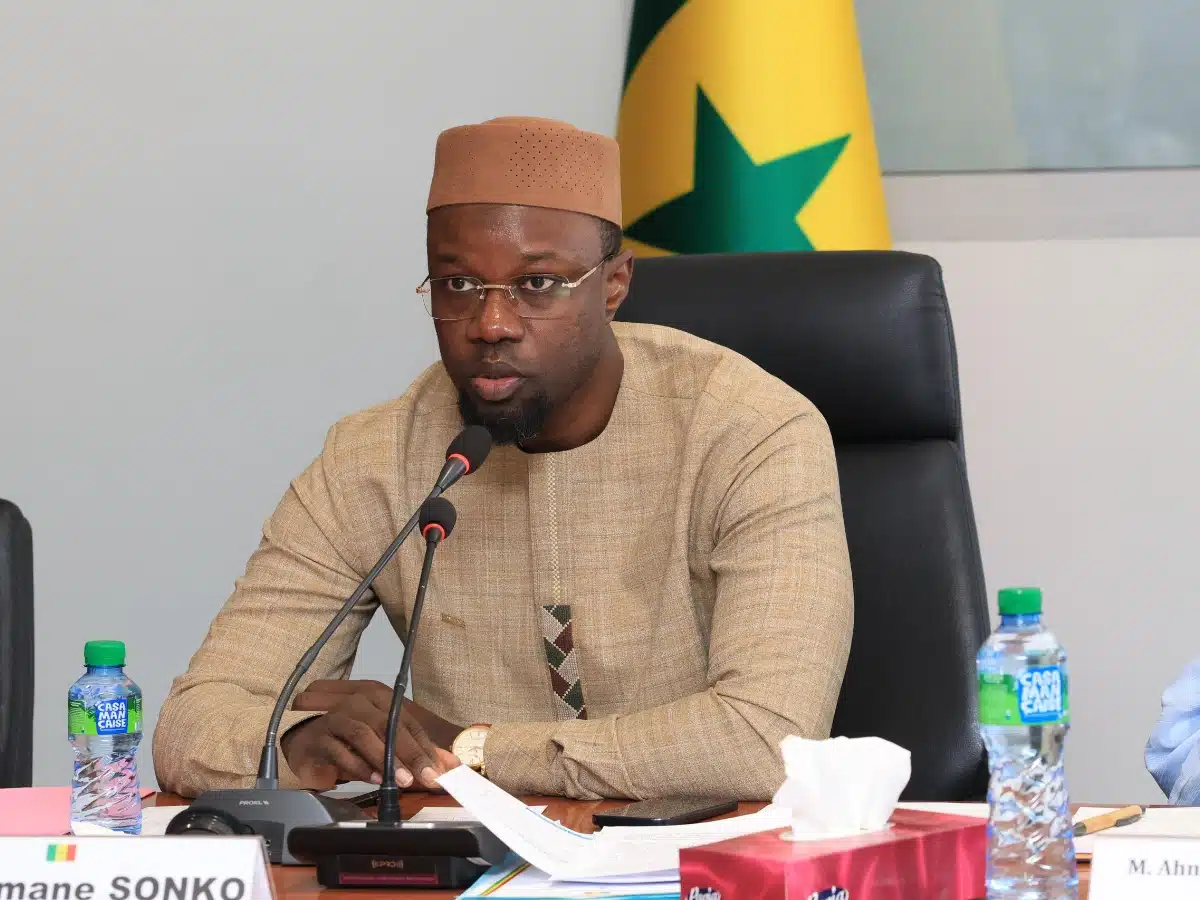
Senegal’s tougher anti-LGBTQ+ laws to be strictly enforced, says Prime Minister Ousmane Sonko
Senegal’s Prime Minister Ousmane Sonko has declared that the country will fully enforce newly strengthened legislation against homosexual acts. Speaking before National Assembly lawmakers, Sonko addressed international criticism, particularly from Western nations, regarding Senegal’s decision to increase penalties for same-sex relations.
Senegal’s Prime Minister Ousmane Sonko has reaffirmed the government’s commitment to enforcing Senegal’s newly toughened anti-homosexuality laws during a heated National Assembly session.
Addressing lawmakers on May 22, 2026, Sonko dismissed Western criticism targeting Senegal’s decision to increase penalties for same-sex acts, emphasizing the country’s sovereignty in defining its moral and social values.
“The Senegalese people are sovereign. The vast majority do not accept these practices within our borders,” Sonko declared, underscoring the government’s determination to uphold national values despite external pressure.
Under the amended legislation, same-sex relations and related offenses are now explicitly defined as “unnatural acts,” with significantly harsher penalties. The law also criminalizes advocacy and financial support for such acts, reflecting a broader crackdown on LGBTQ+ activities in the country.
Rejecting western pressure on LGBTQ+ laws
Sonko pushed back against criticism from both Western governments and some African voices, including prominent Cameroonian lawyer Alice Nkom, who have condemned Senegal’s legislative move. He framed the push for LGBTQ+ acceptance as an attempt by Western elites to impose their values globally, despite internal divisions in their own societies.
“There is a tyranny at play. With eight billion people on Earth, a small group—Western elites—who haven’t even settled debates within their own societies, yet wield global media influence to impose their views worldwide. On what grounds?” Sonko questioned, vowing no moratorium on the law’s implementation.
“This law will be enforced,” he stated firmly, dismissing any possibility of leniency.
The National Assembly passed Law No. 2026-08 on March 27, 2026, amending Article 319 of the 1965 Penal Code to broaden the scope of “unnatural acts” and increase penalties. The law now defines “unnatural acts” as any sexual act between individuals of the same gender, as well as any sexual act involving a corpse or an animal.
Violators face imprisonment ranging from five to ten years and fines between 2 million and 10 million West African CFA francs, with no exceptions for cases involving rape or pedophilia.
Be the first to comment


Comments