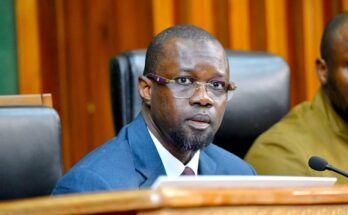
The highest echelons of Senegalese leadership have firmly drawn the line. National Assembly President El Malick Ndiaye took the opportunity during a Monday gathering in Dakar to unequivocally reject the idea of restructuring the country’s public debt. Dakar’s stance prioritizes what Ndiaye describes as a sovereign approach—leveraging internal fiscal tools rather than engaging with creditor groups. This position aligns seamlessly with the economic doctrine championed by the executive since late 2024, when revised debt figures revealed a far higher burden than previously reported.
a steadfast fiscal stance against creditor pressure
For months, the Diomaye Faye-Ousmane Sonko administration has made debt restructuring refusal a cornerstone of its economic policy. For Senegalese authorities, pursuing renegotiation would signal a technical default, undermining the country’s credibility in global financial markets. El Malick Ndiaye echoed this principle, asserting that Senegal possesses sufficient domestic tools to meet its obligations. His emphasis on the political dimension of the decision underscores that fiscal arithmetic alone does not drive this choice.
This unyielding position contrasts sharply with the subtle urgings of multilateral partners. The International Monetary Fund (IMF), whose ongoing program with Dakar remains on hold since the debt revision, has repeatedly highlighted the need for a sustainable fiscal path. Meanwhile, credit rating agencies have downgraded Senegal’s sovereign status multiple times in recent months, increasing the cost of borrowing on international markets.
sovereign management: balancing ambition and fiscal reality
El Malick Ndiaye’s vision of sovereign debt management hinges on a multi-pronged strategy already outlined by the government. Key measures include broadening the tax base, streamlining public expenditure, selectively renegotiating unbalanced contracts, and boosting revenue from hydrocarbon projects. While promising, the immediate impact of these steps remains uncertain. Oil output from the Sangomar field and gas production at Grand Tortue Ahmeyim are expected to bolster state coffers, yet they are unlikely to single-handedly reverse the debt trajectory.
Following reassessment by the Court of Auditors, the debt-to-GDP ratio now exceeds thresholds set by the West African Economic and Monetary Union (WAEMU). Within this challenging landscape, Dakar’s strategy aims to free up budgetary space without severing ties with traditional lenders. The challenge is compounded by rising debt servicing costs, which increasingly crowd out public investment in social sectors and infrastructure.
a strategic message to investors, citizens, and regional partners
El Malick Ndiaye’s address serves multiple audiences simultaneously. To international investors, it signals that Senegal remains a reliable borrower, committed to fulfilling obligations without formal default mechanisms. To domestic audiences, it reaffirms the campaign promise of breaking free from traditional financial dependencies. For regional partners, it reinforces a narrative of economic autonomy, a theme gaining prominence across West Africa.
Yet the success of this strategy hinges on the government’s ability to deliver tangible results in revenue mobilization and expenditure control in upcoming budget laws. While a conventional IMF agreement remains off the table for now, financial markets are closely watching for any signs of a technical compromise that could restore access to concessional funding. Several African economists suggest such an arrangement, distinct from formal restructuring, may ultimately become necessary.
For El Malick Ndiaye, the stakes transcend mere public finance—they represent a test of an economic governance model rooted in the sovereignist discourse that defined the Pastef’s rise to power. His remarks were framed not as a short-term reaction, but as a long-term commitment to an alternative fiscal path.