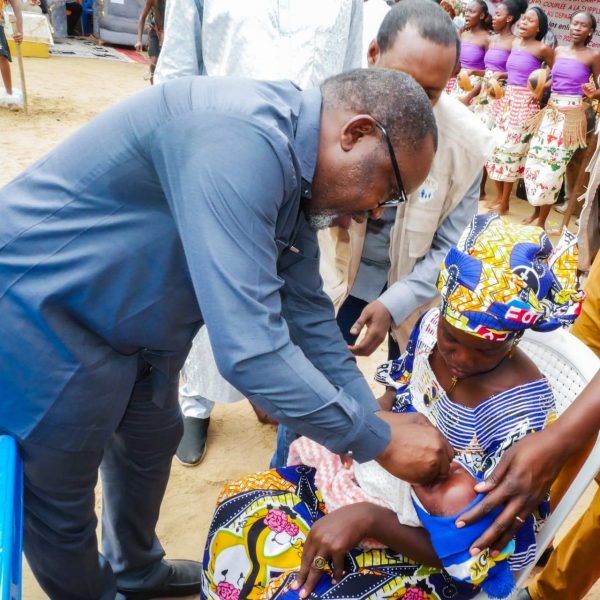
On Thursday, the Minister of Public Health and Prevention, Dr. Abdelmadjid Abderahim, inaugurated the polio vaccination campaign at the Atrone health center in N’Djamena’s 7th arrondissement. Running from June 5 to 7, 2026, the initiative also includes vitamin A supplementation and albendazole deworming for children across the country.
Unified efforts to safeguard children’s health
The campaign’s launch was attended by key figures including Amina Kodjienna, the government delegate for N’Djamena Province, who emphasized its role in complementing existing child protection measures. She urged household heads to ensure their children receive the vaccines, highlighting the importance of community involvement.
The representative from Rotary International reiterated the organization’s long-standing commitment to eradicating polio. They called on parents to support health workers in intensifying efforts against the disease, stressing that every vaccination is a critical step toward protecting future generations.
Luciano Calestini, UNICEF’s representative in Chad, described polio as a devastating disease requiring a robust response. He commended the dedication of all stakeholders and reassured that partners remain steadfast in supporting Chad’s children.
Comprehensive health intervention targets over 6 million children
Dr. Abdelmadjid Abderahim outlined the campaign’s scope: 6,418,757 children aged 0 to 59 months will receive the polio vaccine, while 4.6 million aged 6 to 59 months will benefit from vitamin A supplementation. Additionally, 4.2 million children aged 9 to 59 months will undergo deworming treatment. These interventions span all 23 provinces of Chad.
The minister underscored that these numbers represent real children and families, emphasizing that each vaccinated child is a victory against preventable diseases. He noted that vitamin A supplementation and deworming are essential for ensuring healthy growth, physical development, and intellectual progress.
To maximize impact, the goal is to vaccinate at least 95% of children in every health district, building on the success of the previous campaign in May. Dr. Abdelmadjid Abderahim praised the hard work of field teams, supervisors, local authorities, and communities, calling the campaign a collective responsibility.
A shared commitment to ending polio variants
Despite Chad’s declaration as polio-free in 2016 after no wild poliovirus cases since 2012, the threat of vaccine-derived poliovirus variants persists. The minister stressed the need for ongoing vigilance and collaboration to eliminate this risk entirely.
He expressed deep gratitude on behalf of the Chadian government to technical and financial partners, including the World Health Organization (WHO), UNICEF, Gavi, Rotary International, and Nutrition International. Special thanks were also extended to health agents, supervisors, vaccinators, social mobilizers, volunteers, and community actors for their tireless contributions.
The campaign’s success hinges on unified action, with health authorities reminding the public that child health is a shared responsibility—one that involves families, communities, local leaders, partners, and every citizen.