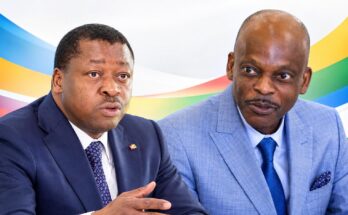
Within Senegal’s political landscape, the relationship between President Bassirou Diomaye Faye and Prime Minister Ousmane Sonko has become a focal point for opposition criticism. Abdou Mbow, a prominent member of the Takku Wallu parliamentary group and a key figure in the former ruling party Alliance pour la République (APR), has publicly framed the dynamic as a political tug-of-war coupled with an institutional crisis. His assessment underscores the growing unease over conflicting signals emanating from the executive branch in recent weeks.
Mounting friction within the executive duo
Elected together on a shared reform agenda in March 2024, Faye and Sonko were once hailed as a harmonious leadership duo by the Pastef party. However, the once-smooth division of responsibilities between the presidency and the prime minister’s office has increasingly shown signs of strain. Disagreements have surfaced over the pace of reforms, the handling of judicial cases inherited from the previous administration, and the government’s public communication strategy.
According to Abdou Mbow, these discrepancies are no longer mere background noise. He interprets them as evidence of a subtle power struggle between two competing centers of influence, each vying to dictate the country’s direction. The crux of the issue lies in the perceived rivalry between Sonko, the unchallenged leader of Pastef and architect of the party’s victory in the November 2024 legislative elections, and Faye, whose constitutional powers as head of state grant him ultimate executive authority.
Opposition seeks to amplify divisions
The APR, once led by former President Macky Sall, is seizing on these tensions to regain political relevance. Following its defeat in both the presidential and snap legislative elections, the party is reframing itself as a guardian of institutional stability. The Takku Wallu group, the largest opposition bloc in the National Assembly, has intensified its rhetoric, warning that internal discord within the ruling coalition risks paralyzing state institutions.
By framing the situation as an institutional crisis, Abdou Mbow shifts the narrative from partisan politics to national governance concerns. This tactic raises questions about the coherence of public decision-making at a time when critical initiatives—such as renegotiating mining and oil contracts, restoring fiscal health, and implementing the Senegal 2050 Agenda—demand alignment between the presidency and the prime minister’s office.
Economic challenges intensify pressure on leadership unity
The economic backdrop amplifies the stakes of any discord at the top. Recent audits commissioned by the new administration have uncovered a public debt figure far exceeding prior official estimates, prompting tense negotiations with the International Monetary Fund (IMF). Addressing this debt burden, alongside potential revisions to the hydrocarbon fiscal framework, requires a unified executive voice.
Yet, subtle divergences in approach have emerged. Ousmane Sonko’s occasionally confrontational tone toward economic actors, media outlets, and judicial figures contrasts with Bassirou Diomaye Faye’s more measured institutional posture. Observers note that this previously complementary division of roles is now being politicized by the opposition as a sign of executive fragility.
Despite the heightened scrutiny, neither the presidency nor the prime minister’s office has acknowledged any public rift. The government continues to project an image of unity during cabinet meetings and high-profile events. Abdou Mbow’s statements thus reflect a battle for narrative dominance: while the APR seeks to paint the executive as weakened, Pastef maintains that the collaboration between Faye and Sonko remains a strength, built on complementary strengths.
The stakes extend beyond domestic politics. The ability of this leadership duo to present a cohesive front will directly impact Dakar’s credibility with international partners and financial backers. As negotiations for new funding frameworks progress and hydrocarbon revenues from fields like GTA and Sangomar come online, the cohesion of the executive branch will be critical.
Related insights
- Moroni’s transport strike cripples economy — industrial action grinds economic activity to a halt
- Senegal’s ministers face scrutiny over undeclared assets — transparency concerns resurface in public discourse
- Senegal approves 45 billion FCFA defense contract — judicial intervention raises questions over procurement processes