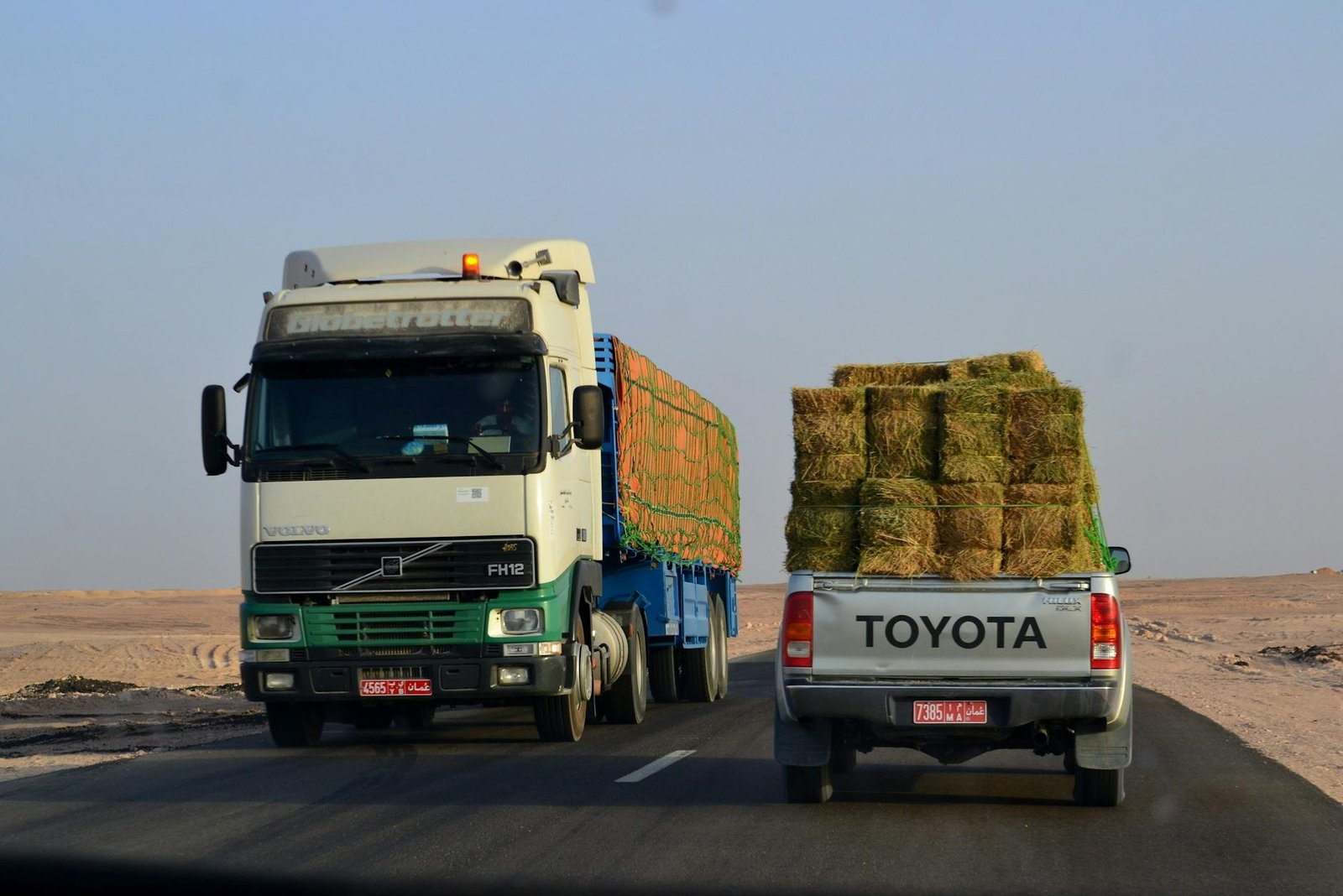
The Chad government is reviving its strategy to enhance regional transit corridors connecting N’Djamena to Douala and Bangui. A comprehensive logistics modernization program is underway to streamline commercial exchanges between Cameroon, Chad, and the Central African Republic (CAR), all heavily reliant on the Port of Douala. The initiative addresses critical needs in economic competitiveness, food security, and deeper integration within the Economic and Monetary Community of Central Africa (CEMAC).
Vital trade lifelines for landlocked economies
For both Chad and the Central African Republic, the Cameroon corridor serves as the backbone of their logistics networks. Historically, nearly 90% of Chad’s imports pass through Douala, the subregion’s primary deep-water port. The 1,800-kilometer Douala-N’Djamena route underpins most of the country’s foreign trade. Any disruption—whether due to poor road conditions, bureaucratic hurdles, or security threats—immediately triggers price hikes in N’Djamena’s markets.
The Douala-Bangui corridor faces similar challenges, compounded by a decade of instability in northeast CAR. Economic operators report delays of several weeks on certain segments, far exceeding the theoretical transit time of around ten days. These delays erode the competitiveness of goods and deter potential investors. Despite repeated funding from institutions like the World Bank and the Africa Development Bank (AfDB) for key sections, systemic issues persist.
N’Djamena’s economic diplomacy push
By relaunching this project, Chad is signaling a renewed political commitment. The effort aligns with a broader economic diplomacy strategy under President Mahamat Idriss Déby Itno, aimed at strengthening Chad’s regional influence. N’Djamena seeks to gain leverage in negotiations with Yaoundé over transit fluidity, port tariffs, and convoy security. Bilateral consultations have already begun to align customs procedures, minimize checkpoints, and deploy electronic cargo tracking systems.
Bangui, equally dependent on the Port of Douala, views this initiative favorably. The two capitals are exploring enhanced trilateral coordination with Cameroon to pool investments and present a unified stance to technical and financial partners. However, turning political commitments into tangible progress faces significant budgetary constraints, as all three nations grapple with limited fiscal flexibility.
Key hurdles to cross for meaningful integration
Beyond political will, corridor modernization demands structural reforms. Bureaucratic roadblocks remain a persistent issue, with redundant checkpoints, informal fees, and border delays inflating transport costs and fueling corruption. The long-awaited Kousséri-N’Djamena joint border post, repeatedly discussed, is yet to become fully operational.
Security risks further complicate logistics. The Lake Chad region remains vulnerable to Boko Haram-affiliated groups, while northern CAR continues to suffer from instability linked to non-state armed factions. Without durable stabilization, logistical promises will remain fragile. Additionally, competition from Nigeria’s Port Harcourt and, prospectively, Cameroon’s deep-water port in Kribi, could reshape regional transit dynamics. Yaoundé is banking on Kribi to absorb a share of CAR and Chad’s trade flows, potentially opening new corridors and prompting a reevaluation of supply chains.
The Chad-led initiative is both timely and daunting. Its success hinges on the three countries’ ability to translate pledges into bankable projects, backed by international donors and paired with robust governance reforms.