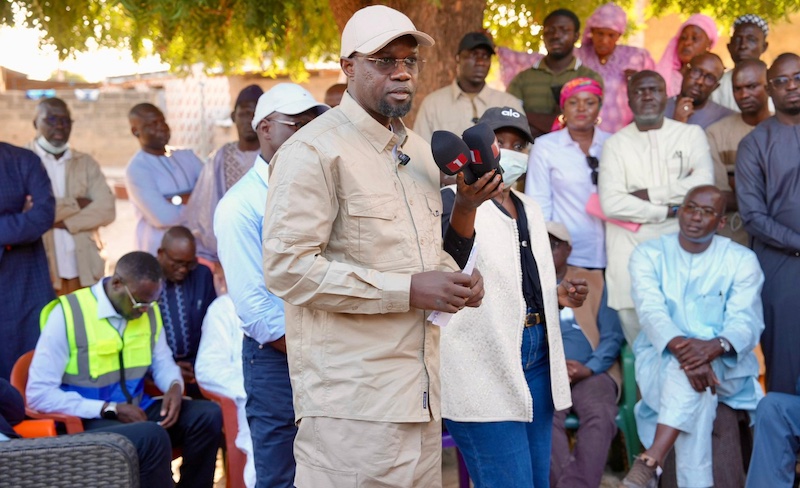
Senegal’s Prime Minister outlines bold strategy for 2026 agricultural season
Prime Minister Ousmane Sonko placed the spotlight on Senegal’s agricultural future during a recent Council of Ministers meeting, focusing exclusively on preparations for the 2026-2027 winter farming campaign. While acknowledging the commendable progress made by national institutions like the Senegalese Institute of Agricultural Research (ISRA) and Senegalese Chemical Industries (ICS) in fertilizer and certified seed production, he presented a frank assessment of the sector’s persistent challenges. The Prime Minister highlighted critical structural weaknesses that continue to hinder the country’s journey toward achieving food sovereignty.
Critical improvements needed for seed autonomy and financial access
The government’s agenda for agricultural transformation centers on several key priorities. Addressing the nation’s recurring dependence on imported seeds remains at the top of the list, along with improving seed quality standards that fell short in the previous season. The current producer targeting system requires significant refinement to ensure more equitable distribution of agricultural resources. Equally pressing is the need to dismantle barriers preventing farmers from accessing affordable agricultural credit.
Infrastructure deficiencies also emerged as a major concern. The Prime Minister emphasized the urgent need for expanded storage facilities nationwide to prevent post-harvest losses. Additionally, he pointed out the neglect of essential farming equipment maintenance, which compromises agricultural productivity. To combat these systemic issues, Ousmane Sonko has mandated the immediate acceleration of digital transformation across the agricultural value chain, building on successful pilot programs in Tivaouane and Nioro.
The Prime Minister stressed that while comprehensive subsidy reforms are underway, immediate measures must ensure transparent pricing and the timely delivery of agricultural inputs to all regions. This dual approach aims to eliminate distribution disparities and prevent the misuse of critical farming resources.