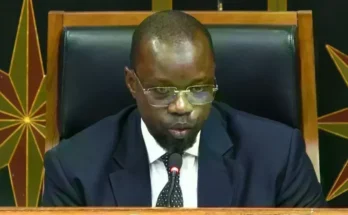
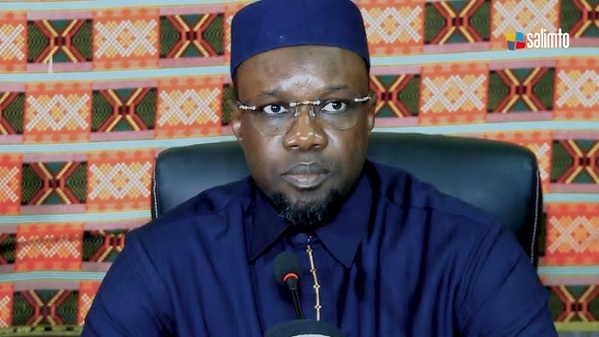
During a high-level interministerial council meeting, Prime Minister Ousmane Sonko presented a comprehensive inventory of Senegal’s ongoing infrastructure projects, revealing critical findings about their current status and challenges. The assessment, based on data collected from various ministries, identified 245 assets and projects that either remain unused, require completion, or are candidates for recycling and repurposing.
Unused completed projects: a hidden financial burden
Among the most striking revelations was the existence of 30 completed infrastructure projects that have not yet been commissioned. Of these, 25 are stalled, representing a frozen investment of 279 billion CFA francs. Fifteen of these high-priority projects face persistent delays due to financial, legal, or administrative hurdles.
Another 23 operational assets across eight sectors—managed by 13 different entities—are deemed recyclable or valorizable, with an estimated combined value of 1,065 billion CFA francs.
Projects in progress: delays and funding gaps
The inventory also highlighted 94 infrastructure projects currently under construction, with 62 of them experiencing significant delays. The total investment committed to these projects stands at 5,227 billion CFA francs, but an additional 973 billion CFA francs is needed to bring them to completion.
State-owned real estate: untapped potential
The assessment included a review of the country’s real estate and land assets, identifying 97 state-owned properties—91 of which are located in Dakar. These assets, with a combined market value of 132 billion CFA francs, require 12.1 billion CFA francs in renovations to unlock their full potential.
Root causes of project stagnation
Prime Minister Sonko pinpointed multiple factors contributing to the delays:
- Financial issues: 42 projects are stalled due to insufficient investment credits, unpaid invoices, or outright payment defaults, leading to work stoppages and lack of operational funding.
- Technical challenges: 18 projects face delays stemming from coordination failures between contractors, utility providers (water, electricity, telecommunications), and project owners. Issues include incomplete technical work, delayed deliveries, missing or uninstalled equipment, and inaccessible sites.
- Legal and administrative obstacles: 14 projects are hindered by unresolved legal disputes, canceled contracts, pending administrative approvals, unsigned agreements, or missing decrees formalizing institutional status.
- Operational oversights: 13 nearly completed projects, some dating back years, lack operational or management models, rendering them unusable despite their physical completion.
Sonko emphasized the paradox of constructing infrastructure without a clear plan for its exploitation, calling it a major driver of the observed stagnation.
Urgent measures and future steps
In response to these findings, Prime Minister Sonko announced decisive actions:
- The establishment of a special committee at the Prime Minister’s office to finalize and expand the inventory.
- A formal request for ministries to deepen the assessment, acknowledging that the current findings are not exhaustive.
- Strict directives to ministries to proactively address technical challenges, particularly those related to utility network connections.
Sonko condemned the waste, negligence, and laxity that have contributed to project delays, calling for a zero-tolerance policy moving forward. He stressed that these inefficiencies have led to massive financial losses, undermining the country’s development goals.