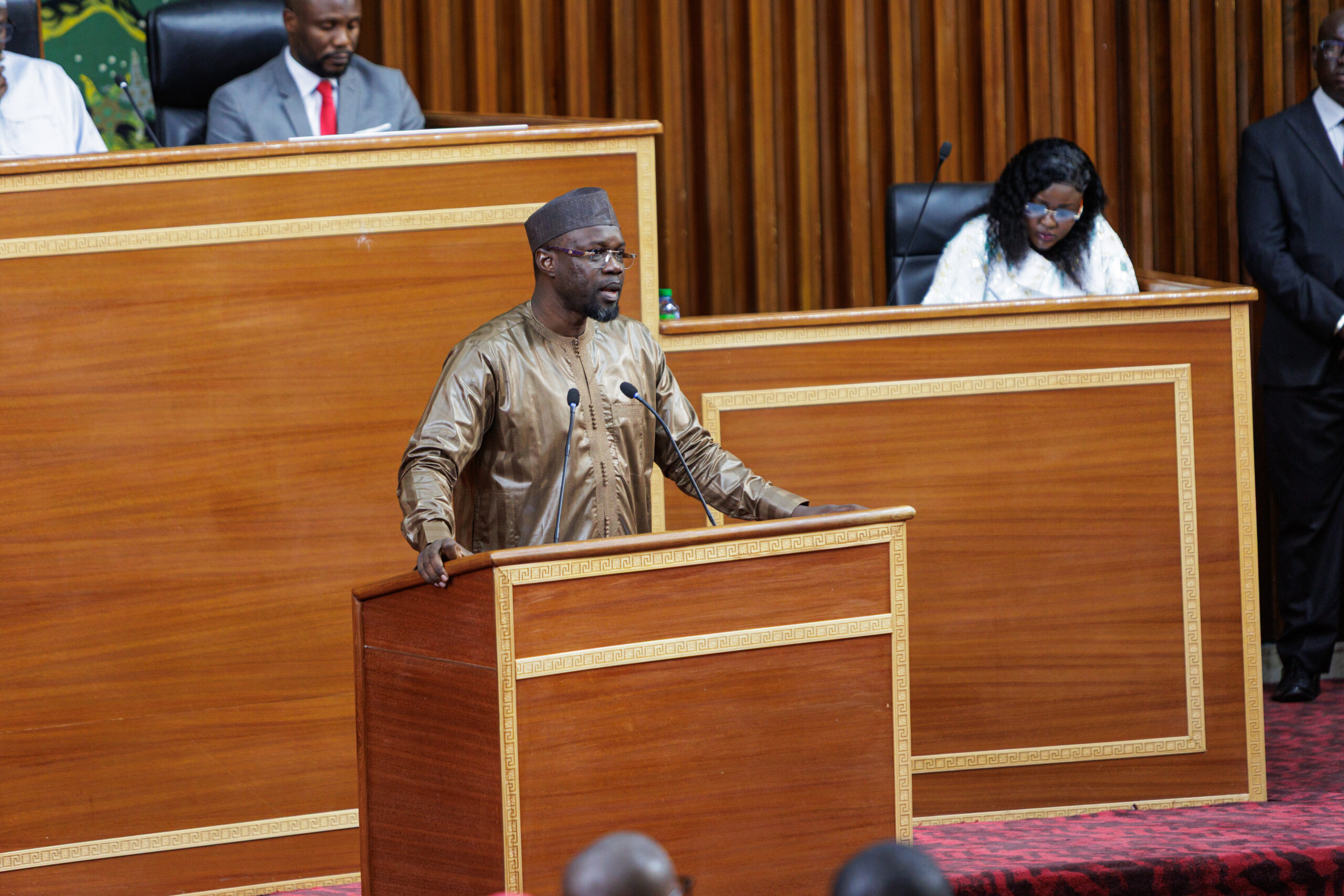
In a firm address to the National Assembly, Senegal’s Prime Minister Ousmane Sonko has championed a newly enacted law that imposes stricter penalties for acts deemed unnatural. During a session dedicated to government responses, Sonko presented the state’s position as both unambiguous and resolute, framing the legislation as a necessary response to what he described as a growing societal challenge.
No personal targeting, just legal clarity
Sonko was clear in his remarks: the law applies universally and does not single out individuals. « A law is impersonal the moment it is passed. No targeted interventions were ever intended, » he declared, addressing lawmakers in the chamber. His statement aimed to dispel concerns that the legislation could be used selectively against any group or individual.
Religious backing strengthens the government’s resolve
The Prime Minister highlighted strong support from religious authorities, noting that numerous faith leaders had reached out to commend the government’s initiative. This backing, he suggested, underscores the moral and ethical consensus behind the law.
Rooting out influence: a call to dismantle networks
Sonko painted a stark picture of underground networks allegedly recruiting young students with financial incentives, warning that unchecked, such practices could normalize deviant behavior in Senegalese society. He urged immediate and strict enforcement, emphasizing that the judiciary must apply the law without exception. « We will not shield anyone involved, » he warned, using a vivid metaphor to underscore his point. « The big fish will not go unpunished. »
Sovereignty over foreign pressure
The Prime Minister dismissed any notion of external interference, asserting that Senegal remains entirely sovereign in its legislative choices. Drawing a line under foreign criticism, he declared, « We take no lessons from anyone. » Sonko framed the issue as one of national consensus, arguing that the Senegalese people at large reject such practices and affirming that the law reflects their collective will.
Rejecting cultural imposition from the West
Sonko also criticized what he sees as a broader attempt by Western countries to impose cultural and social models on African nations. He took aim at segments of Senegal’s elite, accusing them of harboring an inferiority complex in the face of Western attitudes. For him, this law is not just about morality—it is about preserving Senegal’s cultural identity and autonomy.
In his closing remarks, Sonko shut the door on any possibility of suspending or softening the law. « There will be no moratorium, » he stated firmly, reaffirming the government’s commitment to full and immediate implementation.