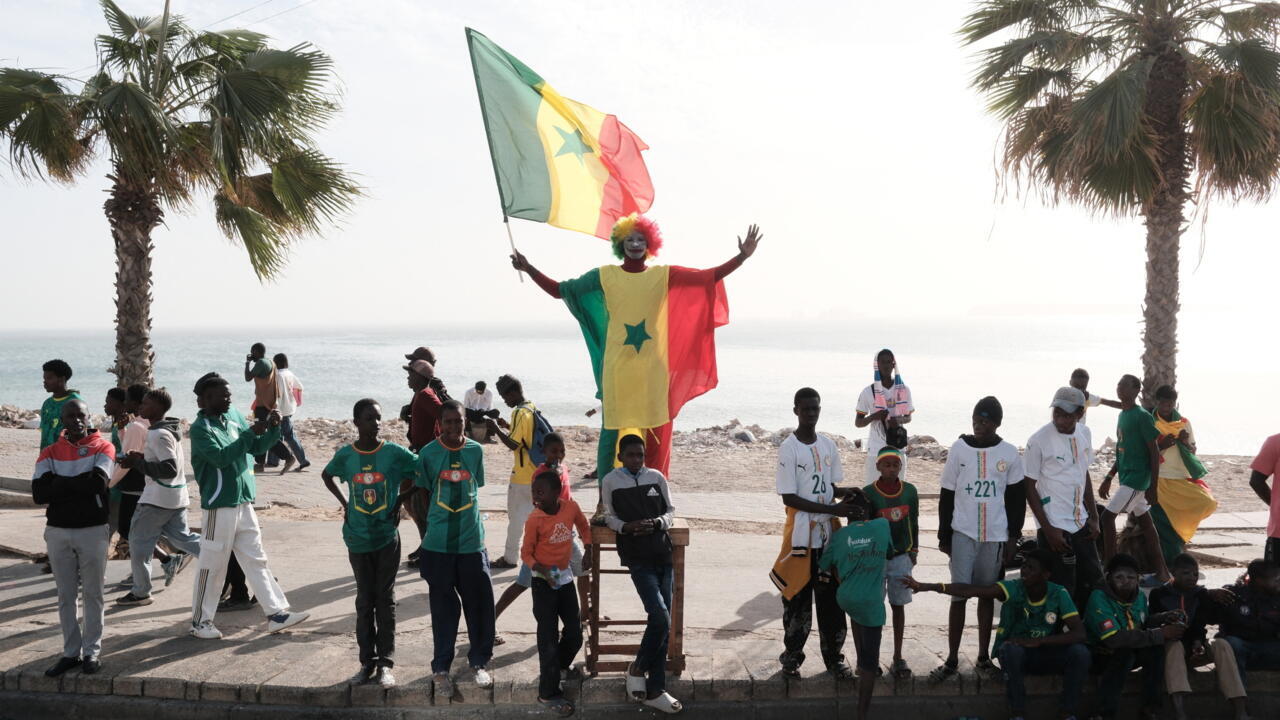
Just hours before the opening match of the 2026 football World Cup, Senegal is already in the grip of sports betting fever. Over the past five years, the industry has gone digital, removing the need to visit a physical shop – a few taps on a phone are enough to place a wager. As a result, more and more people are getting into betting. For them, the World Cup has already started.
In a group of young footballers from the same neighbourhood club, the outcome of the 16 June match between Senegal and France is hotly debated. Anything seems possible, nothing is certain. Assane already has a plan: “I’m going to bet on two different apps – France on one, Senegal on the other. That way, I’ll have a chance of winning. A friend called me and said: ‘Assane, I need money, let’s place some bets.’ I told him: ‘Let’s go, let’s try our luck.'”
Mohamed, for his part, makes no secret of his passion for betting. “It excites me,” he laughs. For him too, the sports betting craze has already begun with the imminent start of the 2026 World Cup. This young Dakar native has already placed money on the opening match of the Lions de la Teranga against Les Bleus. “I’ve put down lots of possible combinations. First ticket: Senegal wins. Second ticket: both teams score. Next, Mbappé scores for France, Sadio Mané for Senegal,” he details. “I hope it turns out like that because if it does, I win!”
“We lose more than we win”
Over the past month, Mohamed has bet a total of 80,000 CFA francs (about 122 euros). Out of that sum, his net loss is 30,000 CFA francs (45 euros). Small amounts each time, but bets on every league on the planet. “All competitions, leagues, Champions League, French Cup, in the United States and even China (laughs). Basically, there’s no limit. But we lose more than we win – that has to be said,” he admits.
Like many other Senegalese, Mohamed got hooked on sports betting right after Covid-19. At that time, betting apps multiplied on screens. Practices changed. Malick Diouf, founder of the Dakar Sport Summit, a conference dedicated to sports economics, explains: “We are a majority-Muslim country where betting is looked down upon. The fact that it has become digital has lifted the taboo and allowed all social classes to play without being judged.”
The sector is driven by three heavyweights: Russian operator 1xBet, French company Betclic, and the Senegalese group Sunubet. Since November 2025, these companies have seen their revenues taxed at 20%. The same applies to bettors’ winnings. “The state earns revenue, but the money collected from sports betting should be used to fund professional, and especially amateur, sport,” argues Malick Diouf.
For sports bettors, the football World Cup is a highly anticipated period, but also one of excess. Associations are warning about rising cases of addiction.