Despite democratic advances, gender representation in Senegal faces persistent challenges
Senegal, long recognized as a democratic model in West Africa, continues to grapple with significant underrepresentation of women in local governance structures. Recent data reveals sobering figures: out of 558 communes nationwide, only 18 are led by women mayors, while women preside over just 3 of the 43 departmental councils. These statistics starkly contrast with the nation’s constitutional commitment to gender equality and its progressive 2010 parity law.
The legislative setback
The November 2024 legislative elections further exposed this trend, with female representation in the National Assembly declining from 44.2% to 41%. Even more concerning was the paltry 13% of women heading electoral lists—a critical indicator of political influence and leadership opportunities. These figures point to systemic barriers that extend beyond mere representation into the realms of financing, media visibility, and institutional access.
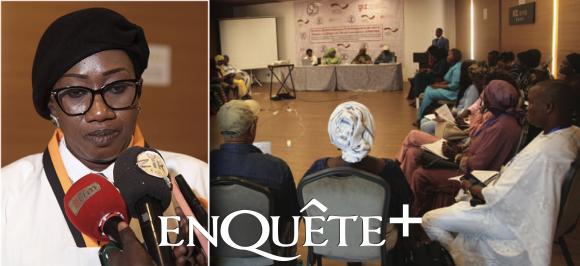
Bator Seck, the Senegalese focal point for the Réseau des femmes leaders pour le développement (RFLD), emphasized that while Senegal has made landmark strides—including ratifying key international human rights conventions and enshrining gender equality in its 2001 Constitution—the reality on the ground remains discouraging. “The numbers are not just statistics; they reflect deep-rooted structural obstacles and persistent cultural biases that continue to marginalize women in decision-making spaces,” she stated during a two-day regional seminar on women’s political participation.
The RFLD’s initiative, supported by the Afrofeminist Initiative for Human Rights Development in Francophone West Africa program, brings together 30 women leaders from diverse backgrounds—parliamentarians, local elected officials, activists, and civil society leaders—to strategize on strengthening female political engagement. “Democracy cannot be complete when half the population remains excluded from leadership roles,” Seck asserted. “The future of Senegal’s governance must be built with women, not merely for them.”
Breaking barriers: confidence, skills, and systemic change
Maman Diouf Fall, representing the Ministry of Family and Social Solidarity, highlighted a critical yet often overlooked challenge: the psychological and personal barriers women face in pursuing leadership roles. “Many women possess the competence and legitimacy to lead, yet societal pressures, entrenched stereotypes, and a lack of structured mentorship deter them from fully claiming their space in public life,” she noted.
She underscored the need for targeted interventions, including:
- Leadership training programs focused on political communication, negotiation, and public governance;
- Skills development in policy analysis, project management, and digital tools essential for modern governance;
- Rural accessibility to ensure women in remote areas are not excluded from capacity-building opportunities;
- Intergenerational mentorship to guide young women entering politics and civil society;
- Economic empowerment as a cornerstone for sustained political participation.
Fall also pointed to the Ministry’s ongoing initiatives, including sensitization campaigns, leadership workshops, and psychosocial support for vulnerable groups, all aimed at fostering resilience and active civic engagement among women and girls.
A call for collective action
The seminar served as a rallying cry for transformative action, with participants stressing that true gender equity requires more than policy commitments—it demands a cultural shift. “Our collective responsibility is to dismantle the systemic barriers that prevent women from occupying their rightful place in Senegal’s public sphere,” Fall concluded. “This involves continuous community sensitization, leadership reinforcement, and creating pathways for young women to access decision-making tables.”
As Senegal charts its democratic future, the conversation around women’s leadership is no longer about capability—it is about dismantling the structures that limit their potential.