Sino-Congolese infrastructure programme hit by customs delays
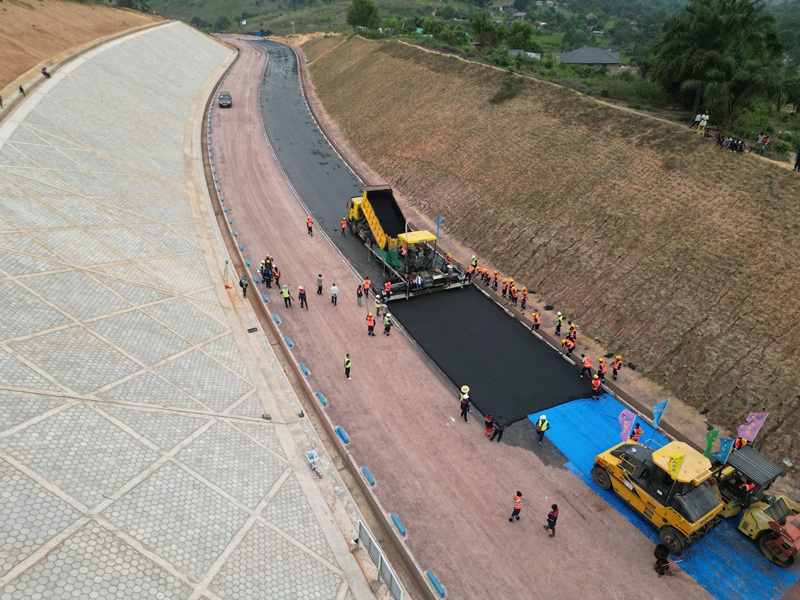
Despite concerted efforts from technical, financial and institutional stakeholders, the Sino-Congolese Programme in the Democratic Republic of the Congo (DRC) is facing significant setbacks. The primary obstacle? Protracted customs clearance procedures that are directly hampering the progress of key infrastructure projects across the country.
John Banza, Minister of Infrastructure, received an update from Nico Nzau Nzau, Director-General of the Congolese Agency for Major Works (ACGT), during a recent infrastructure caravan. The report highlighted that road surfacing work on multiple projects had been delayed indefinitely due to a critical shipment of bitumen stuck at the Matadi port for over six months. This shipment, imported by SISC SA, was supposed to benefit from tax exemptions under the programme’s legal framework, including Law No. 14/005 of February 11, 2014, and Amendment No. 5 to the 2024 Collaboration Agreement.
Government intervention urgently needed
The stagnation of customs procedures has created a domino effect. Indirect taxes and logistical requests—including those related to import clearances—remain unresolved for months, despite the programme’s designated structures being tasked with facilitating these processes. The Agency for Coordination, Pilotage and Monitoring of Conventions (APCSC) plays a central role in resolving these bottlenecks, yet progress remains stalled.
If no decisive action is taken, the consequences could be severe: major slowdowns or even halts in construction activities. The situation is particularly critical as the dry season, traditionally ideal for infrastructure work, is underway. Delays now risk derailing timelines and delivery targets set by the government.
Key projects in jeopardy
The blockade at Matadi port alone has trapped:
- 1,477 tonnes of bitumen, intended for Kinshasa’s ring roads, the Matadi–Tshela–Singini road, and the Kananga–Kalamba Mbuji route;
- 1,650 tonnes of bitumen for the rehabilitation of National Road 1 (RN1), specifically the Mbujimayi–Nguba section;
- Heavy machinery, including concrete plant equipment for the Idiofa Stadium, spare parts, and other essential materials—all held up at customs checkpoints.
While some projects are advancing positively—such as the 17 new buildings and 11 modernized wards at the Kikwit General Referral Hospital (expanding capacity from 150 to 650 beds)—the broader outlook is concerning. Other flagship initiatives at risk include:
- Southeast and Southwest ring roads in Kinshasa;
- The Manterne–Tshela–Singini road;
- The RN1 Mbujimayi–Nguba segment;
- The Idiofa Stadium;
- The Kikwit General Referral Hospital.
The Minister’s ongoing caravan through Grand Bandundu and other provinces has confirmed that while progress is evident in some areas, the customs impasse threatens to undermine the entire programme’s objectives.
Economic and social repercussions
The delays are not just logistical—they translate into tangible losses for the DRC. Delayed infrastructure development means delayed economic growth, reduced job creation, and postponed benefits for local communities. The population, eagerly awaiting modern facilities, risks being deprived of critical services and connectivity improvements.
The government has emphasized the importance of the APCSC in resolving these issues. As the designated interface between stakeholders and customs authorities, its intervention is vital to unblock shipments and restore momentum to the programme.
With time slipping away, the call for urgent coordination and decisive action has never been louder. The future of Congo’s infrastructure—and its people—hangs in the balance.
Comments are closed, but trackbacks and pingbacks are open.