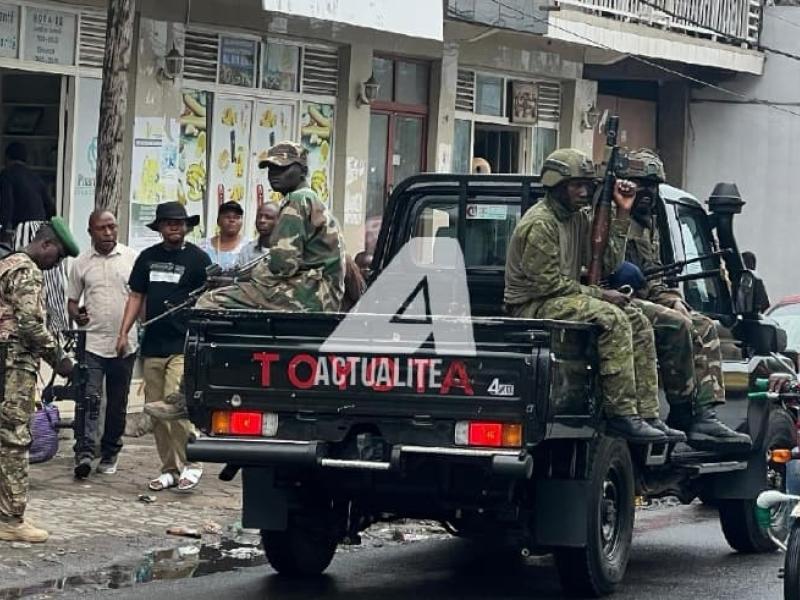
eastern DRC conflict: Russia accuses Ukraine of backing M23 rebels
The M23 rebel movement, which has seized control of large areas in North Kivu and South Kivu provinces, now faces fresh accusations of receiving foreign support. Moscow has pointed an accusing finger at Ukraine, alleging its involvement in the conflict that continues to destabilize eastern Democratic Republic of the Congo (DRC).
During a joint press conference with Burundi’s Foreign Minister Édouard Bizimana in Bujumbura on July 10, 2026, Russian Foreign Minister Sergei Lavrov condemned what he described as blatant foreign interference in African affairs, particularly in the DRC. He claimed that Kinshasa, with Bujumbura’s support, is confronting an aggression led by the M23, backed by external actors—including Ukrainians.
« We are witnessing clear attempts at interference in African affairs, especially in the Democratic Republic of the Congo. The legitimate authorities of this Republic, supported by Burundi, are today facing an aggression led by the so-called M23 group, which is backed by foreign representatives, including Ukrainians. We are fully aware of this, and our Burundian friends are as well, » Lavrov stated.
The Russian diplomat went further, accusing Ukraine of seeking to bolster forces opposed to legitimate governments across Africa to weaken countries aligned with Moscow and expand its influence on the continent.
« Ukrainians are participating in too many conflicts in Africa. They aim to support forces opposed to legitimate governments solely to position themselves as a key player on the continent and create difficulties for Russia-friendly countries, » Lavrov asserted.
Russia raises alarm over drone warfare in eastern DRC
In a separate development, Russia has expressed growing concerns about the increasing use of armed drones in eastern DRC, warning that this escalation is exacerbating the humanitarian and security crisis. Speaking at a United Nations Security Council meeting on June 26, 2026, Russia’s acting UN representative, Anna Evstigneeva, highlighted the impact of drone strikes, including a deadly attack in Goma on March 11 that killed a UNICEF staff member.
Evstigneeva also raised alarms about reports of foreign mercenaries operating in the conflict, some of whom may have gained military experience in Ukraine before being recruited as drone operators or instructors in the DRC.
« We are also concerned by reports of foreign mercenaries, some with experience from operations in Ukraine, being employed as drone operators or instructors, » she told the Security Council.
Diplomatic efforts stall amid escalating tensions
Despite international mediation efforts, including the Washington Agreement and negotiations under Qatari auspices in Doha, the security and humanitarian situation in eastern DRC continues to deteriorate. Disputes over the interpretation of the Washington Agreement between Kinshasa and Kigali have further hindered its implementation, while the Montreux talks in Switzerland failed to produce meaningful breakthroughs.
Calls for adherence to peace commitments have intensified at national, regional, and international levels. Yet, these appeals have so far failed to translate into tangible progress. Diplomatic inertia persists as conflicting parties cling to divergent interpretations of peace accords, deepening deadlocks and delaying their effective execution.
Comments are closed, but trackbacks and pingbacks are open.