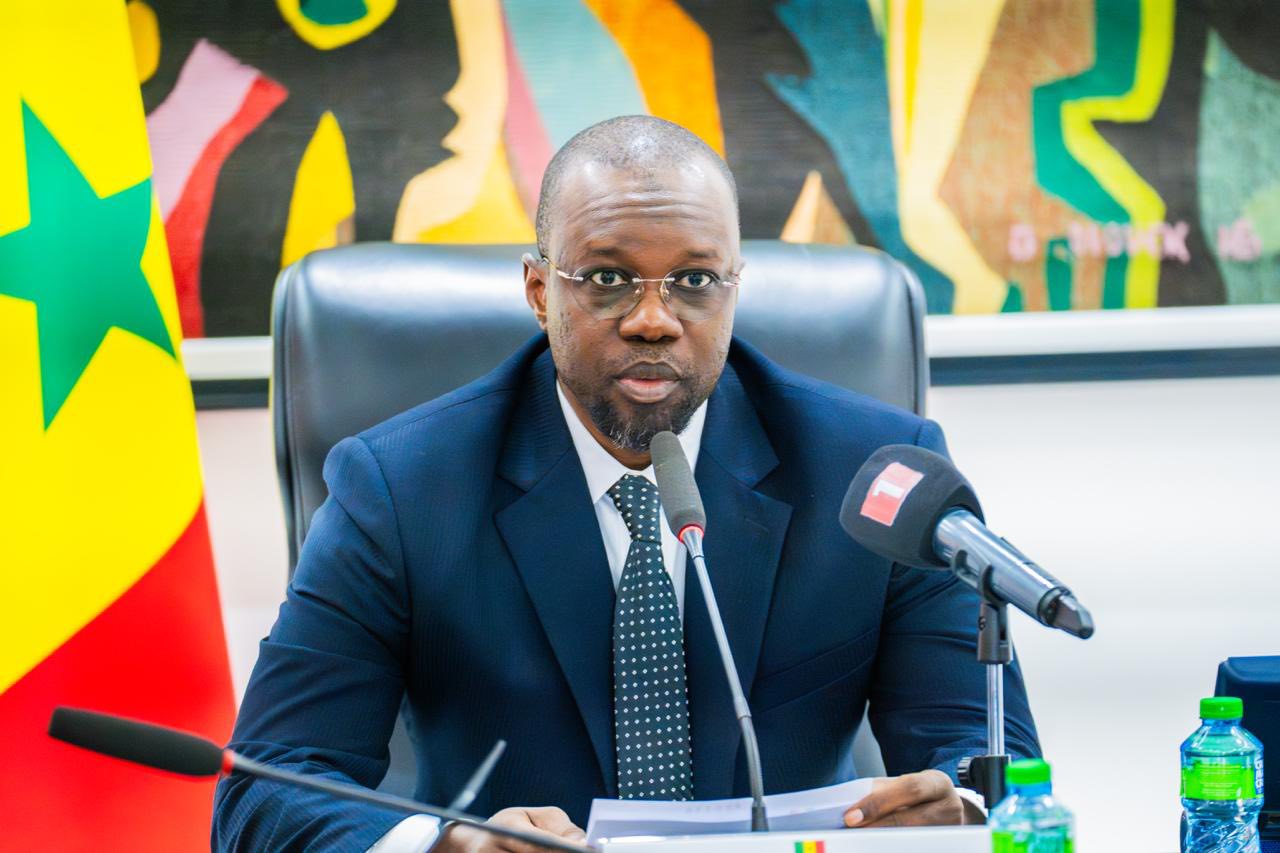
During a high-stakes interministerial council meeting focused on infrastructure development, Senegalese Prime Minister Ousmane Sonko openly challenged Justice Minister Yassine Fall on the current state of judicial accountability in the country. The heated exchange unfolded as Fall presented updates on infrastructure deficits and irregularities in construction projects.
Demanding accountability for financial mismanagement
Sonko’s frustration was palpable as he questioned the lack of legal consequences for officials accused of financial misconduct. « In this nation, some individuals can act with impunity, protected by a system that remains untouched,» he declared, highlighting the staggering sums lost to mismanagement. « Billions vanish without consequences, and no one faces justice,» he added, his tone underscoring the systemic failures.
A call for transparency and legal action
The Prime Minister reiterated that their administration was elected to ensure accountability. « We cannot keep asking Senegalese citizens to reinvest in the same projects while those responsible for squandering billions roam freely,» he asserted. Sonko also raised concerns about the judiciary’s perceived vulnerability to corruption, questioning how justice could be served if the system itself is compromised. « If the judiciary is undermined, what recourse does the people have?»
Yassine Fall’s response
Responding to Sonko’s criticism, Minister Fall acknowledged the challenges but assured that her team is working to hold accountable those responsible for wrongdoing. « We are committed to ensuring that every wrongdoer faces consequences, despite structural obstacles,» she stated. « With determination, we will deliver justice for the Senegalese people,» she promised.
Sonko, however, remained unconvinced. While supporting efforts to build new prison facilities through renegotiations, he stressed that accountability cannot be overlooked. « Responsibilities must be assigned, and sanctions must follow—no exceptions,» he insisted, even invoking the term « judicial sabotage » to describe the perceived inaction.
A demand for public disclosure
The Prime Minister urged that every case be thoroughly reviewed and made public. « These cases belong to the people, not to judges or officials,» he declared, warning of intensified scrutiny in the near future. « The people deserve answers, and we will provide them,» he concluded, signalling a potential escalation in addressing judicial and financial misconduct.