South Kivu crisis: MSF tackles mass displacement amid acute health emergency
In South Kivu, eastern Democratic Republic of the Congo (DRC), the humanitarian situation has reached a critical juncture. Persistent armed clashes in Baraka and surrounding areas have crippled access to essential medical services, while the region grapples with a severe health crisis. Médecins Sans Frontières (MSF) stands among the few organizations actively delivering life-saving support to affected communities.
Escalating violence drives mass displacement in South Kivu
Clashes between the FARDC and the Alliance Fleuve Congo (AFC)/M23 and their allied factions have intensified on the Fizi Highlands, exacerbating long-standing intercommunal tensions. This surge in violence has triggered a new wave of mass displacement, pushing nearly five million people from their homes across the DRC. In South Kivu and Maniema alone, 1.9 million individuals have been displaced, as reported by OCHA.
Without adequate shelter solutions, most displaced families have sought refuge with host families or in overcrowded displacement camps like Monge Monge. Basic necessities—clean water, food, and healthcare—remain desperately out of reach for both locals and the displaced.
Distance and poverty block access to healthcare
Years of conflict have stripped countless families of their livelihoods. Many have walked for days to reach safety, only to face another challenge: affording medical care. MSF has scaled up its emergency response to meet these urgent needs.
Ikupe Roger, a 60-year-old father of eight, recounted his harrowing escape: «When the fighting erupted, my family and I fled our village to save our lives.» Today, they live in constant fear of renewed violence. «Before MSF arrived, healthcare was nearly impossible to access. Paying over 100,000 Congolese francs for treatment is beyond our means,» he explained. Though he works as a fisherman and small-scale farmer, survival remains a daily struggle.
«The lack of resources means many cannot afford transport or even basic medical care,» says Gianpietro Campedelli, MSF’s Project Coordinator in Baraka. Without timely intervention, patients arrive at health facilities in critical condition, often too late for life-saving treatment.
Displaced civilians face targeted violence and trauma
Beyond injuries from active combat, many civilians endure severe trauma from attacks during their flight. Fatou, a 40-year-old woman now staying with a host family in Mwandiga, shared her ordeal: «Armed men struck me during our escape. They stole everything we had. When we left Makobola, the village was empty—and everything we left behind was looted.»
MSF strengthens health systems amid epidemics and conflict injuries
The General Reference Hospital in Baraka is overwhelmed by the dual burden of war-wounded patients and surging epidemics. Cholera outbreaks, malaria spikes, and respiratory infections strain an already fragile healthcare system.
Between January and April 2026, MSF’s teams:
- Supported Baraka’s General Reference Hospital with medical supplies, logistical aid, and staff training to handle the influx of wounded;
- Covered treatment costs for severe cases, including advanced malaria, acute respiratory infections, and diarrheal diseases;
- Bolstered seven community health sites to detect and treat malaria, pneumonia, and diarrhea early.
In total, 26,234 patients received care, including 426 war-wounded, 16,574 malaria cases, 2,953 diarrheal cases, and 3,832 pneumonia cases.
Cholera response and hygiene interventions
MSF has also led the fight against epidemics:
- 1,002 patients treated at the Cholera Treatment Center (CTC) in Baraka since January;
- Distribution of hygiene kits and installation of chlorination points;
- Repairs to manual water pumps in Baraka, Mwangaza, and Mushimbakye;
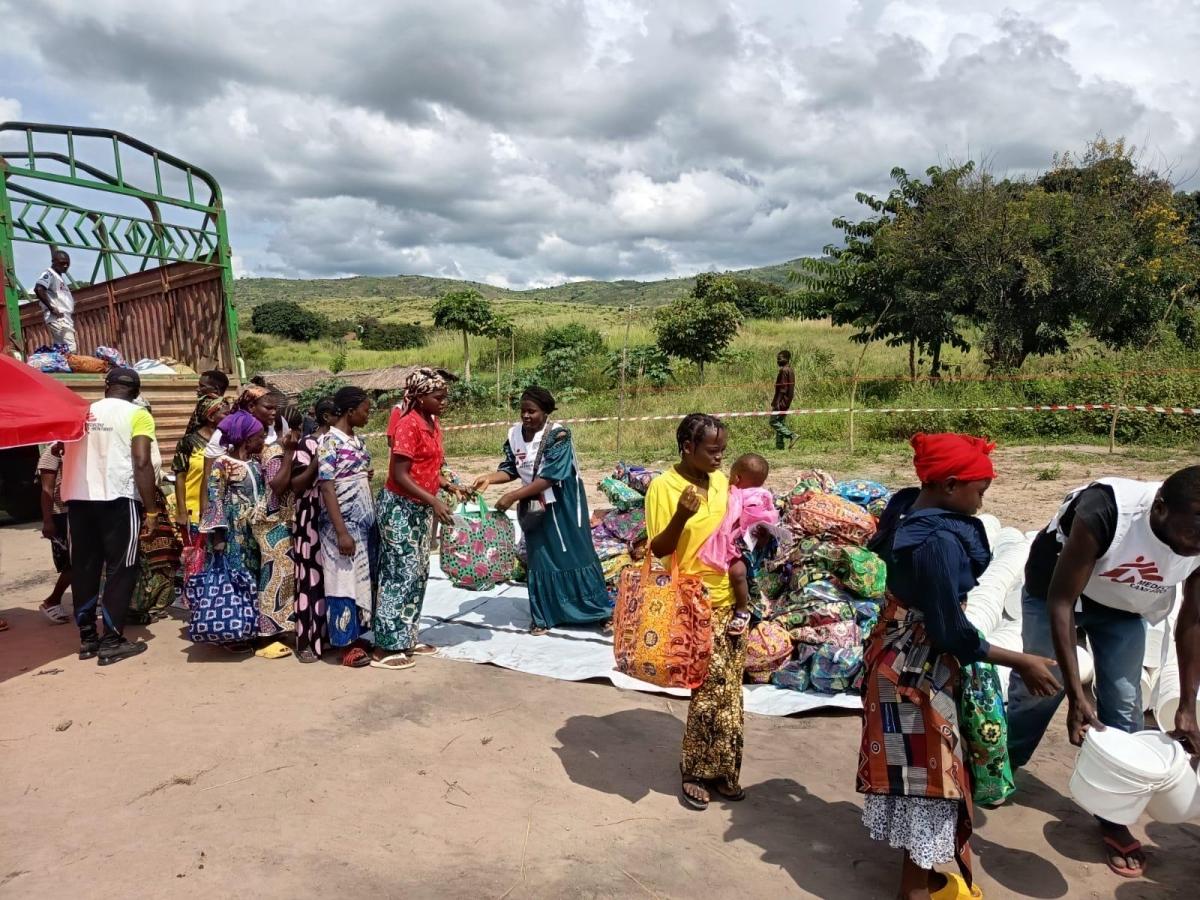
- Delivery of 488 essential kits (soap, blankets, dishes, mosquito nets) to Monge Monge camp, including 870 menstrual hygiene kits for women.
Urgent need for expanded humanitarian action
MSF’s teams are now prioritizing reproductive health services and care for survivors of sexual violence at Baraka’s health center, alongside water, sanitation, and hygiene (WASH) initiatives in Monge Monge displacement camp. Yet, the needs far outstrip available resources.
«While MSF’s presence is vital, it cannot alone address the staggering humanitarian gaps. A broader coalition of actors must step up to protect civilians facing relentless health and social vulnerabilities,» Campedelli stressed.