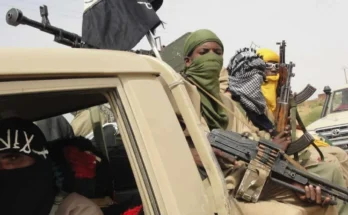
The Front de Libération de l’Azawad (FLA), a Tuareg rebel faction, has established a strategic logistical artery connecting Libya to northern Mali, traversing Niger. This critical route is understood to be fundamental to the execution of their recent military operations.
Within the ever-evolving security landscape of the Sahel, southern Libya consistently emerges as a central nexus for insurgent activities. The Tuareg rebels of the Front de Libération de l’Azawad (FLA) have utilized Libyan territory as an indispensable logistical rear base, facilitating the planning and execution of their significant offensive initiated on April 25, aimed at reclaiming Kidal.
The Fezzan and Oubari: logistical sanctuaries
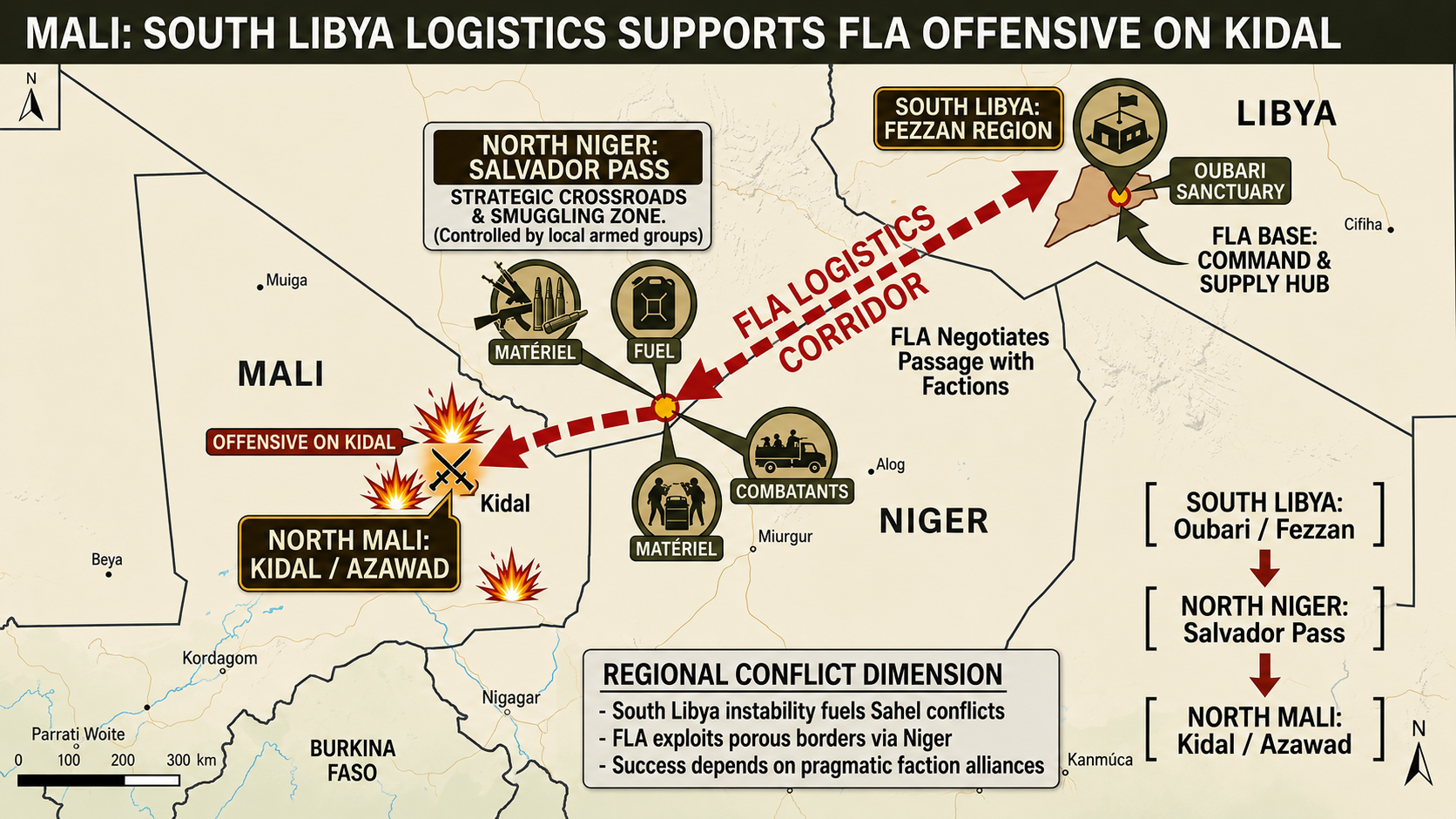
At the core of this operational network lies the Fezzan region, a historically permeable area within southern Libya. Rebel infrastructure has been strategically developed in the vicinity of Oubari. Far from being a mere sanctuary, this locale functions as a primary staging ground, a logistical command center, and a vital supply conduit for FLA combatants.
From this secure enclave, the movement has meticulously planned the military operations currently destabilizing northern Mali.
The « passe de Salvador », an artery for all illicit flows
To project their forces and materiel into the Malian operational theater, the rebels depend on a highly strategic transborder axis. This continuous corridor extends from southern Libya to northern Mali, bisecting the territory of Niger.
The pivotal component of this route is the renowned « passe de Salvador ». Located in the northernmost reaches of Niger, this desert crossroads is widely recognized as a favored transit zone for terrorist organizations and illicit networks involved in arms and drug trafficking.
For the purposes of this offensive, the pass facilitates the movement of three critical components:
- Military hardware, including weaponry, ammunition, and associated logistical supplies;
- Fuel, an indispensable commodity ensuring the mobility of vehicle convoys across the desert terrain;
- The transit of combatants, who leverage this route to deploy to the front lines and subsequently withdraw into Libyan territory following engagements.
The operational flow thus delineates a distinct trajectory:
- Southern Libya (Oubari / Fezzan)
- Northern Niger (Passe de Salvador), a zone under the influence of local armed groups
- Northern Mali (Kidal / Azawad)
Niger, an obligatory passage under specific terms
The utilization of this corridor underscores the intricate nature of transborder alliances. As the Nigerien segment of this axis falls under the dominion of various indigenous armed factions, the FLA was precluded from operating unilaterally.
Consequently, to facilitate the movement of its forces and supply convoys, the Tuareg rebellion was compelled to negotiate transit rights and secure authorization from these entities that exert control over northern Niger. This logistical compromise unequivocally illustrates that the success of military offensives across the Sahel now hinges upon pragmatic agreements forged between interconnected armed factions operating regionally.
As the struggle for control of northern Mali intensifies, these observations unequivocally affirm the profoundly regional dimension of the conflict, wherein Libyan instability persistently casts its influence upon the various theaters of tension throughout the Sahel.