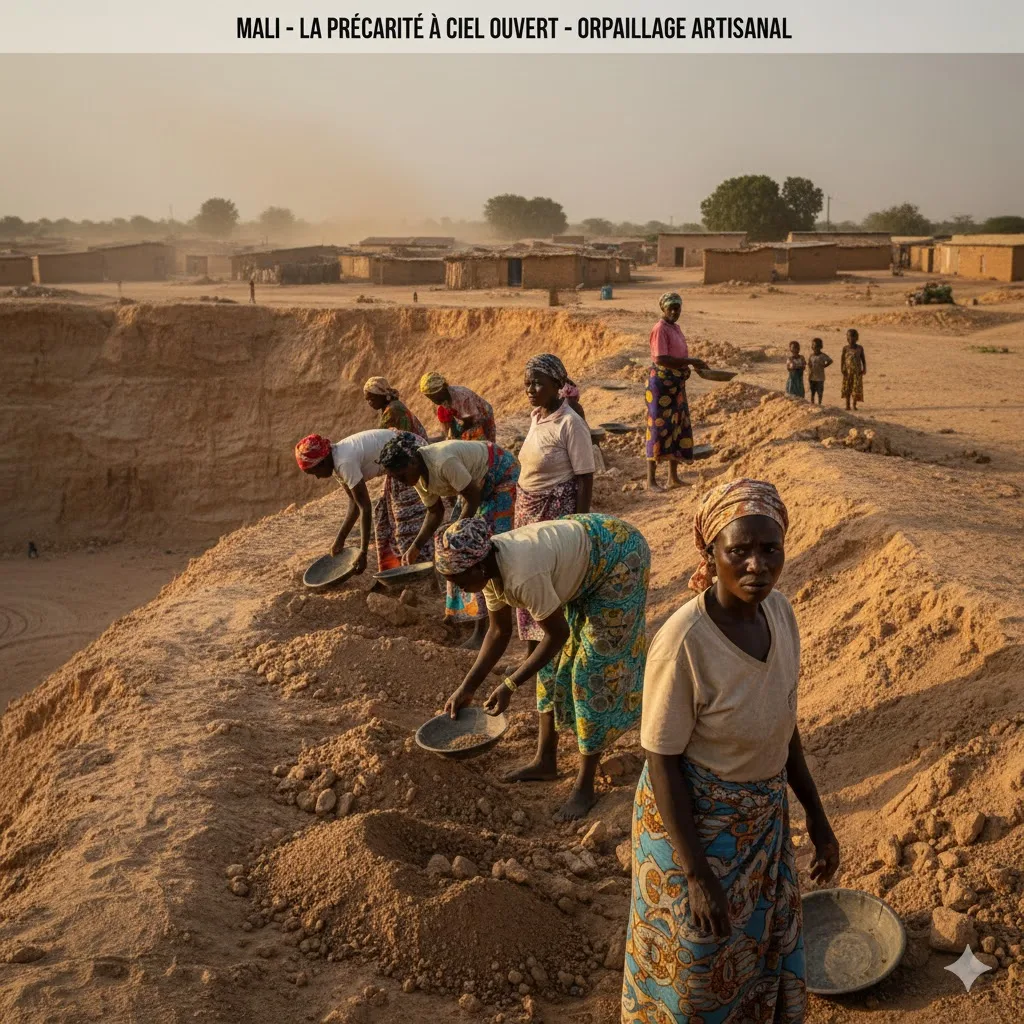

On Friday, January 9, 2026, a catastrophic landslide in Kéniéty, situated in the Kéniéba circle, resulted in the deaths of six women. This heartbreaking event highlights a grim truth: severe financial hardship is forcing mothers into life-threatening situations every day just to stay alive.
Mothers risking everything to fight hunger
For women working at these precarious gold mining sites, the danger is not a choice but a desperate survival tactic. Driven by the urgent need to provide food and basic necessities for their families, they endure working conditions that are almost unimaginable. Throughout the Kayes region, it is common to find women laboring for over 12 hours under intense heat, all for the hope of finding a few tiny fragments of gold.
This cycle of poverty pushes them toward the most hazardous sections of the mines. Frequently barred from the more lucrative tunnels by men, they are often restricted to abandoned pits or older, structurally compromised excavations. These “residual” areas, considered too unstable by other miners, often become death traps when the earth gives way due to erosion.
A cycle of extreme vulnerability
The risks extend far beyond the threat of sudden collapses. Economic fragility makes these women particularly susceptible to a variety of social and health hazards. They often handle toxic substances like mercury without any protective gear, risking permanent illness. Furthermore, their presence at these sites leaves them vulnerable to exploitation and gender-based violence.
The tragedy in Kéniéty, which claimed the lives of six women including two who were married, is a stark example of this danger. While searching for gold remnants in the walls of a former Chinese mining operation, they were buried by a sudden cave-in. Despite the rapid response of local rescuers using whatever tools they had available, the sheer weight of the collapsed earth proved fatal.
The critical need for sustainable economic options
For the residents of Dialafara, managing abandoned mining sites has become a matter of public safety. When mining firms depart the area leaving behind massive, open craters, they create a magnet for disaster for the most impoverished citizens. There is now a strong demand for the systematic backfilling of these sites once operations cease, as a vital measure to protect women from entering them.
Beyond physical safety measures, the issue of economic empowerment is paramount. The transitional authorities, through various social services, are being urged to provide these women with the training and resources needed to transition into safer income-generating activities. Without viable alternatives to the gold trade, poverty will continue to claim lives within the earth of Mali.