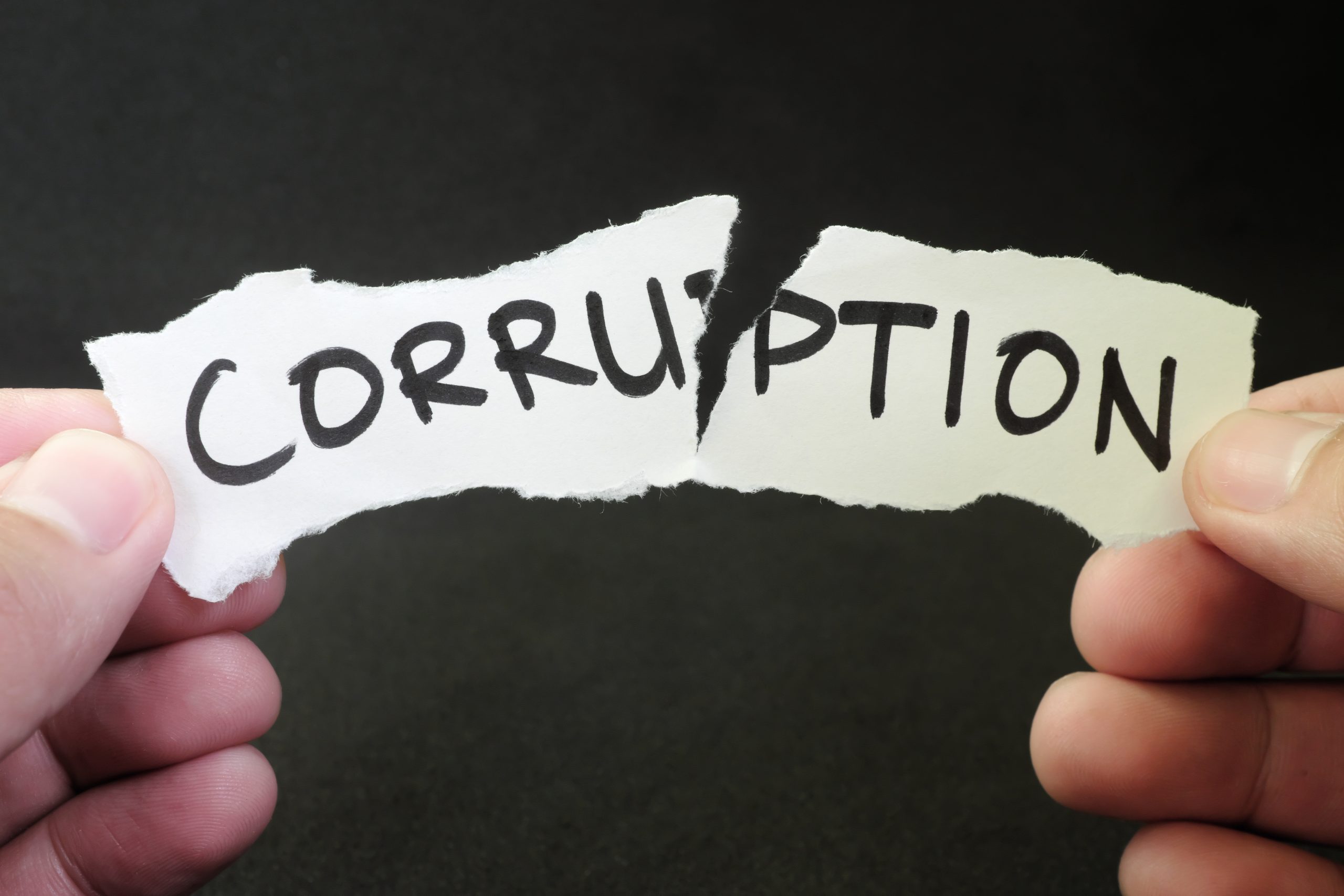
In Mali, terms like “Bonya” (respect), “woro songo” (the price of cola), or “buru songo” (the price of bread) have become common euphemisms for illicit payments. These “small gifts” are the building blocks of a corruption crisis that has deeply permeated Malian society, creating a social tragedy that many now feel forced to accept.
What allows this culture of bribery to persist? How can a phenomenon that seems universally tolerated be effectively challenged? According to Transparency International’s definition, corruption is the misuse of delegated authority for personal benefit. In Mali, this manifests daily through public service interactions, administrative hurdles, and various forms of undue influence.
The daily reality of extortion
The story of Myriam (a pseudonym), a commercial director at a Bamako advertising firm, illustrates the systemic nature of the problem. She reports that every time she secures a contract, officials from the client organization demand a percentage of the deal. “It is a take-it-or-leave-it situation,” she explains, expressing exhaustion at a practice that has become an unofficial social norm.
Corruption also appears in more mundane settings: paying a bribe to bypass administrative delays, giving a “gift” to pass an exam, or relying on personal connections rather than merit. These routine acts have led to a dangerous normalization of the practice across multiple sectors.
Omar Keita, an entrepreneur, describes the frustration of waiting an entire day in line during a fuel shortage, only to be forced to pay 10,000 F.CFA to a pump attendant who refused to serve him without a “tip.” This occurred during a period when Mali faced severe fuel scarcity due to attacks on tankers traveling from Sénégal and Côte d’Ivoire.
Keita felt humiliated by the act, yet such transactions have become so frequent that they create a self-perpetuating cycle. As these habits spread, the moral weight of corruption diminishes—a cultural shift that is central to its widespread acceptance.
Institutional gaps and sociological drivers
Sibiri Diarra, a retired international civil servant, notes that in the United Nations system, gifts are strictly regulated and cannot exceed a specific value. In Mali, however, such rules are either non-existent or unknown to the public, leaving the door open for exploitation. Anti-corruption networks in Mali argue that the absence of real legal consequences only serves to embolden the practice.
Sociologist Mohamed Abdellahi Elkhalil, an expert on Sahelian social issues, believes corruption has infiltrated the very core of Malian society. He warns that this “normalization” threatens the nation’s democratic and economic foundations. According to Elkhalil, the root is sociological rather than cultural, driven by a desire to live beyond one’s means.
Oumar Korkosse, from the Network of Traditional Communicators for Development (Recotrade), adds that poverty and unemployment act as catalysts. When wages are insufficient or paid irregularly, small-scale corruption becomes a survival mechanism for many, including those who would otherwise prefer to act with integrity.
The Association Malienne de Lutte contre la Corruption et la Délinquance Financière (AMLCDF) emphasized during a recent workshop in Bamako that the issue is fundamentally moral. They advocate for a renewed civic conscience based on ethics and respect for the public good, suggesting that religious leaders and educational programs must lead this transformation.
An endemic challenge for the nation
A March 2024 Afrobarometer survey highlights the scale of the issue. Citizens perceive judges, magistrates, business leaders, and police officers as the most corrupt actors. Many respondents admitted to paying bribes just to access basic public services.

On the roads, the situation is equally dire. Ousmane Diarra, a motorcycle taxi driver, reports being stopped multiple times a day by police. Regardless of whether his papers are in order, he says he is forced to pay between 1,000 and 2,000 F.CFA at every checkpoint, a significant drain on his daily earnings.
The data confirms these lived experiences. Mali’s score in the Corruption Perceptions Index (CPI) by Transparency International remained low at 27/100 in 2024 and 28/100 in 2025, ranking the country 136th out of 180 nations. This stagnation reflects a public sector that experts and international analysts view as heavily compromised.

Furthermore, the World Bank’s 2023 Worldwide Governance Indicators gave Mali a score of -0.86 for corruption control, well below the global average. Me. Soumaré Boubacar, a lawyer in Bamako, concludes that when institutional integrity is in doubt, corruption evolves into a survival strategy. “If everyone else is doing it,” citizens often ask, “why shouldn’t I?”