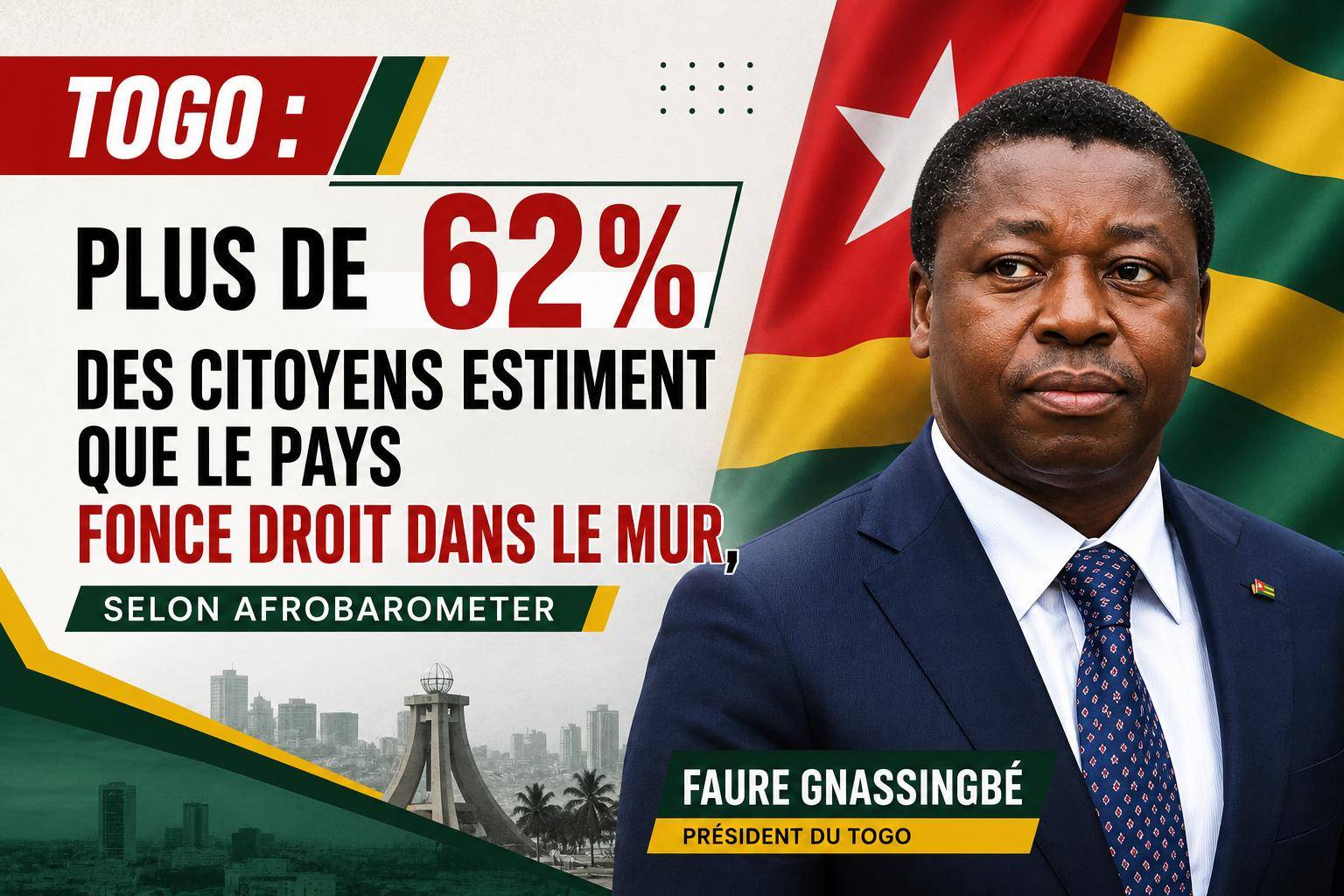
While official narratives extol the virtues of the National Development Plan and a stable macroeconomic trajectory, ground-level realities have delivered a stark rebuttal to the administration of Faure Gnassingbé. The latest Afrobarometer study paints a picture of a Togo struggling, where 62% of its populace feels the nation is headed in a perilous direction. With a surge in severe poverty, critical water shortages, and inadequate healthcare, the chasm between the governing elite and the general public has never been more profound.
The assessment of widespread disenchantment has landed squarely on the desks of policymakers in Lomé. Currently, more than six out of ten Togolese perceive the country as moving in the wrong direction, marking a sharp eleven-percentage-point increase since 2021. This erosion of trust is not merely a transient opinion but reflects a deep-seated disappointment with economic management, which 63% of Togolese now rate as quite poor or very poor. This prevailing pessimism is not abstract; it’s a direct consequence of daily life characterized by a continuous decline in purchasing power and a complete absence of opportunities for a spirited youth.
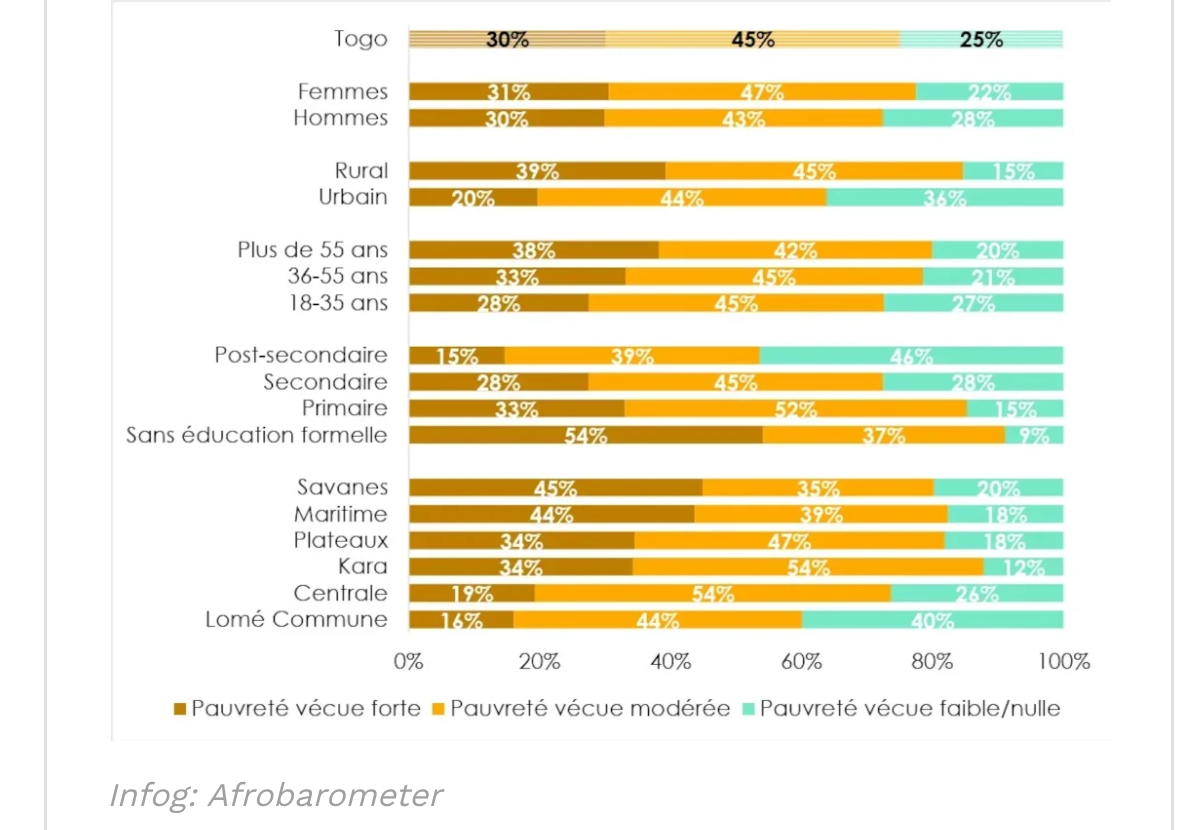
Beyond the often-cited, impersonal GDP figures touted by the government, the survey delved into the lived experience of poverty – the kind felt daily in household budgets and on dinner tables. The findings are unequivocally alarming: a majority of respondents describe their personal living conditions as poor, and over half report a deterioration in their financial situation over the past twelve months. Presently, three-quarters of Togolese grapple with moderate or severe poverty, underscoring that the dividends of economic growth evaporate long before reaching the average citizen. For the vast majority, daily existence has become a relentless battle for survival, marked by a severe lack of cash income, essential medical care, and even safe drinking water.

This widespread precarity does not affect the country uniformly, revealing a striking territorial and social divide. One of the study’s most salient points concerns the Kara region. Contrary to the common assumption that historical power strongholds might be exempt, this area holds the unfortunate national record, with 88% of its population affected by lived poverty. This figure serves as a direct rebuke to the balanced development policies so frequently promoted by the state leadership. Concurrently, the survey highlights that women and rural inhabitants remain the primary victims of this failing system, while education, though beneficial, is no longer sufficient to guarantee a decent standard of living in a saturated and patronage-driven job market.
How can such a decline be explained after years of social pledges? The current disparity is unbearable, contrasting the overt luxury displayed by a minority with the profound distress of inland populations. The government appears to have prioritized grand, high-profile projects at the expense of genuine investment in human capital. Afrobarometer’s findings depict a society teetering on the edge, where trust in institutions erodes as fundamental rights become unattainable luxuries.
Togo can no longer rely on artificial growth statistics to obscure pervasive hardship. When the vast majority of a nation asserts that its country is heading in the wrong direction, it fundamentally questions the entirety of current governance. The so-called Togolese miracle is nothing but a mirage for the millions of citizens who form the base of the societal pyramid. Without a radical redirection that places human well-being at the forefront of priorities, the vessel that is Togo risks sinking permanently. The Togolese people have spoken; they are exhausted from merely surviving, and it remains to be seen if anyone in Lomé is still capable of heeding their cry of distress.