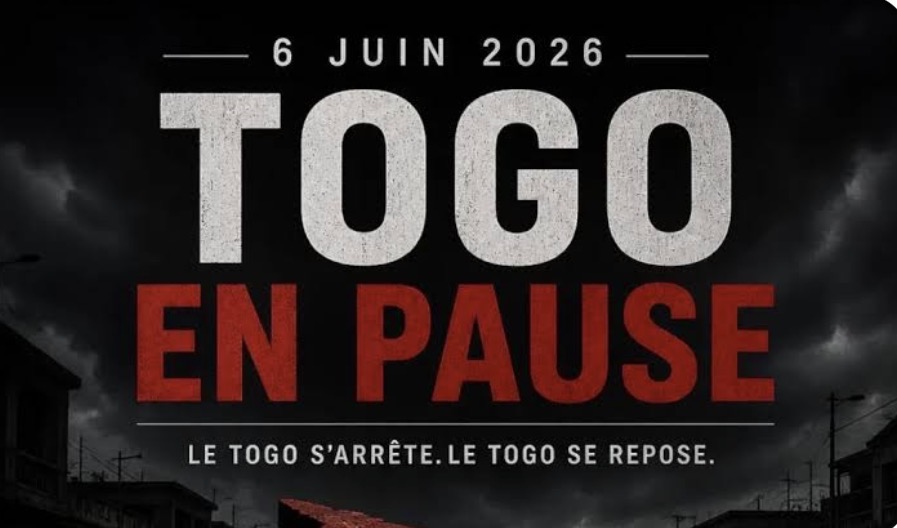
June 6, 2026, is not just another date on the calendar. It marks a deliberate collective decision to break away from a decades-old political system that has stifled progress and perpetuated inequality. The people of Togo, through the M66 movement and a united front of opposition forces, are choosing to step out of the cycle rather than perpetuate it.
For nearly six decades, Togo has operated under a tightly controlled framework where power is not shared but hoarded. Elections, institutions, and public discourse exist in name only, while the real machinery of governance remains locked within a militarized, clan-based network. Repression, censorship, and systemic exclusion are not anomalies—they are the foundation of this enduring structure.
A new generation refuses to comply
The youth of Togo have grown up under a system that offers no real alternatives. They have witnessed the suppression of dissent, the muzzling of independent voices, and the deepening divide between privilege and marginalization. Yet, they refuse to accept this as their fate. The Togo en Pause initiative is their declaration: no longer will they play the role of silent spectators in a rigged game.
On June 6, the focus shifts from marches and protests to a different form of resistance—one rooted in absence. Staying home, halting commerce, and withdrawing labor are not acts of surrender but of defiance. Each closed shop, each empty street, and each unanswered call sends a clear message: the system is unsustainable without the people’s compliance.
The anatomy of a locked system
The power structure in Togo is not a product of chance but of deliberate design. Key positions in the military, security forces, civil service, and public enterprises are reserved for a tightly knit circle of loyalists. Modernization rhetoric and international partnerships have done little to alter this reality. Poverty, inequity, and limited opportunities persist, reinforcing the cycle of control.
The people—both at home and abroad—see through the illusion. Togo en Pause is an acknowledgment that the system’s endurance is not a sign of strength but of oppression. It is a refusal to normalize the unacceptable.
A mobilization that transcends boundaries
What makes this movement compelling is its inclusivity. Workers, traders, students, civil servants, artisans, farmers, and the diaspora are all called to participate by withdrawing their participation in the status quo. June 6 is not about grand gestures but about collective clarity. It is a statement that the population will no longer lend legitimacy to a system that offers no real change.
Choosing to stay home, to pause economic activity, and to disrupt daily routines is an act of courage. It challenges the fear that has kept dissent at bay for generations—a fear of reprisal, of instability, of the unknown. But it also poses a fundamental question: Is the cost of compliance worth the illusion of stability?
A moment of reckoning
Togo en Pause is not a single-day event; it is a turning point. It signals the end of an era where power is preserved at all costs and the beginning of a new chapter where the people reclaim agency. The message is simple: the system must evolve, or it will collapse under the weight of its own contradictions.
On June 6, Togo will stand still.
Not in defeat, but in defiance.