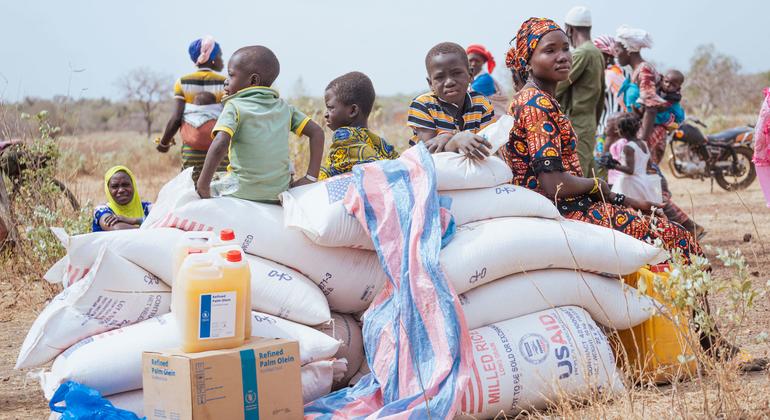
The UN Refugee Agency (UNHCR) issued a pressing call for international assistance on Friday, highlighting the deteriorating humanitarian situation in the Sahel. Currently, nearly 4 million individuals are displaced across Burkina Faso, Mali, Niger, and neighboring territories. This figure represents a staggering 66% increase compared to five years ago, driven by persistent instability, crumbling public services, and the escalating effects of the climate crisis.
While the majority of those forced to flee remain within their own borders, the UNHCR noted that cross-border migration is becoming more frequent. This shift is placing immense strain on the infrastructure and host communities of neighboring nations, according to Abdouraouf Gnon-Konde, the Regional Director for the UNHCR in West and Central Africa. In the context of African news today, this migration trend signals a deepening regional crisis that requires immediate attention.
Severe budget shortfalls and operational challenges
The UNHCR is advocating for a renewed global commitment to address the emergency in the central Sahel, emphasizing that Mali, Burkina Faso, and Niger cannot manage these burdens in isolation. For the current year, the agency has secured less than 33% of its required $409 million budget. This financial deficit has paralyzed vital operations, including legal documentation, education, healthcare, and emergency housing.
Abdouraouf Gnon-Konde warned that over 212,000 refugees and asylum seekers in the region remain unregistered. This lack of official documentation prevents them from accessing basic rights and increases their vulnerability to harassment or arbitrary detention. Such developments are central to Africa politics English discussions regarding human rights and regional stability.
The collapse of education and healthcare
The ongoing presence of armed groups continues to terrorize local populations, leading to forced recruitment and severe movement restrictions. Within this landscape of pan-African current affairs, the statistics are grim: women and children make up 80% of the displaced population, and gender-based violence is on the rise. Data from regional protection monitors indicates a sharp increase in reported incidents this year.
The impact on social infrastructure is equally devastating for African society news. Approximately 900 medical facilities have been forced to shut down, leaving millions without healthcare. Furthermore, by mid-2025, more than 14,800 schools had closed their doors across the Sahel. This has left 3 million children without an education or a safe environment, significantly raising the risk of human trafficking and child recruitment into militant groups.
Climate change and food insecurity as displacement drivers
Beyond physical violence, the UNHCR identifies food insecurity as a primary reason for flight. The number of people citing hunger as their main reason for moving has doubled in recent years. This is exacerbated by climate shocks, which trigger intense competition over dwindling resources like water and fertile land. These environmental pressures often undermine social cohesion and peaceful coexistence between displaced groups and their hosts. Reporting for The Panafrican Press, it is clear that without a surge in international support, the humanitarian trajectory for the Sahel remains precarious.
Comments are closed, but trackbacks and pingbacks are open.