Mali has made measurable strides in key health indicators in recent years, including reductions in infant mortality, under-five mortality rates, maternal deaths, and gains in life expectancy (World Health Organization, 2025; UNICEF, 2025). In 2018, the government launched an ambitious universal health coverage plan (Mathauer et al., 2019). Yet, despite these efforts, accessing quality healthcare remains a significant challenge across the country.
Critical barriers persist—particularly a severe shortage of trained healthcare workers and inadequate funding—compounded by years of political instability (World Bank, 2024; Touré et al., 2022; UN Trust Fund for Human Security, 2025; Arie, 2019). Rural areas face the brunt of this crisis, with over half of the nation’s doctors concentrated in the capital city of Bamako (Sangare et al., 2021).
These systemic gaps are reflected in Mali’s Universal Health Coverage Service Coverage Index score of 41 out of 100 (World Health Organization, 2024), placing it below both the African average (44) and the global average (68).
Malians prioritize healthcare reform
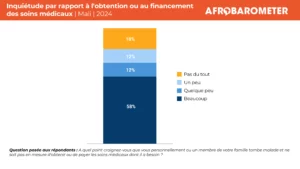
Findings from a special Afrobarometer Round 10 survey reveal that healthcare is the number one issue Malians want their government to address. While only about one in seven adults currently has health insurance coverage, public sentiment overwhelmingly supports universal healthcare access—even if it means higher taxes.
Citizens who sought care at public clinics or hospitals in the year prior to the survey reported mixed experiences. While many confirmed receiving necessary treatment, frequent complaints included unaffordable care or medications, long wait times, and persistent shortages of essential drugs and supplies. Nearly half of respondents said a family member went without needed medical attention during the past year.
Despite these frustrations, two-thirds of Malians express confidence in the government’s efforts to improve primary healthcare and trust the Ministry of Health to deliver results.
Comments are closed, but trackbacks and pingbacks are open.