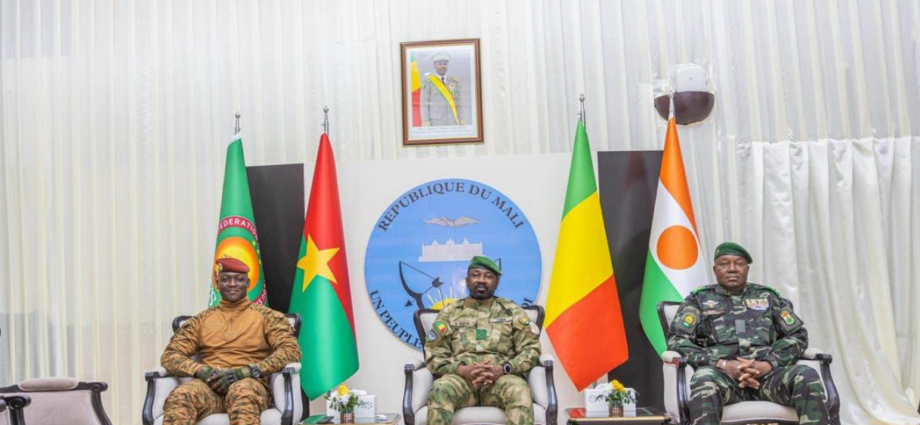
Washington has publicly cautioned Madagascar against replicating Russia’s controversial security framework, originally deployed in the Sahel, amid growing military ties between Antananarivo and Moscow. A high-ranking US military official has highlighted the ineffectiveness of Russia’s approach amid persistent jihadist violence in Mali, Burkina Faso, and Niger, warning that expanding this model could destabilize the Indian Ocean region.
Washington’s sharp critique of Russia’s Sahel security model
US concerns center on Russia’s military cooperation model, implemented across the Sahel, where jihadist groups continue to carry out deadly attacks despite increased support from Moscow. US officials argue that this approach has failed to deliver long-term stability, instead fueling regional insecurity.
Lieutenant General John Brennan, Deputy Commander of US Africa Command (AFRICOM), emphasized during a late 2026 press briefing that Washington opposes the replication of this security model in other African regions. The warning follows a high-level US delegation visit to Madagascar and Mozambique in early November, aimed at assessing the geopolitical shifts in the Indian Ocean.
Why Madagascar is a key player in the Russia-US rivalry
Since 2025, Madagascar has deepened its military and political relations with Russia, securing arms deliveries, drones, and training from Russian instructors. In February 2026, Madagascar’s President met with Vladimir Putin in Moscow, marking a pivotal moment in bilateral cooperation.
Recent agreements signed during the Russia-Africa summit in Moscow further solidified this partnership, covering defense, tourism, and trade. For Washington, this growing alignment raises concerns, particularly given Madagascar’s strategic location between the Indian Ocean and African coastlines.
Mozambique’s escalating insurgency adds urgency
Beyond Madagascar, US officials have flagged rising threats in northern Mozambique, where Islamic State-affiliated groups are expanding their maritime operations. These groups increasingly target commercial shipping routes, posing risks to global trade and regional stability.
General Brennan stressed the need for enhanced US-Madagascar cooperation in maritime surveillance, intelligence sharing, and military training to counter these emerging threats.
Can Madagascar balance relations with Russia and Western partners?
While US officials acknowledge Madagascar’s sovereign right to choose its military partners, they urge Antananarivo to weigh the consequences of aligning with Russia’s Sahel-inspired security model. The warning reflects broader US efforts to maintain influence in the Indian Ocean while deterring states from adopting Moscow’s approach.
Madagascar now faces a complex strategic dilemma: advancing its partnerships with Russia, preserving its national sovereignty, and maintaining its relationships with Western powers. With no immediate sanctions or punitive measures announced, Washington appears to prioritize dialogue and persuasion over coercion.
The geopolitical stakes in the Indian Ocean
The rivalry between Russia and the US in Madagascar is not limited to military cooperation. It reflects a larger competition for influence in the Indian Ocean, where maritime trade routes, energy security, and regional stability are at stake. As Madagascar strengthens ties with Moscow, Washington seeks to reinforce its own partnerships in the region, ensuring it does not lose ground in a critical geopolitical theater.
Comments are closed, but trackbacks and pingbacks are open.