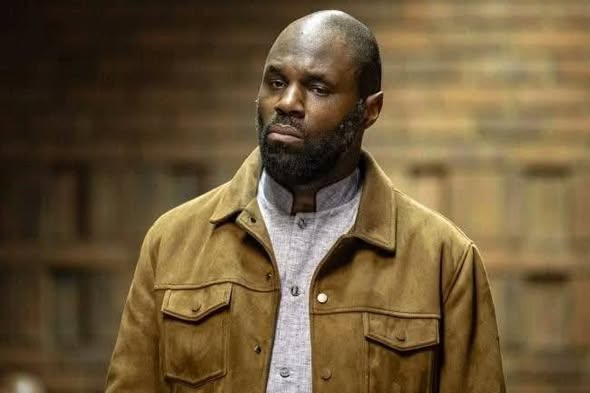
The imminent verdict from South African courts on the fate of Kémi Séba—arrested in April while attempting to enter Zimbabwe clandestinely—has sparked a critical question: Is this controversial internet personality, with 1.5 million followers, the true heir to modern panafricanism? Writer Venance Konan examines the movement’s evolution and its current contradictions.
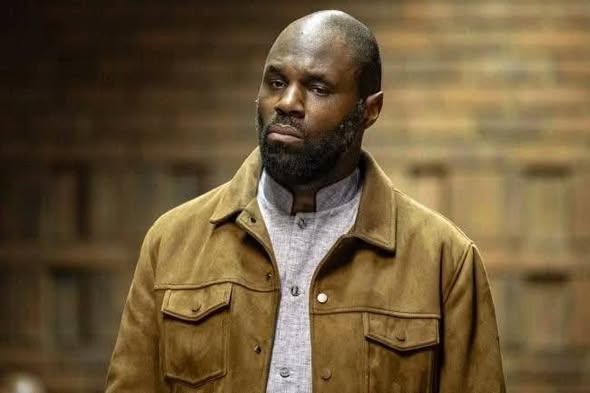
Kémi Séba, whose real name is Stellio Gilles Robert Capo Chichi, holds dual citizenship with Bénin and Niger. Recently apprehended in South Africa alongside his 18-year-old son and a white supremacist associate from Pretoria, Séba faces prosecution in his home country for “glorifying crimes against state security and inciting rebellion”—charges stemming from a video supporting soldiers involved in a failed December coup. A red notice has been issued against him.
From panafricanism to Russian propaganda networks
Kémi Séba, along with media personalities Franklin Nyamsi and Nathalie Yamb, represents the most vocal voices of contemporary panafricanism across Francophone Africa. These figures spearhead opposition to French influence on the continent, yet simultaneously serve as Moscow’s most effective propaganda tools in Africa. They actively support the military juntas of the Alliance of Sahel States (AES)—Mali’s Assimi Goïta, Burkina Faso’s Ibrahim Traoré, and Niger’s Abdourahamane Tiani—despite these regimes openly rejecting democratic governance. Does this new panafricanism simply mean replacing French domination with Russian control?
The historical roots of panafricanism
Panafricanism emerged in early 20th-century Black intellectual circles in the Americas and Caribbean. It became a driving force in Africa’s anticolonial struggles, with leaders like Kwame Nkrumah of Ghana, Sékou Touré of Guinea, and Patrice Lumumba of Congo inspiring a generation. The movement united African students in France through the Fédération des étudiants d’Afrique noire en France (FEANF), which evolved from a student union into a political force advocating for decolonization and continental unity. FEANF’s militant stance against the Algerian war drew harsh reprisals from French authorities, including reduced scholarships and constant police surveillance. The organization was dissolved in 1980.
The independence of Ghana in 1957 and most African nations in 1960 were seen as triumphs of panafricanist struggle. The creation of the Organization of African Unity (OAU) in 1963 marked a milestone toward continental unity. However, post-independence reality revealed the dominance of narrow nationalism over pan-African ideals. Failed unification attempts were overshadowed by secession movements—such as in Eritrea and Sudan—or separatist conflicts like Biafra and Casamance. In 2002, Libyan leader Muammar Gaddafi revived the vision of a united Africa by transforming the OAU into the African Union, but this initiative faded after his 2011 overthrow. The African Union’s New Partnership for Africa’s Development (NEPAD), launched in 2001, has since become largely inactive.
Panafricanism today: rhetoric vs. reality
Today, panafricanism is invoked more as a political slogan than as a lived ideal. African leaders—even those accused of human rights abuses—routinely declare themselves panafricanists. Notably, former Ivorian president Laurent Gbagbo recently formed the Parti des peuples africains-Côte d’Ivoire (PPA-CI), branding it as panafricanist. Similarly, Senegal’s ruling party is called Les Patriotes africains du Sénégal pour le travail, l’éthique et la fraternité (PASTEF). Yet these claims ring hollow when African governments either expel foreign Africans—such as in South Africa—or engage in open hostility, as seen in the regional tensions between Sahelian AES countries and ECOWAS states.
The so-called panafricanist voices dominating social media—Kémi Séba, Franklin Nyamsi, and Nathalie Yamb—are all figures who, despite their anti-Western rhetoric, appear increasingly aligned with Russian interests. Séba, stripped of French citizenship for hate speech, ironically expressed regret over its loss. These activists portray themselves as persecuted champions of African liberation, yet their alliance with authoritarian regimes and foreign powers raises a fundamental question: Can true panafricanism exist when leaders willingly place Africa under new forms of domination?
According to leaked conversations, Séba accuses Nyamsi and Yamb of being opportunists in the pay of Faure Gnassingbé. These revelations expose a panafricanism that is increasingly tainted by opportunism, propaganda, and foreign interference. As global powers vie for influence, Africa’s survival may depend not on empty slogans, but on genuine unity—an urgent return to the core values of panafricanism.