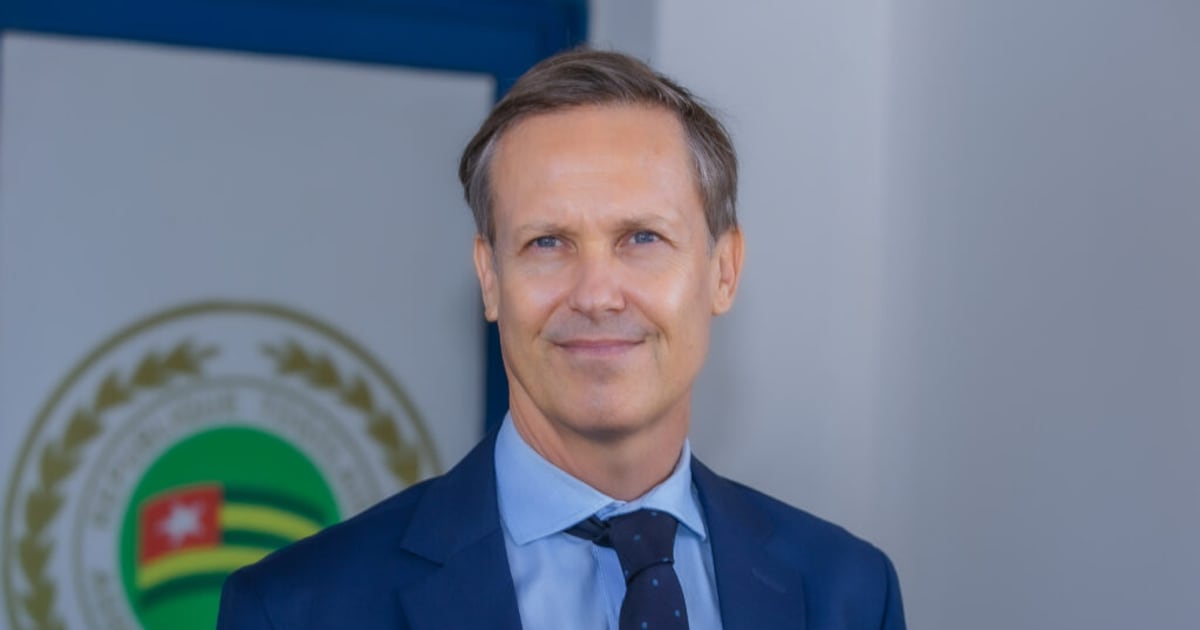
The European Union (EU) has reaffirmed its commitment to strengthening its partnership with Togo amid escalating international tensions. This declaration was made in Lomé by the Head of the EU Delegation to Togo, Gwilym Ceri Jones, during Europe Day, a celebration held annually on May 9th. This year, the focus was on Europe’s achievements as well as the pressing geopolitical and security challenges facing the world.
The diplomat highlighted a context marked by heightened geopolitical strains, rising armed conflicts, and global economic setbacks. He underscored Europe’s resolve to remain a trusted partner for African nations, with Togo at the forefront of this collaboration.
«In these uncertain and volatile times, the EU stands as a steadfast and dependable partner, fostering cooperation rooted in international law,» he stated. He also emphasized the tangible outcomes of EU-Togo collaboration, particularly through development aid programs and initiatives supporting economic and social progress.
Key achievements include:
- Over 1.3 million Togolese now connected to electricity thanks to EU-funded electrification programs.
- More than 2.5 million people benefiting from improved waste collection and treatment systems.
- Ongoing rehabilitation of the RN2 highway, linking Lomé to Aného and the Benin border.
The EU has also pledged to support a 18% increase in Togo’s electricity production, prioritizing renewable energy sources. Additionally, the diplomat praised Togo’s efforts in hosting 60,000 refugees in the northern regions, its mediating role in the Sahel and Great Lakes regions, and the dedication of Togolese defense and security forces in combating terrorism.
The timing of this partnership is deliberate. As neighboring Sahel nations grapple with instability and some governments distance themselves from Western influence, the EU is doubling down on its alliance with Togo—a country that serves as both a shield and a mediator. By reinforcing ties with Lomé, Brussels is securing a critical geopolitical ally, ensuring stability before unrest reaches the Gulf of Guinea.
This relationship transcends mere developmental aid. Initiatives like electrification and waste management are not just humanitarian gestures; they are tools for social pacification in a nation where access to basic services can sway public sentiment. The pledge to boost renewable energy production aligns with the EU’s low-carbon development goals, while the rehabilitation of the RN2 highway underscores a shared economic interest—keeping trade corridors open is vital for both European markets and local economies.
However, the cornerstone of this partnership is security. By acknowledging Togo’s refugee hosting capacity and its diplomatic mediation in crisis zones, the EU is effectively outsourcing stability. Though not directly on the frontline of jihadist threats, Togo absorbs both migration pressures and diplomatic burdens, acting as Europe’s last line of defense against the Sahel’s instability. The recognition of Togolese security forces’ efforts reflects Europe’s dependence on local allies to uphold regional order.
This alliance is no longer just about cooperation—it’s a calculated geopolitical strategy. By locking in Togo as its strategic stronghold, the EU is securing its influence in West Africa while reinforcing its containment policy against the turbulence sweeping across the Sahel.