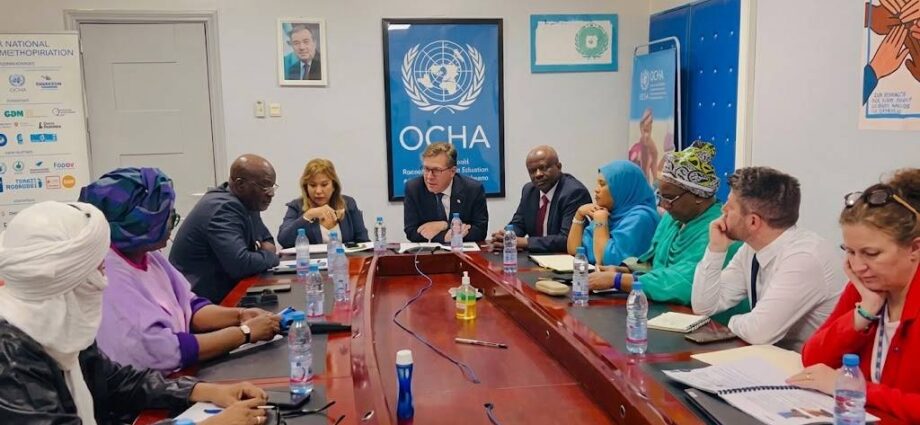
Bamako is hosting a high-level United Nations delegation this week, led by Tom Fletcher, Deputy Secretary-General for Humanitarian Affairs. The visit comes as Mali faces a critical humanitarian crisis, with 5.1 million people in urgent need of assistance in 2026.
Humanitarian crisis reaches unprecedented scale in Mali
The UN estimates that 5.1 million Malians—nearly one in four citizens—will require humanitarian support in 2026. Among them, 3.8 million are designated as priority beneficiaries for immediate intervention under the Humanitarian Response Plan.
This staggering demand reflects deepening vulnerabilities across the country. Families displaced by conflict, communities ravaged by food insecurity, and populations cut off from essential services are all facing mounting hardship. The most pressing needs include:
- Food security: Over 1.5 million people face acute hunger due to disrupted supply chains and economic instability.
- Healthcare access: Critical shortages in medical supplies and personnel threaten the wellbeing of millions.
- Clean water and sanitation: Only 45% of rural Malians have consistent access to safe drinking water.
- Protection services: Vulnerable groups, including women and children, are increasingly exposed to risks without adequate safeguards.
Diplomatic tensions shape humanitarian response
The UN delegation’s arrival follows recent policies by Malian authorities that restricted the operations of several international aid groups. These decisions, framed as efforts to strengthen national sovereignty, have reduced the capacity of humanitarian actors to deliver critical aid.
Tom Fletcher’s visit signals a renewed dialogue between the transitional government and the UN, though it does not necessarily indicate a broader reversal of restrictions on other organizations. The UN’s presence remains a key channel for assessing needs and coordinating international support.
Balancing sovereignty with life-saving aid
For Mali, the challenge is twofold: asserting national priorities while ensuring that vulnerable populations receive the help they need. The humanitarian community warns that the gap between identified needs (5.1 million) and targeted beneficiaries (3.8 million) risks leaving hundreds of thousands without lifesaving support.
Funding shortages, logistical hurdles, and restricted access to conflict zones further complicate the response. Aid agencies are calling for greater collaboration between Malian authorities and international partners to bridge these gaps.
As the UN delegation engages with local leaders, the focus remains squarely on the human cost of the crisis. Whether through renewed diplomatic channels or expanded on-the-ground operations, the urgency of the situation demands immediate action.
Also read: Humanitarian aid in conflict zones: Challenges in 2026
Comments are closed, but trackbacks and pingbacks are open.