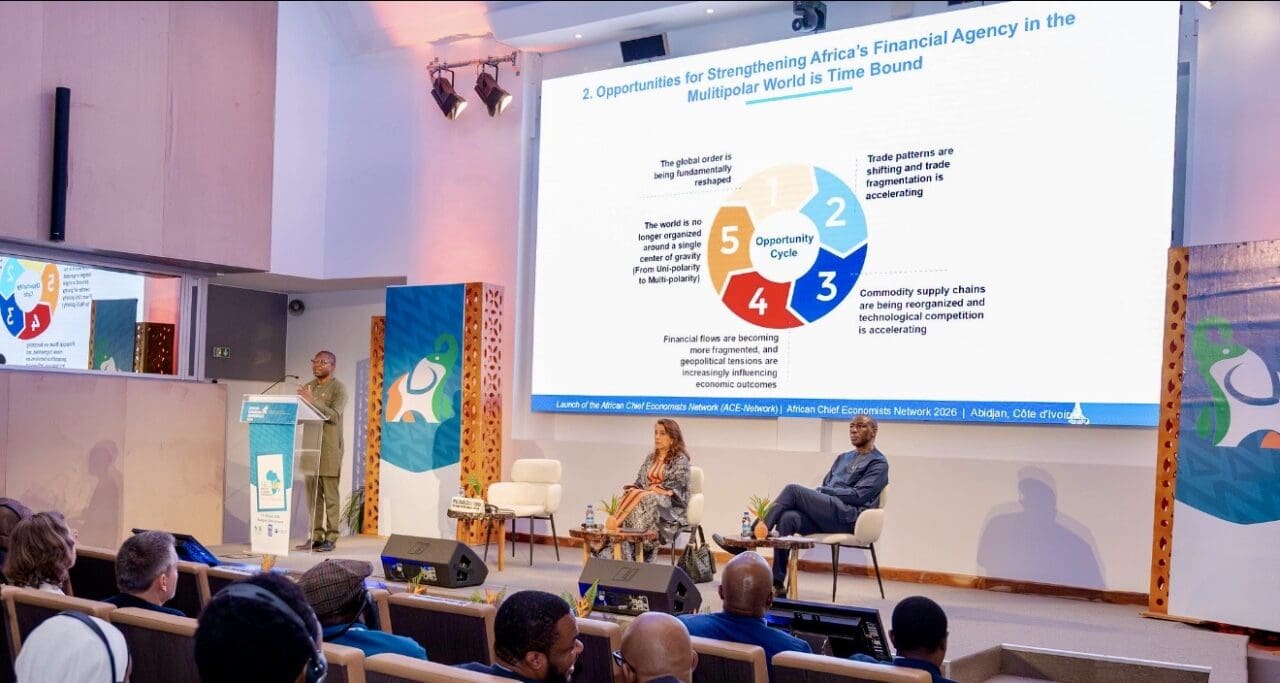
The 2026 Abidjan Conference wrapped up with a bold vision: Africa must not just navigate global shifts but actively shape them. Over three days, policymakers, economists, and international partners convened to redefine the continent’s economic future, emphasizing integration, strategic financing, and collective action as pillars of resilience.
Closing the conference, organizers underscored a critical shift in narrative. Africa is no longer a passive observer of global changes but a potential leader in crafting the new economic order. The event, co-hosted by the African Development Bank (BAD), the United Nations Development Programme (PNUD), and the Organisation for Economic Co-operation and Development (OCDE), served as a platform to challenge old paradigms and propose actionable solutions.
From vulnerability to strategic advantage
Raymond Gilpin, Chief Economist at the UNDP Africa Regional Bureau, framed economic turbulence as an opportunity rather than a threat. « While global instability will persist, » he noted, « it cannot erode the fundamental resilience of Africa’s people. » The conference’s central message was clear: reform must accelerate, partnerships must deepen, and urgency must define every move toward building the Africa we aspire to—and the world needs.
This perspective signals a departure from reactive strategies. The focus is now on converting geopolitical disruptions into strategic gains, ensuring Africa’s voice shapes global economic rules rather than merely adapting to them.
Breaking silos to tackle interconnected challenges
Ida McDonnell, Senior Advisor at the OECD, highlighted the interconnected nature of modern challenges. « Trade, debt, climate, and fiscal policies are no longer isolated issues, » she emphasized. « They demand integrated analysis and data-driven decision-making. » The conference called for dismantling institutional silos to foster collaboration between governments, financial institutions, and development partners.
This holistic approach reflects Africa’s evolving reality, where a single crisis—whether financial, climatic, or political—can trigger cascading effects across the continent. Addressing these requires not just resources but a new framework for understanding and responding to complexity.
From dialogue to tangible impact
Marie-Laure Akin Olugbade, Vice President of the African Development Bank, stressed the urgency of turning discussions into action. « The recommendations from Abidjan must now guide public policies and development partnerships, » she asserted. The challenge lies in implementation, particularly amid tight fiscal constraints and intensifying global competition.
The vision is ambitious: strengthen Africa’s geopolitical agency and commercial resilience. But realizing it demands more than declarations—it requires investment, innovation, and relentless execution.
Powering Africa’s economic future
Ahunna Eziakonwa, UN Assistant Secretary-General and UNDP Africa Regional Director, framed the conference as a starting point. « The real test begins now, » she said. « We must remove barriers to intra-African trade, invest in innovation, and prepare our youth for a transformed global economy. »
Her words encapsulate the conference’s core philosophy: Africa’s sovereignty will not be secured by aligning with global powers or retreating inward, but by building its own economic strength. « In a multipolar world, » she concluded, « Africa’s leverage lies in its ability to create value, finance its growth, and defend its interests independently. »
Abidjan: A laboratory for Africa’s new economic vision
The 2026 edition of the African Economic Conference also marked the launch of the African Chief Economists Network (ACE Network), a platform designed to amplify Africa’s economic voice. Beyond institutional announcements, the conference symbolized a shift in discourse—from aid-dependent narratives to discussions about Africa’s capacity to influence global economic governance.
In a world where traditional alliances are shifting, organizers see an unprecedented window of opportunity for Africa. But this potential will only materialize if ambition is matched with action: concrete policies, strategic investments, and measurable outcomes. Only then can the promises made in Abidjan move beyond rhetoric to shape a more sovereign, resilient, and influential Africa on the world stage.
Comments are closed, but trackbacks and pingbacks are open.