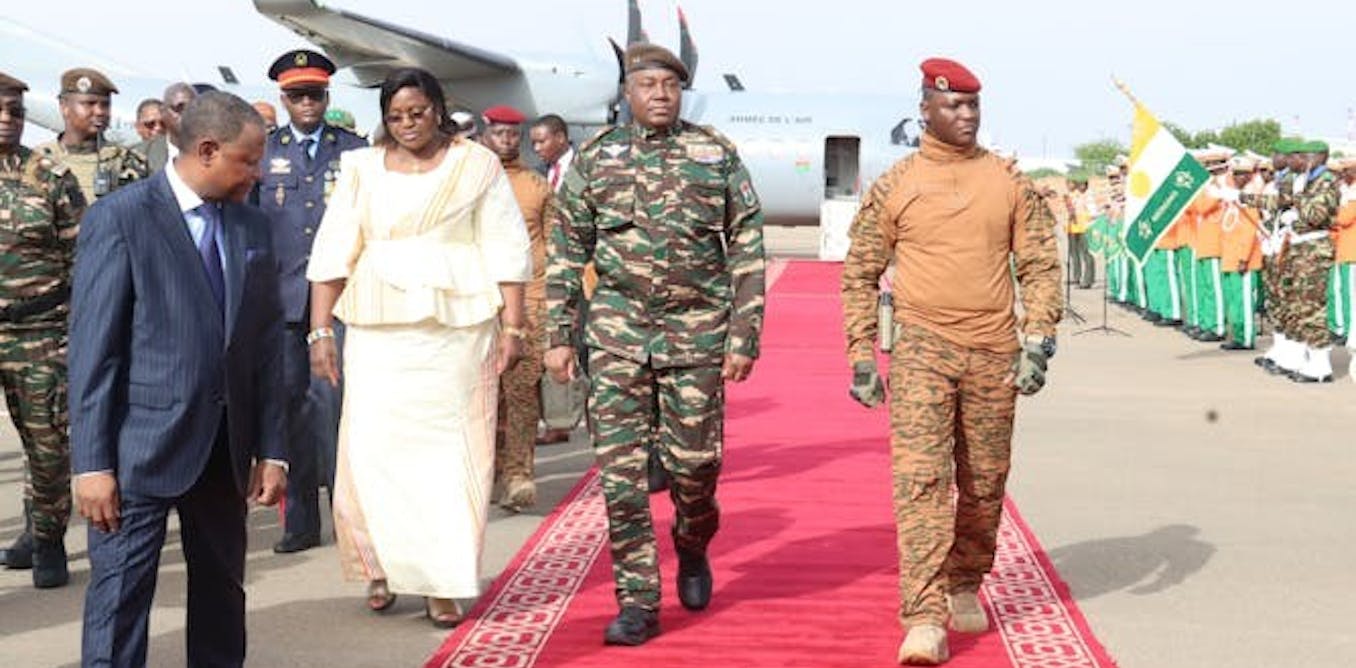
The landscape of partisan politics in Burkina Faso underwent a radical transformation at the end of January 2026. On January 29, the administration of Captain Ibrahim Traoré formally disbanded all political organizations, including the very groups that had championed his rise to power in September 2022.
While these organizations had already been suspended since Traoré took control, the junta justified this latest decree as a necessary step in a national “restructuring” program designed to eliminate social fragmentation.
In practical terms, this decision erases the remaining avenues for independent civic engagement and further consolidates absolute authority in the hands of Traoré. Furthermore, the state has moved to seize all assets belonging to the dissolved parties. This development is a major focal point for those following African news today, as it signals a tightening of military control.
Although the regime initially enjoyed vibrant civilian backing, this crackdown stands in stark contrast to its previous rhetoric regarding popular mobilization and national rebirth. However, for observers of pan-African current affairs, this shift is part of a predictable historical cycle.
Throughout the Sahel and across the continent, those who support military interventions often find that their early enthusiasm does not translate into long-term political leverage. Coups that begin with the blessing of the streets frequently conclude with the junta marginalizing or even persecuting the same civilian groups that helped legitimize their takeover. This is a recurring theme in Africa politics English coverage.
Extensive research into the history of military takeovers, particularly the recent surge of coups in Africa, reveals a clear pattern.
Once they have secured the reins of government, military leaders rarely show any inclination to share power. Civilian organizations are useful during the initial phase of a putsch; they provide the necessary crowds and a veneer of democratic legitimacy, making the seizure of power appear to be a response to public outcry.
Yet, these same allies soon become obstacles. They possess their own leadership structures, loyal constituencies, and specific expectations for the transition process. Their ability to criticize delays or mobilize protests makes them a threat to the junta’s desire for total control. This independence is exactly what military regimes seek to eliminate.
Initial civilian support should never be mistaken for a permanent mandate, nor does it ensure that a transitional government will remain inclusive. The recent ban on political parties in Burkina Faso serves as a stark reminder of this reality. While support from outside the military barracks can help ignite a coup, it rarely guarantees a seat at the table once the new regime is established.
The illusion of lasting civilian influence after a coup
Contrary to common perceptions, military takeovers frequently garner support from specific segments of the population. In some instances, civilians actively encourage the military to step in and help stabilize the new order.
This dynamic has been particularly evident in the latest wave of African coups. From Mali to Niger, military interventions were met with celebrations and endorsed by various civil society actors, political factions, and other domestic stakeholders. For coup leaders, these partnerships provide immediate visibility and a ready-made support base.
However, a parallel trend exists: while civilian groups expect to maintain influence in the post-coup era, juntas frequently sideline, ignore, or outright repress their former partners.
This cycle repeats across different eras and ideologies. For example, following the 1969 coup in Sudan, the Communist Party initially supported the Free Officers led by Colonel Jaafar Nimeiri. However, within months, Nimeiri began removing communist figures from the government. By 1971, he had launched a violent campaign that effectively destroyed the party.
A similar story unfolded after the 2013 coup in Egypt. The Tamarod protest movement backed General Abdelfattah el-Sisi’s takeover, only to see their influence vanish as the state rapidly closed down civic space.
Regrets among coup supporters in the Sahel
Today, many civilian groups in the Sahel that welcomed recent coups are facing the same disillusionment as their predecessors. These events are frequently highlighted in African society news as cautionary tales of political alliances.
In Mali, the Mouvement du 5 juin – Rassemblement des forces patriotiques (M5-RFP)—a coalition of opposition parties, religious leaders, and activists linked to Imam Mahmoud Dicko—has become a fierce critic of Colonel Assimi Goïta’s junta.
This is ironic given that the M5-RFP was a primary supporter of the 2020 intervention. After leading massive protests against President Ibrahim Boubacar Keïta, the movement welcomed the military in August 2020, expecting to help guide the country’s transition.
Those hopes were quickly dashed. The junta excluded the M5-RFP from key government roles. When Goïta launched a second coup in May 2021 to consolidate military control, the movement’s influence was almost entirely erased.
The aftermath of the 2021 coup in Guinea followed a nearly identical path. Opposition leaders who fought against former President Alpha Condé initially praised General Mamady Doumbouya’s takeover.
Hoping for a significant role in the transition, these party leaders even lobbied the Economic Community of West African States (ECOWAS) to avoid sanctions, legitimizing the coup as a necessary intervention. However, the junta eventually ignored these parties, and within a year, several members were arrested for protesting their exclusion from the political process.
Viewed through this lens, the dissolution of political parties in Burkina Faso is not an isolated event but a predictable stage in military governance. Early political support does not translate into a lasting partnership once a military leader has firmly established their grip on power.
Comments are closed, but trackbacks and pingbacks are open.