
Event details
- Date: February 24, 2026, from 18:00 to 19:30
- Location: Room K011, 1 pl. Saint-Thomas-d’Aquin, 75007, Paris
- Organisers: CERI, Africa Programme
This upcoming session is hosted by the Africa: Citizenship, Violence and Politics research group at CERI in collaboration with the Africa Programme. It aims to dissect the evolving security landscape, a topic frequently covered in African news today.
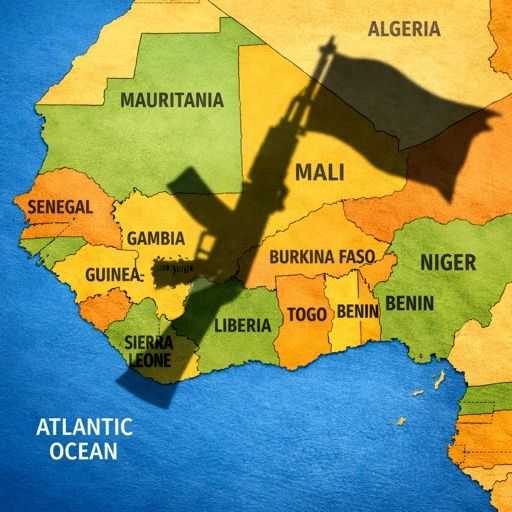
Since emerging in 2017, the Al-Qaeda affiliate known as Jama’at Nusrat al-Islam wal-Muslimin (JNIM) has solidified its role as a dominant militant force in the central Sahel. Operating through various katibas, the group has challenged state sovereignty in parts of Mali, Niger, and Burkina Faso, establishing its own forms of territorial governance.
However, since 2019, a strategic shift has seen JNIM push southward toward the Gulf of Guinea. This expansion has targeted northern Bénin, Togo, and Côte d’Ivoire. Yet, the pattern of this progression remains inconsistent: Ghana has remained largely untouched, and while Côte d’Ivoire faced attacks between 2020 and 2022, claims of responsibility have since ceased. Conversely, the security environment in Bénin deteriorated sharply throughout 2025.
According to the latest findings from the Crisis Group, this territorial spread is not a simple reflex but a calculated risk. For those following Africa politics English reports, the expansion presents a significant dilemma for JNIM leadership. Moving too slowly allows competitors to seize ground, while moving too quickly risks overextending resources and triggering internal fragmentation.
In the current geopolitical climate, defined by the emergence of the Alliance of Sahel States (AES) and their departure from CEDEAO, understanding JNIM’s internal logic is vital. For readers of The Panafrican Press, these insights are crucial for developing effective security frameworks in West Africa. Such pan-African current affairs highlight the need for cohesive regional responses to armed jihadist movements.
Guest Speakers
Jean-Hervé Jézéquel (International Crisis Group)
As the Sahel Project Director, Jézéquel provides deep analysis of the political and security dynamics in the Sahel. He earned his doctorate from the EHESS in 2002.
Discussants
Marte Beldé (Sciences Po Bordeaux)
A postdoctoral researcher involved in the GOVJIHAD project, Beldé focuses on the economic and spatial growth of jihadist groups in West Africa. Her 2025 doctoral research focused on Salafi-jihadi expansion in Sikasso, Mali.
Beatriz de León Cobo (GEMASS – Sorbonne Université)
A specialist in radicalisation, Cobo is an Associate Fellow at the Royal United Service Institute (RUSI) and leads the Europe-Sahel Dialogue Forum. Her work is a staple for those monitoring African society news regarding security.
Moderator:
Dan Sanaren (CERI–Sciences Po / CNRS)
Comments are closed, but trackbacks and pingbacks are open.