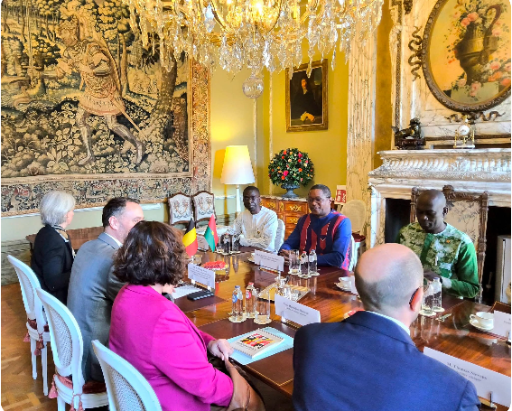
Following a working visit to Brussels on November 4-5, 2026, Burkina Faso’s foreign minister Karamoko Jean-Marie Traoré secured a fresh commitment from Belgium: a €40 million cooperation package earmarked for post-2027 programs. The pledge arrives at a pivotal moment, as Ouagadougou navigates strained ties with Western capitals while redefining its diplomatic playbook under President Ibrahim Traoré.
Brussels reaffirms financial backing despite political friction
The announcement follows high-level talks between Traoré and his Belgian counterpart Maxime Prévot. Belgium’s renewed pledge channels through Enabel, the Belgian development agency, and signals Brussels’ intent to keep development cooperation alive even amid diverging political narratives. While Burkina Faso champions sovereign decision-making and partnership diversification, the €40 million infusion shows dialogue remains on the table.
The funding—which does not represent immediate disbursement but a future commitment—continues the trajectory set by the 2023-2027 cooperation program valued at €34.5 million. Priorities for the new tranche include sustaining livelihood improvement initiatives, local governance projects, and social sector investments for vulnerable communities.
Diplomatic channels stay open despite shifting alliances
Traoré’s agenda extended beyond bilateral meetings. In Brussels he met with Kaja Kallas, the EU’s High Representative for Foreign Affairs and Security Policy, to review Burkina Faso–EU relations and map future collaboration roadmaps. The next day’s session with Prévot covered regional security dynamics, economic resilience programming, and avenues for reinvigorated cooperation.
These exchanges underline a pragmatic stance: even as Ouagadougou distances itself rhetorically from traditional Western partners, functional dialogue persists. The €40 million package exemplifies how economic necessity can coexist with political posturing.
Sovereignty vs. external support: a balancing act
The pledge raises questions about President Traoré’s balancing act. Since taking power in September 2022, he has positioned Burkina Faso as an assertive sovereign actor—challenging Western influence, ousting French troops, and deepening ties with Moscow. Yet the decision to accept Belgian aid suggests a nuanced stance: rejecting political alignment does not automatically exclude pragmatic partnerships.
Analysts point to two drivers. First, strategic differentiation: Ouagadougou can critique Brussels’ foreign policy while still accepting development funds that directly benefit populations. Second, regional leverage: maintaining ties with Brussels helps Burkina Faso diversify its diplomatic portfolio without severing all Western conduits.
Next steps: promises vs. delivery
While the €40 million commitment carries symbolic weight, its real-world impact hinges on implementation. Brussels will monitor disbursement timelines and project milestones; Ouagadougou must demonstrate transparent use of funds to avoid renewed criticism. For now, the announcement signals cautious re-engagement rather than a wholesale diplomatic realignment.
Brussels gains a foothold in a volatile Sahel landscape, and Burkina Faso gains resources to address pressing socioeconomic deficits. Whether this constitutes a turning point—or merely another chapter in Ouagadougou’s evolving foreign policy—will become clearer once funds are deployed and results measured.
Comments are closed, but trackbacks and pingbacks are open.