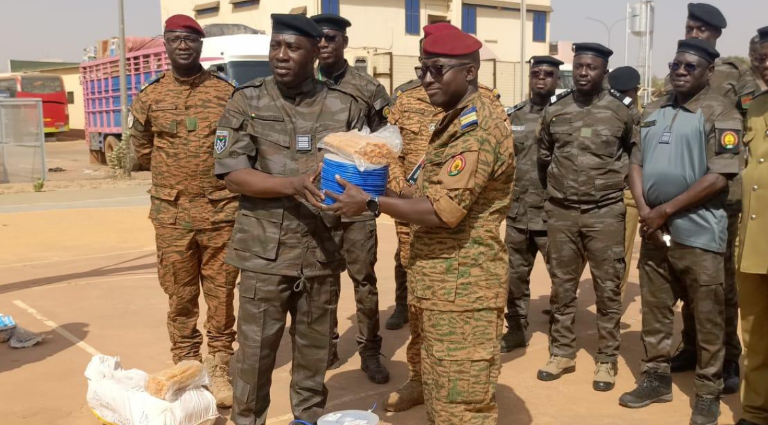
Operation ‘Magnan’ nets over 10 billion FCFA in prohibited goods across Burkina Faso
The Burkina Faso Customs Directorate has concluded a sweeping three-month anti-smuggling operation, intercepting contraband goods valued at over 10.8 billion West African francs (FCFA). The enforcement campaign, codenamed ‘Magnan,’ spanned from July 10 to October 15, 2026, delivering a decisive blow to illicit trade networks operating within and across the country’s borders.
The sheer volume of intercepted merchandise—drugs, chemicals, explosives, and counterfeit goods—exposes the extensive reach of organized smuggling rings that undermine public health, economic stability, and national security. Authorities warn that the scale of these operations highlights an urgent need for stronger regulatory oversight and interagency collaboration to dismantle trafficking networks permanently.
More than 4.2 million doses of Tapentadol seized in major bust
The most substantial haul during Operation ‘Magnan’ involved Tapentadol, a prescription opioid painkiller. Customs officers intercepted over 4.2 million tablets, valued at approximately 8 billion FCFA. The sheer quantity suggests large-scale diversion or illegal importation, posing serious risks to public health.
In addition to the opioid painkiller, authorities also seized over 11 tons of counterfeit medications valued at 1.1 billion FCFA. These unregulated pharmaceuticals raise grave concerns about authenticity, storage conditions, and potential contamination—factors that could lead to ineffective treatment or severe health complications for unsuspecting consumers.
Public health at risk from counterfeit and diverted medicines
Counterfeit drugs circulating in informal markets often contain incorrect active ingredients, incorrect dosages, or even toxic substances. Such risks are amplified when these products are introduced into public supply chains. The interception underscores the need for tighter controls over pharmaceutical imports and distribution to safeguard patient safety and preserve trust in the healthcare system.
Dangerous contraband beyond medicines: drugs, chemicals, and explosives intercepted
Operation ‘Magnan’ extended beyond pharmaceuticals. Customs seized significant quantities of illicit substances, including:
- Cocaine and cannabis – flagged as major threats due to their illegal status and potential links to organized crime
- Cyanide and mercury – toxic industrial chemicals commonly misused in artisanal mining
- Explosives and detonation equipment – posing grave risks of accidental detonation or terrorist misuse
The discovery of these items highlights the complex and multifaceted nature of smuggling operations, which extend into chemical warfare agents, industrial inputs, and explosive materials—posing threats far beyond traditional contraband.
Agricultural and food products also targeted in smuggling crackdown
Smugglers do not only traffic high-value or restricted goods. Operation ‘Magnan’ also intercepted large quantities of everyday essentials:
- Over 500 metric tons of fertilizers
- Nearly 490 metric tons of rice
- Thousands of containers of cooking oil
- Unregistered pesticides and counterfeit textbooks
- Spooled weaving thread and other consumer goods
These findings reveal that smuggling affects not only luxury or niche markets but also basic necessities, distorting local economies and threatening food security. The presence of unapproved agricultural inputs jeopardizes crop yields and soil health, while food adulteration risks public health.
Economic sabotage: how illegal trade undermines Burkina Faso’s growth
Smuggling doesn’t just violate the law—it distorts markets and funds criminal enterprises. By evading customs duties and regulatory compliance, illicit traders undercut legitimate businesses, creating unfair competition and draining public revenue.
Millions of dollars in uncollected taxes directly impact the government’s ability to fund education, healthcare, and infrastructure. Meanwhile, local producers face price undercutting by smuggled goods, threatening jobs and industrial development. The long-term cost of unchecked smuggling is a weakened economy and reduced public services for all citizens.
Can sustained enforcement break the back of smuggling networks?
The success of Operation ‘Magnan’ marks a critical milestone, but officials emphasize that isolated seizures are not enough. To dismantle these networks permanently, authorities must:
- Trace the supply chains from origin to end-users
- Identify key actors involved in procurement, transport, and distribution
- Strengthen interagency cooperation between customs, police, health regulators, and trade bodies
- Enhance intelligence-sharing to anticipate smuggling routes and methods
Without sustained pressure on both upstream and downstream nodes of these networks, smuggling operations can quickly regroup. The challenge ahead is to turn tactical victories into strategic change—protecting consumers, preserving revenue, and fostering fair trade across Burkina Faso.
Comments are closed, but trackbacks and pingbacks are open.