Ouagadougou’s contradictory approach to national and food sovereignty
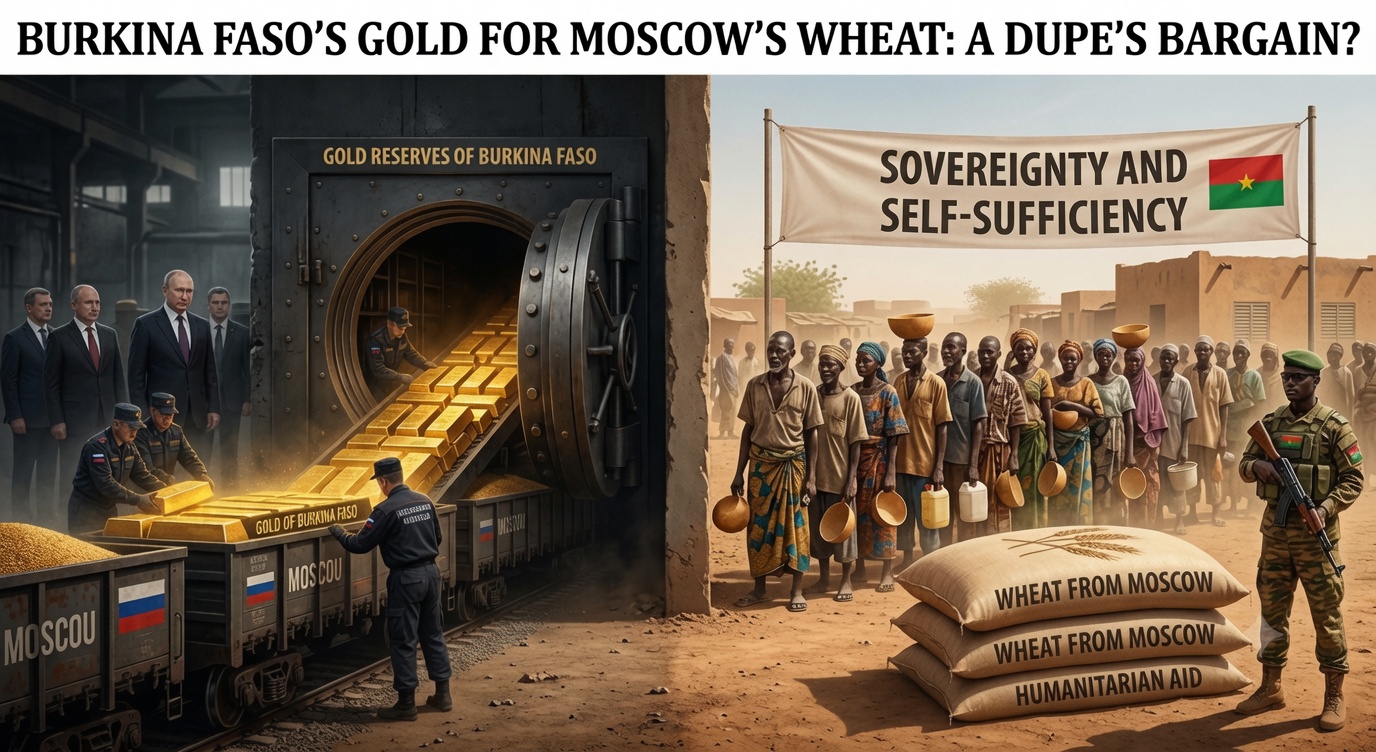
In the heart of West Africa, a stark contradiction is unfolding. While Burkina Faso’s leadership touts a narrative of “reclaimed sovereignty,” its actions reveal a troubling reality: the country is mortgaging its national gold reserves to Moscow in exchange for emergency wheat shipments. This transaction underscores a deeper paradox—one where rhetorical defiance meets economic submission.
The recent visit of a high-ranking Russian diplomat to Ouagadougou laid bare the extent of this quid pro quo arrangement. Officials proudly announced the transfer of Burkina Faso’s gold reserves to Moscow’s central bank, a move framed as a strategic partnership. Yet, this decision raises pressing questions about the true meaning of economic sovereignty for a nation that claims to reject foreign domination.
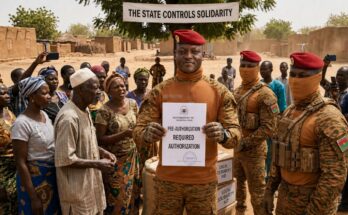
At the very moment when Burkina Faso’s gold is being stored abroad, the capital grapples with a humanitarian crisis. The government’s decision to block independent aid initiatives and non-governmental organizations from assisting vulnerable populations has intensified concerns. By monopolizing humanitarian assistance, authorities seem determined to ensure that every morsel of food reaching the hungry is seen not as a natural right, but as a concession from the state.
Dual crises: food insecurity and political control
The wheat-for-gold exchange is more than an economic transaction—it is a stark admission of failure. Burkina Faso, a nation rich in gold, now relies on foreign grain to feed its people, a dependency that starkly contrasts with its stated goals of self-sufficiency. The irony is not lost on observers: a country that prides itself on rejecting neocolonialism is now entrusting its most valuable resource to another foreign power, all while begging for basic food supplies.
This situation is compounded by the government’s restrictive policies on local aid. By preventing citizens and civil society groups from directly supporting those in need, the authorities appear to prioritize political control over humanitarian effectiveness. Such measures not only hinder immediate relief efforts but also risk eroding public trust in the state’s ability to address crises.
The gold reserves: a symbol of misplaced priorities
Burkina Faso is one of West Africa’s top gold producers, a resource that should ideally fuel agricultural development, infrastructure projects, and food security programs. Instead, the nation’s wealth is being leveraged to secure short-term political and economic gains. The transfer of gold to Moscow suggests a transactional relationship, where national assets are bartered for immediate survival rather than invested in long-term resilience.
Critics argue that this approach weakens the country’s economic foundations. Without reinvesting gold revenues into domestic sectors—such as agriculture, irrigation systems, or food storage—the government risks perpetuating cycles of dependency. For a nation that has endured years of conflict and displacement, the absence of sustainable solutions is glaring.
Sovereignty in name only
The true measure of sovereignty lies not in rhetoric, but in tangible outcomes. Can a government claim independence when its people remain dependent on foreign handouts for survival? The wheat arriving from Russia may fill empty stomachs, but it does little to address the structural issues plaguing Burkina Faso’s food systems. Meanwhile, the gold that should fund national development is being sent abroad, further entrenching the country’s economic vulnerabilities.
The current leadership’s policies reveal a troubling disconnect between ambition and reality. Burkina Faso’s citizens are repeatedly called upon to endure hardships in the name of national pride and security. Yet, the persistence of food insecurity and unmet basic needs suggests that these sacrifices are not translating into tangible improvements. When a state’s survival depends on the goodwill of an external patron, its sovereignty is, at best, incomplete.
The gold-for-wheat exchange is not merely a policy misstep—it is a reflection of a deeper crisis. Burkina Faso’s leaders must confront a difficult question: Are these partnerships truly strengthening the nation, or are they merely trading one form of dependence for another?