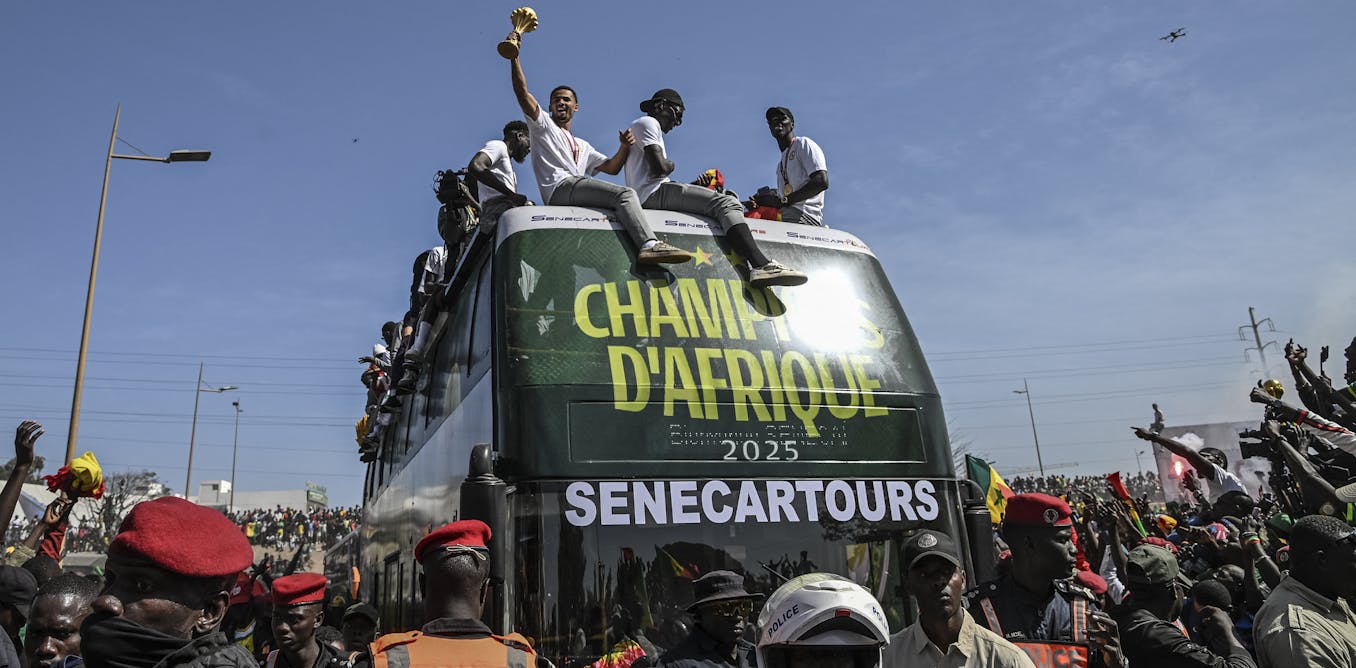
Two months after the CAN 2025 final, which concluded on the pitch with a 1-0 scoreline, the Confédération Africaine de Football (CAF) Appeals Jury issued a controversial ruling. The decision stripped Senegal of its victory, awarding a 3-0 forfait win to Morocco instead. The grounds? A temporary withdrawal of the Senegalese team from the field for roughly ten minutes.
The CAF’s decision, grounded in Articles 82 and 84 of its regulations, sharply contrasts with the referee’s initial ruling to resume and complete the match. This legal reversal raises critical questions: How does sports law interpret such scenarios? What are the broader implications of this decision? In this analysis, we explore the legal nuances and potential consequences of this unprecedented ruling.
What legal basis did the CAF Appeals Jury rely on?
The CAF’s decision hinges on Chapter 35 of the CAN regulations, specifically Articles 82 and 84, which address team withdrawals. The jury ruled:
In application of Article 84 of the TotalEnergies CAF Africa Cup of Nations Morocco 2025 Regulations, the Senegalese national team is declared forfeited in the final match. The result is officially recorded as a 3-0 victory for the Royal Moroccan Football Federation (FRMF).
The legal qualification of Senegal’s action as a “withdrawal” rather than an “abandon” is pivotal. In sports law, terminology shapes the applicable legal framework and determines the outcome. Misclassification can lead to unintended consequences—akin to a physician prescribing the wrong treatment based on an incorrect diagnosis.
Why did the CAF Appeals Jury overrule the referee’s decision to continue play?
While the Appeals Jury’s reasoning remains undisclosed, its authority to act independently cannot be disputed. The jury exercised its sovereign discretion, disregarding a central element of the case: the referee’s decision to resume the match. This raises eyebrows, as the referee, per IFAB Law 5, holds ultimate authority over match proceedings, including the power to suspend or abandon play for violations or external interference.
The referee’s choice to temporarily halt the game—rather than declare an outright abandonment—was critical. No predefined time threshold dictates when a match should be considered abandoned. The referee’s discretion is final, binding all parties (erga omnes, as jurists would say). Their decisions on match-related facts, including the final result, are conclusive and must be respected.
Has a similar case ever occurred in a continental final?
Historically, football authorities avoid overturning on-field results, making this case exceptional. While no identical scenario exists in a CAN final, parallels can be drawn from other high-stakes matches:
- South Africa vs. Senegal (2017 World Cup qualifiers): The match was replayed after evidence emerged of referee corruption influencing the outcome.
- Wydad Casablanca vs. Espérance de Tunis (2019 CAF Champions League final): Moroccan players refused to resume play after a disallowed goal and VAR malfunction. The referee declared an abandonment, and the Court of Arbitration for Sport (CAS) upheld the forfeit, citing refusal to continue as abandonment under CAF disciplinary codes.
The key difference in the CAN 2025 final? Senegal resumed play, allowing the match to reach its conclusion, whereas Wydad Casablanca never returned to the pitch.
Can Senegal appeal, and what are its prospects?
Absolutely. Senegal has already filed an appeal, as permitted under sports law. When a sports body issues a final decision—such as the CAF Appeals Jury’s ruling—the Court of Arbitration for Sport (CAS) can review the case via a declaration of appeal. The filing fee is 1,000 Swiss francs (~$1,279 USD), followed by written submissions, oral arguments, and a final ruling, likely within months.
Additionally, the Senegalese Football Federation (FSF) has requested a suspension of the CAF decision, allowing Senegal to retain its title until the CAS delivers its verdict. This case serves as a landmark for sports law, touching on regulatory interpretation, referee authority, jurisdictional composition, estoppel (ethical constraints in proceedings), and the governance of sports organizations.
Comments are closed, but trackbacks and pingbacks are open.